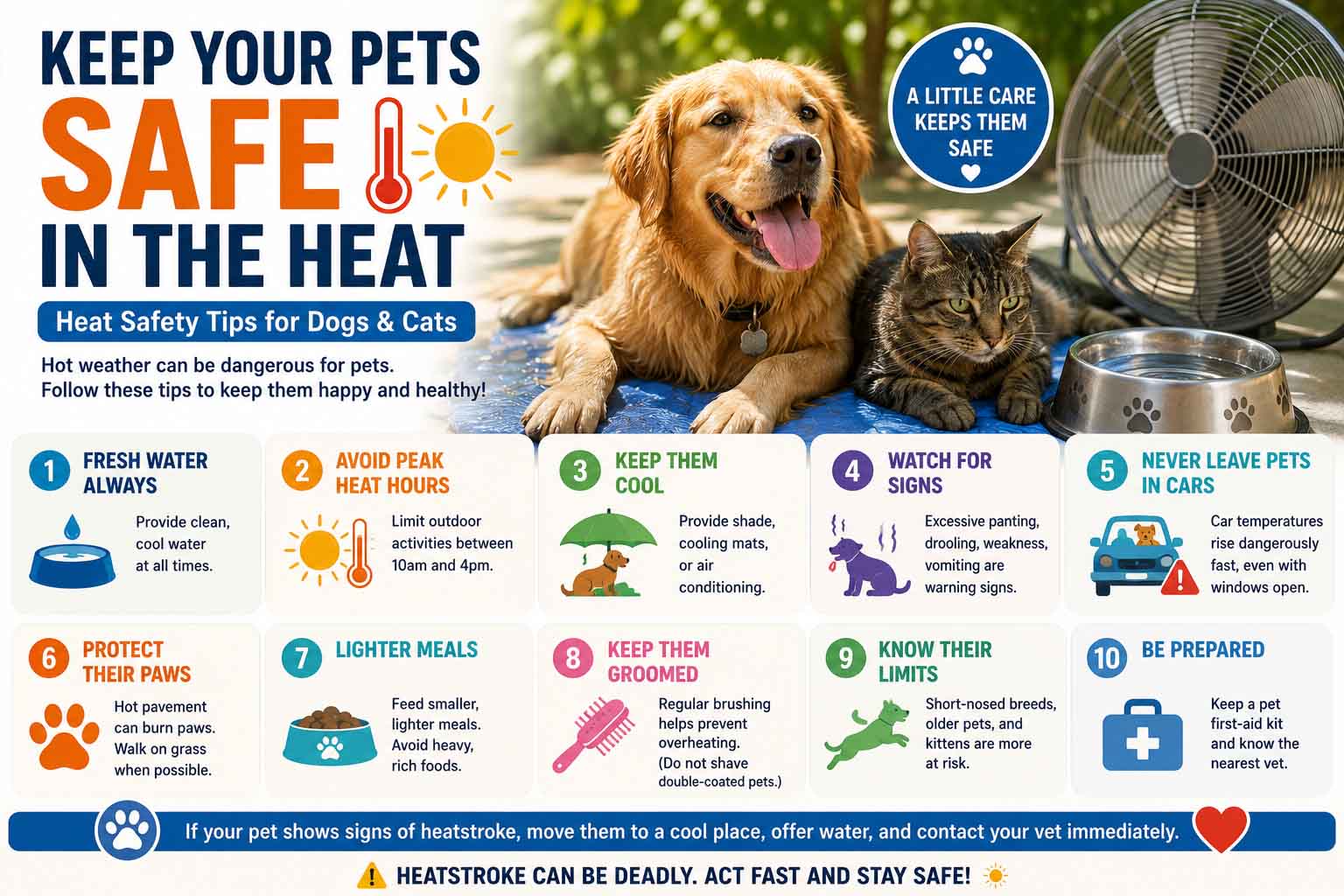
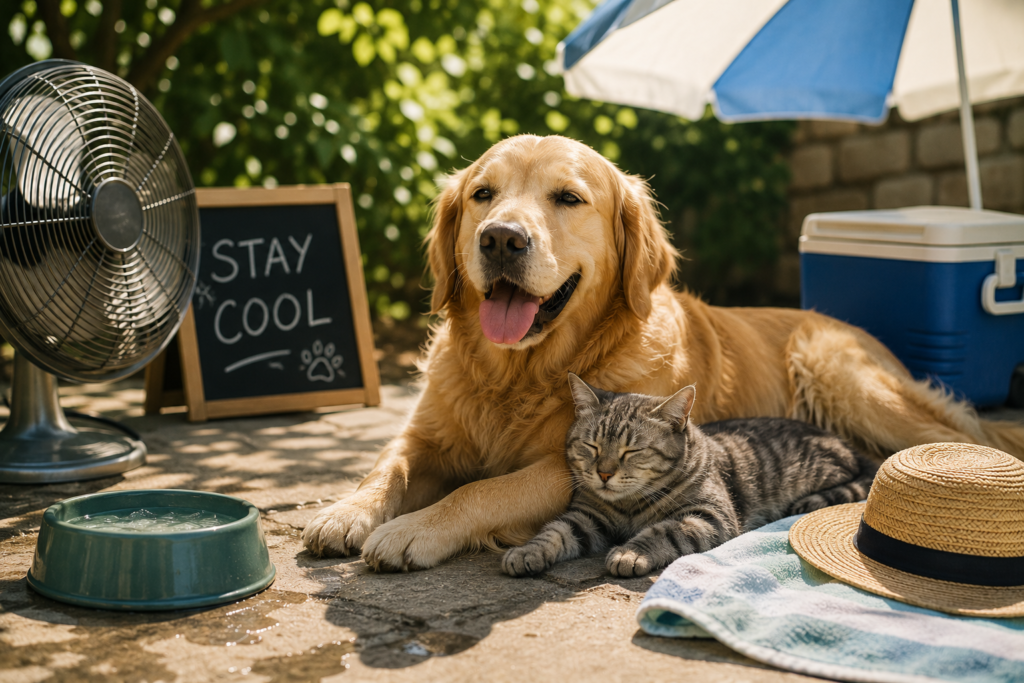
When summer temperatures rise, following proper pet safety heatwave guidelines is crucial to protect your dogs and cats.
Meta Description: A highly detailed, expert-level guide covering scientifically proven methods to protect dogs and cats during extreme summer heatwaves. This ultimate guide explores physiological temperature regulation, indoor/outdoor environmental control, and safety protocols for animal content production sets.
As the intensity and duration of summer heatwaves continue to escalate globally, protecting our companion animals from the severe impacts of high temperatures has become an urgent priority. It is generally known that dogs and cats possess fundamentally different, and often less efficient, thermoregulatory systems compared to humans. When the external environment reaches extreme heat, their natural ability to cool down through panting and limited sweat glands can quickly become overwhelmed, leading to catastrophic health failures. This is not merely a matter of temporary discomfort; heat stress can rapidly progress to fatal heatstroke, irreversible organ damage, and severe neurological complications.
Essential Pet Safety Heatwave Tips for Summer Walks
For modern pet owners, as well as professionals in the digital media industry who frequently work with animal actors, understanding the precise mechanisms of heat exhaustion is absolutely critical. Many experts emphasize that a proactive, multi-layered approach is required to guarantee pet safety during the summer months. This involves not only managing the ambient temperature of their living spaces but also carefully timing physical activities, recognizing the subtle early warning signs of distress, and utilizing modern technology to minimize their exposure to heat-generating environments.
This comprehensive guide delves deep into the biological realities of canine and feline heat tolerance, offering a scientifically grounded blueprint for summer safety. Structured around real-world scenarios, practical environmental adjustments, and advanced production set guidelines, this document serves as an exhaustive resource. By mastering these variables, which can change depending on the specific breed and situation, you can create a perfectly controlled, safe microclimate for your pets, ensuring their well-being throughout the harshest tropical nights and scorching days.
Understanding the Biological and Physiological Vulnerabilities of Pets to Heat
The foundational step in protecting dogs and cats from extreme heat is understanding the biological limitations of their bodies. Unlike humans, who rely on millions of sweat glands distributed across their entire skin surface to achieve rapid evaporative cooling, companion animals have a severely restricted capacity for sweating. Some studies suggest that the primary mechanism for heat dissipation in dogs and cats is through the respiratory tract via panting, making them highly susceptible to environmental conditions where the air is both hot and humid. When the ambient temperature matches or exceeds their internal body temperature, panting becomes dangerously inefficient. Recognizing these physiological constraints allows owners to anticipate dangerous situations long before visible symptoms appear.
The Science of Panting and the Limits of Evaporative Cooling
Panting is a complex physiological response where rapid, shallow breathing draws cooler air over the moist surfaces of the nasal passages, tongue, and lungs, allowing heat to dissipate through evaporation. However, this system has severe limitations during high-humidity heatwaves.
Expert Know-how: When the relative humidity in the air is exceptionally high, the moisture from the animal’s respiratory tract cannot evaporate effectively. In these conditions, panting merely expends muscular energy, which paradoxically generates more internal heat, accelerating the onset of hyperthermia.
Common Beginner Mistake: Assuming that as long as a dog is panting, it is successfully cooling down. In reality, frantic, excessively loud, or uncontrollable panting is a massive red flag indicating that the animal’s primary cooling mechanism is failing to regulate its core temperature.
Real-world Case: Veterinary emergency rooms frequently see cases where dogs collapse in shaded, but highly humid, outdoor areas. Owners are often confused because the dog was out of direct sunlight, failing to realize that the high humidity neutralized the dog’s ability to cool off via panting.
Practical Tip: Always monitor the “heat index” or “feels like” temperature, which factors in humidity, rather than just the raw temperature. If the humidity exceeds 70%, even moderately warm days require strict indoor confinement with mechanical cooling.
Identifying the Early and Critical Stages of Heatstroke
Heatstroke is a rapidly progressing, life-threatening condition that occurs when a pet’s core body temperature exceeds 104°F (40°C). Generally, cellular damage begins at this threshold, and immediate intervention is required to prevent systemic organ failure.
Expert Know-how: The earliest signs of heat distress are often subtle. Look for excessively sticky or dry gums, a bright red or purplish tongue, lethargy, and a glassy-eyed expression. If the pet begins to vomit, experience diarrhea, or show signs of ataxia (stumbling and loss of coordination), they have entered the critical stages of heatstroke.
Practical Tip: Gently press on your pet’s gums to check the capillary refill time. The area should turn white and return to its normal pink color within two seconds. If it takes longer, or if the gums are dark red, the animal is experiencing severe cardiovascular stress and dehydration.
Common Beginner Mistake: Waiting for the pet to stop panting or collapse before seeking medical help. By the time an animal loses consciousness or experiences a seizure, irreversible brain and kidney damage may have already occurred.
Production Set Problem Solving: On actual video production sets, handlers constantly monitor the resting respiratory rate of animal actors. If a cat or dog begins open-mouth breathing (especially rare and dangerous in cats) under the studio lights, filming is immediately halted, and the animal is moved to a designated cooling zone.
Breed-Specific Risks: Brachycephalic and Thick-Coated Pets
Not all pets experience heat equally. Anatomical structure and coat type play a massive role in an animal’s ability to tolerate high temperatures. Depending on the purpose and breed characteristics, the approach to summer safety must be heavily customized.
Expert Know-how: Brachycephalic breeds, such as Pugs, French Bulldogs, Persian cats, and Shih Tzus, have compressed upper airways. This anatomical anomaly drastically reduces the surface area available for evaporative cooling during panting, making them exceptionally prone to fatal heat stress even in mild temperatures.
Real-world Case: A French Bulldog walking for just 15 minutes in 80°F (26°C) weather can experience a dangerous spike in body temperature, whereas a longer-snouted breed might handle the same walk with minimal stress. Brachycephalic breeds require almost exclusively indoor, air-conditioned environments during the summer.
Practical Tip: For double-coated breeds like Huskies or Golden Retrievers, do not shave their fur completely down to the skin. The undercoat acts as a crucial insulating layer against the sun’s radiant heat and protects the skin from severe sunburn. Instead, utilize rigorous de-shedding techniques to remove the trapped dead undercoat, improving air circulation.
Common Beginner Mistake: Believing that a shaved dog is automatically a cool dog. Shaving a double-coated breed actually destroys their natural thermal regulation system and exposes highly sensitive skin to direct ultraviolet radiation.
Comprehensive Indoor and Outdoor Environmental Management
Creating a safe environment for pets during a heatwave requires meticulous planning and a proactive approach to temperature control. It is not enough to simply leave a bowl of water out; the physical spaces they inhabit must be strategically altered to prevent heat accumulation. Generally known as microclimate management, this involves utilizing technology, understanding material thermodynamics, and altering daily routines to synchronize with the coolest parts of the day. Whether inside a modern apartment or navigating urban sidewalks, pet owners must act as environmental engineers, ensuring that every zone the pet interacts with is optimized for thermal safety and comfort.
Strategic Indoor Cooling and Airflow Circulation
While air conditioning is the most effective tool for indoor temperature management, relying on it blindly without understanding airflow can lead to uneven cooling and wasted energy.
Expert Know-how: Set the air conditioner to a comfortable 72-76°F (22-24°C) and utilize oscillating fans or air circulators directed at the ceiling to create a gentle, continuous convection current throughout the room. This prevents cold air from pooling only on the floor and ensures the entire space remains consistently cool.
Practical Tip: Place high-quality cooling mats made from phase-change materials or non-toxic cooling gels in the areas where your pet naturally prefers to rest. Avoid placing these mats in direct sunlight, as they can absorb heat and defeat their purpose.
Common Beginner Mistake: Leaving a fan on for a dog or cat in a closed, hot room without an air conditioner. Because pets do not sweat significantly across their bodies, blowing hot air over them does not cool them down via evaporation; it merely acts like a convection oven, dangerously raising their body temperature.
Real-world Case: In households where owners are away for long hours, smart thermostats are utilized to ensure the indoor temperature does not rise above a safe threshold. If a power outage occurs, these systems send immediate alerts to the owner’s smartphone, allowing for emergency intervention.
The Hidden Danger of Asphalt and Urban Walking Surfaces
Urban environments pose a unique and severe threat to dogs during the summer. Materials like asphalt, concrete, and synthetic turf absorb massive amounts of solar radiation, reaching temperatures far exceeding the ambient air temperature.
Expert Know-how: Asphalt temperatures can easily reach 140°F (60°C) when the air temperature is only 85°F (29°C). At this temperature, severe, blistering burns to a dog’s paw pads can occur in less than 60 seconds. The pads are sensitive tissues that take a significantly long time to heal once damaged.
Practical Tip: Always perform the “Seven-Second Test.” Press the back of your bare hand firmly against the pavement. If it is too hot for you to hold your hand there comfortably for seven full seconds, it is absolutely too hot for your dog to walk on.
Common Beginner Mistake: Walking dogs in the early afternoon because the owner happens to be free. All outdoor physical activities must be strictly rescheduled to the early morning hours before sunrise or late at night after the pavement has had several hours to radiate its stored heat away.
Production Set Problem Solving: When shooting outdoor commercial content featuring animals, production teams lay down specialized thermal-reflective mats or utilize shaded grass areas exclusively. If a shot requires an animal to traverse pavement, high-quality, breathable protective booties are fitted to the animal to ensure absolute paw safety.
Vehicle Safety and the Fatal Greenhouse Effect
The interior of a parked car is arguably the most dangerous environment for any pet during the summer months. The glass windows act as an amplifier for solar radiation, creating a rapid and deadly greenhouse effect.
Expert Know-how: Even on a mild 70°F (21°C) day, the temperature inside a parked car can spike to 100°F (38°C) in just 20 minutes, and reach a fatal 115°F (46°C) shortly after. Cracking the windows provides absolutely no significant reduction in this rapid temperature rise.
Real-world Case: Tragic incidents frequently occur when owners leave their pets in the car for “just five minutes” to run an errand, only to be delayed. The pet, unable to escape the trapped heat, quickly succumbs to hyperthermia.
Practical Tip: The golden rule is universally absolute: never, under any circumstances, leave a pet unattended in a vehicle, regardless of whether the engine is running with the AC on. Mechanical failures or accidental engine shut-offs can turn the car into a death trap in minutes.
Common Beginner Mistake: Assuming that parking in the shade makes it safe. The sun’s position shifts rapidly, and a shaded spot can become bathed in direct sunlight within minutes, triggering the greenhouse effect with lethal efficiency.
Advanced Safety Protocols for Animal Content Production in Summer
In the modern digital landscape, pets frequently star in online content, from casual social media posts to professional, monetized channels. For creators producing 9:16 vertical short-form content featuring animals like dogs, cats, meerkats, or pigs, the summer heat introduces significant logistical and ethical challenges. The high-intensity lighting, the heat generated by professional camera equipment, and the repetitive nature of filming can severely stress an animal actor. In actual production fields, ensuring the absolute safety and comfort of the animal is paramount. By leveraging cutting-edge AI technologies and adjusting directorial techniques, creators can drastically minimize the time animals spend under hot lights, ensuring both their well-being and the production of high-quality, helpful content.
Managing Heat and Stress in High-Intensity Studio Environments
Professional lighting rigs and high-end cameras generate a tremendous amount of localized heat, which can quickly turn a small studio into a stressful environment for an animal.
Expert Know-how: When filming indoors during the summer, the studio’s ambient temperature must be aggressively cooled to around 68°F (20°C) prior to the animal entering the set. LED lighting must be used exclusively, as traditional tungsten or halogen lights emit dangerous levels of infrared heat that can rapidly overheat a pet.
Real-world Case: A production team shooting a multi-part comedic series featuring a dog in a 9:16 vertical format noticed the animal panting heavily between takes. They immediately instituted a mandatory 15-minute cooling break in a designated dark, AC-chilled room for every 10 minutes of filming.
Practical Tip: Keep specialized cooling vests or damp, cool towels in a refrigerator on set. In between takes, gently drape these over the animal’s back and neck to rapidly dissipate any accumulated body heat.
Common Beginner Mistake: Forcing an animal to perform repetitive actions under bright lights for extended periods to get the “perfect shot.” This not only endangers the animal’s health but also results in lethargic, unhappy footage that viewers can easily detect.
AI Utilization and Workflow Automation to Minimize Filming Time
The most effective way to protect animal actors from summer heat is to drastically reduce the amount of time they need to be on set.
Latest Trends & AI Utilization: Many experts in the field now utilize advanced AI tools to automate post-production, thereby requiring less raw footage. By using AI-driven software like CapCut for rapid automated cut editing, creators can rely on shorter, more spontaneous clips rather than forcing animals to endure long, continuous takes.
Production Set Problem Solving: Instead of keeping an animal on a hot set while tweaking audio and background scores, professionals utilize generative AI audio platforms like Suno or Mureka to completely design the soundscape during post-production. This allows the physical shoot to wrap up swiftly, prioritizing the animal’s swift return to a cool resting area.
Practical Tip: Plan the shoot meticulously using storyboards before bringing the animal on set. Ensure all lighting, focus points, and camera angles are locked in using a stand-in object, so the animal is only brought under the lights for the absolute minimum time required to capture the action.
Real Work Application Example: By leveraging AI scriptwriting assistants to pre-plan every precise movement, a creator can reduce a typical three-hour shoot to a highly efficient 45-minute session, completely mitigating the risk of heat exhaustion for the feline or canine star.
Directorial Adjustments: Silent Slapstick and Auditory Stress Reduction
Heat stress is compounded by psychological stress. Loud noises, chaotic sets, and confusing vocal commands can elevate an animal’s heart rate, thereby increasing their core body temperature.
Expert Know-how: When directing fast-paced, comedic animal content, completely removing text dialogue and focusing entirely on visual reactions is highly effective. This “silent slapstick” format eliminates the need for creators to shout cues or play loud reference audio on set, maintaining a calm, stress-free environment for the pet.
Real-world Case: A successful creator specializing in animal comedy mandates a strict “배경 음악 금지, 효과음만 크게” (No background music, loud sound effects only) rule during the audio mixing phase. Because all exaggerated sound effects are added exclusively in post-production, the physical set remains entirely silent, keeping the animal’s autonomic nervous system relaxed and their body temperature stable.
Practical Tip: Use purely visual cues or silent hand signals combined with high-value treats to direct the animal’s attention. This prevents auditory fatigue and keeps the animal eagerly engaged without raising their stress hormones.
Common Beginner Mistake: Playing loud, energetic music on set to create a “fun vibe” for a shoot. Animals have incredibly sensitive hearing; the combination of summer heat, bright lights, and loud, unpredictable noises can trigger severe anxiety and rapid overheating.
Emergency Response and Advanced First Aid for Heat Exhaustion
Despite the most meticulous preventative measures, emergencies can still occur. Recognizing the signs of heatstroke and knowing exactly how to execute safe, effective first aid can mean the difference between life and death for a pet. Generally, the window for intervention is incredibly narrow. The goal of first aid is not to immediately return the pet to a normal temperature, but rather to safely stop the temperature from rising further and begin a controlled, gradual cooling process while in transit to an emergency veterinary clinic. Attempting aggressive cooling techniques without medical knowledge can cause catastrophic physiological shock.
Immediate Actions and Safe Body Cooling Techniques
If you suspect your pet is suffering from heatstroke, you must act instantly to lower their body temperature, but you must do so using controlled, scientifically sound methods.
Expert Know-how: The immediate priority is to move the pet out of the heat and into a well-ventilated, air-conditioned space. Apply lukewarm—not freezing—water to the areas where blood vessels are closest to the skin surface: the neck, armpits, and groin area. Directing a fan over these moistened areas maximizes safe evaporative cooling.
Common Beginner Mistake: Plunging an overheated dog into a bathtub of ice-cold water. Extreme cold causes the superficial blood vessels in the skin to constrict instantly (vasoconstriction), trapping the lethal heat deep inside the body’s core and potentially inducing fatal cardiac shock.
Practical Tip: Isopropyl alcohol (rubbing alcohol) can be applied in very small amounts to the paw pads. Alcohol evaporates much faster than water, drawing heat away rapidly. However, use this sparingly and ensure the area is well-ventilated so the pet does not inhale the fumes.
Real-world Case: During an outdoor event, a dog collapsed from heat exhaustion. The quick-thinking owner placed cool, wet towels on the dog’s underbelly and positioned a portable fan nearby while calling the vet. By avoiding ice and focusing on gradual evaporation, the owner stabilized the dog enough to survive the transport to the clinic.
Hydration Protocols and Electrolyte Management
Dehydration is a constant threat during the summer, severely compromising a pet’s ability to regulate heat. Proper hydration involves more than just offering plain water; it requires understanding cellular absorption and electrolyte balance.
Expert Know-how: If a pet is conscious and capable of swallowing, offer small, frequent sips of cool water. Do not allow them to gulp large quantities of water rapidly, as this can trigger severe vomiting, leading to further fluid loss and dangerous aspiration pneumonia.
Practical Tip: Keep unflavored, pet-safe electrolyte solutions (or plain coconut water in moderation) on hand during the summer. Adding a small amount to their drinking water can help rapidly replenish the vital minerals lost through excessive panting and subtle paw sweating.
Common Beginner Mistake: Forcing water down the throat of a severely lethargic or semi-conscious pet using a syringe. If the animal lacks a proper swallowing reflex, the fluid will enter their lungs, causing a potentially fatal secondary complication.
Production Set Problem Solving: On professional animal shoots, hydration stations are placed out of direct sightlines but easily accessible. Handlers use high-moisture treats, like small pieces of chilled, pet-safe melon or wet food pouches, to ensure animals stay hydrated without needing to drink large volumes of water that might cause gastrointestinal upset during physical activity.
□ Comprehensive Summer Pet Safety Checklist
□ Have you tested the pavement with the back of your hand for 7 seconds before walking?
□ Is the indoor air conditioner set between 72-76°F (22-24°C) with proper fan circulation?
□ Are all outdoor walks strictly rescheduled to early morning or late night?
□ Have you ensured your pet is never left in a parked car, even for one minute?
□ For video creators: Is the set fully cooled and lit with low-heat LEDs before the animal arrives?
□ For video creators: Are you utilizing a ‘silent set’ approach to minimize psychological heat stress?
□ Do you have a pet-specific first aid kit containing a digital rectal thermometer and cool compresses?
□ Is fresh, cool water available in multiple locations throughout the house?
□ Have you brushed out your double-coated dog’s undercoat instead of shaving it?
□ Do you know the route to the nearest 24-hour emergency veterinary clinic?
In conclusion, safeguarding our pets during extreme heatwaves requires a multifaceted strategy that blends environmental control, physiological awareness, and careful behavioral management. By understanding that dogs and cats cannot regulate heat as efficiently as humans, we must take absolute responsibility for their microclimates. Whether adjusting the timing of daily walks to avoid scorching pavement, maintaining optimal indoor airflow, or applying advanced AI and directorial techniques on a production set to minimize an animal actor’s exposure to stress and heat, every detail matters. By strictly adhering to these scientifically proven protocols and utilizing the checklist provided, you can ensure that your beloved companions navigate the summer safely, comfortably, and free from the life-threatening dangers of heat exhaustion.
FAQ
Q1. Is it safe to shave my double-coated dog in the summer to keep them cool?
No, it is highly dangerous. A double coat acts as an essential thermal insulator, protecting the dog from the sun’s radiant heat and preventing severe sunburn. Instead of shaving, engage in rigorous grooming to remove the dead undercoat, which allows air to circulate against the skin naturally.
Q2. How can I tell if the pavement is too hot for my dog to walk on?
Always use the “Seven-Second Test.” Place the back of your bare hand firmly against the asphalt. If the heat forces you to pull your hand away before seven seconds have passed, it will severely burn your dog’s sensitive paw pads.
Q3. Why shouldn’t I use ice water to cool down a dog suffering from heatstroke?
Ice water causes rapid vasoconstriction, meaning the blood vessels on the skin’s surface tightly close up. This traps the dangerous heat inside the body’s core organs, worsening the heatstroke and potentially sending the dog into deadly shock. Always use lukewarm or cool water instead.
Q4. Can cats get heatstroke, even if they stay indoors?
Yes, absolutely. If an apartment lacks proper ventilation or air conditioning, indoor temperatures can easily reach dangerous levels. Cats, especially brachycephalic breeds like Persians, can suffer from heat stress if they are trapped in a hot, stagnant environment.
Q5. What are the earliest warning signs of heatstroke in a dog?
The first signs include excessive, uncontrollable panting, dark red or sticky gums, lethargy, and a glassy-eyed stare. If you notice any of these symptoms, immediately move the dog to a cool area and begin gentle cooling measures.
Q6. Is it safe to leave my dog in the car if I leave the air conditioning running?
No. Leaving a pet unattended in a vehicle is never safe. Mechanical failures, a stalled engine, or the pet accidentally bumping the controls can turn off the AC, causing the interior to reach fatal temperatures within minutes due to the greenhouse effect.
Q7. How does humidity affect a dog’s ability to cool down?
Dogs rely on the evaporation of moisture from their respiratory tract during panting to dissipate heat. When the air is highly humid, this moisture cannot evaporate effectively, rendering panting virtually useless and leading to rapid overheating.
Q8. What should I do if my pet refuses to drink water during a heatwave?
Try adding a small amount of low-sodium chicken broth or pet-safe electrolytes to their water bowl to entice them. You can also increase their hydration by feeding them high-moisture canned wet food or offering pet-safe, unsweetened ice cubes to lick.
Q9. Are cooling mats actually effective for pets?
Yes, high-quality cooling mats filled with phase-change materials or non-toxic gel are very effective at drawing heat away from a pet’s body. However, they must be kept out of direct sunlight and placed in shaded, indoor areas to function correctly.
Q10. How can video creators protect animal actors during summer shoots?
Creators must use low-heat LED lighting, keep the studio heavily air-conditioned, and drastically minimize the animal’s time on set. Utilizing a “silent slapstick” approach without loud on-set audio helps prevent psychological stress, which can elevate core body temperature.
Q11. Can using AI tools really help with pet safety in content creation?
Yes. By using AI tools like CapCut for rapid automated editing or generative audio AI for post-production sound, creators require far less physical filming time. This ensures the animal is exposed to studio lights and set stressors for only brief, manageable periods.
Q12. At what temperature does heatstroke become a critical emergency?
When a pet’s core body temperature exceeds 104°F (40°C), they are in the danger zone for heatstroke. If it reaches 106°F (41°C) or higher, rapid cellular death and systemic organ failure begin to occur.
Q13. Should I put sunscreen on my dog or cat?
Yes, especially for pets with white fur, thin coats, or pink skin exposed on the nose and ear tips. However, you must use sunscreen specifically formulated for pets, as human sunscreens often contain zinc oxide or toxic ingredients that are fatal if ingested when the animal grooms itself.
Q14. Why is my Brachycephalic (flat-faced) dog struggling so much in mild heat?
Breeds like Pugs and Bulldogs have compressed airways, drastically reducing the surface area available in their nasal passages for evaporative cooling. They cannot move air efficiently enough to cool down, making them extremely vulnerable even in moderately warm temperatures.
Q15. If my pet recovers quickly from heat exhaustion, do I still need to see a vet?
Yes, it is absolutely imperative. Heatstroke can cause severe internal organ damage, blood clotting disorders, or kidney failure that may not show obvious symptoms for 24 to 48 hours. A veterinary professional must perform bloodwork and properly monitor the animal.
ASPCA (American Society for the Prevention of Cruelty to Animals) – Hot Weather Safety Tips
RSPCA (Royal Society for the Prevention of Cruelty to Animals) – Dogs in hot weather
[Site Policies]
■ About Us We provide verified, expert information on health, climate change, and field safety protocols.
■ Contact www6812@naver.com
■ Privacy Policy This website uses cookies to serve personalized ads through Google AdSense. You can disable cookies at any time through your browser settings.
■ Disclaimer All information on this site is for informational and educational purposes only and does not substitute professional medical or legal advice. The operator assumes no liability for any actions taken or outcomes resulting from the use of this information.
메타 설명: 돌아온 백구 실화 1993년, 대전으로 팔려간 진돗개 백구가 300km를 달려 진도의 할머니에게 돌아온 감동적인 실화. 진돗개의 귀소본능과 충성심, 그리고 반려견 실종을 예방하는 필수 안전 가이드를 확인해 보세요.
“팔려간 백구가 어떻게 다시 주인을 찾아 돌아올 수 있었을까?”
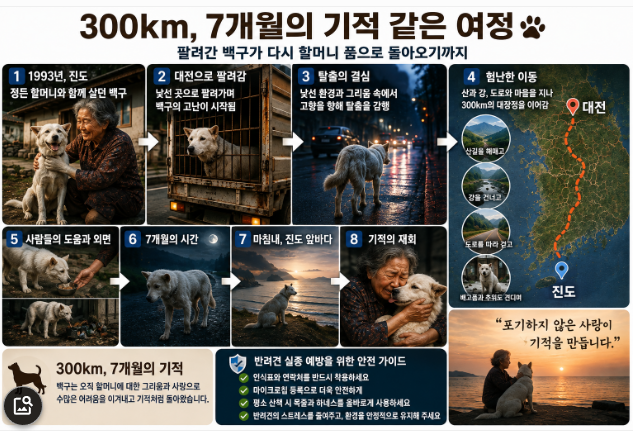
1993년, 대한민국을 눈물바다로 만들었던 돌아온 백구 실화를 기억하시나요? 전라남도 진도에서 대전으로 팔려 갔던 백구가 무려 300km가 넘는 거리를 7개월 동안 헤매다 본래 주인이던 할머니의 품으로 돌아온 이 사건은, 당시 큰 화제가 되며 동화와 광고로도 제작되었습니다.
돌아온 백구 실화, 단순한 전설이나 지어낸 이야기가 아닌, 명백한 진도개 실화인 이 사건은 우리에게 반려견의 깊은 사랑과 놀라운 능력을 다시금 깨닫게 합니다. 백구는 도대체 어떻게 그 먼 길을 기억하고 주인을 찾아온 강아지가 될 수 있었을까요? 감동적인 스토리 이면에 숨겨진 진돗개의 특성과, 우리가 사랑하는 반려견을 잃어버리지 않기 위해 꼭 알아야 할 예방 수칙을 정리해 드립니다.
백구의 기적 같은 300km 여정과 할머니와의 눈물겨운 재회 장면은 글로 다 담아내기 어려울 만큼 깊은 감동을 줍니다. 이미 40만 명이 넘는 분들이 시청하고 눈물 흘린 백구의 생생한 실화를 아래 영상에서 먼저 확인해 보세요.
1. 돌아온 백구 이야기는 무엇인가?
1988년 전남 진도군에서 태어난 백구는 박복단 할머니의 따뜻한 보살핌을 받으며 자랐습니다. 하지만 돌아온 백구 실화, 1993년 3월, 어려운 형편 때문에 백구는 대전의 한 애견가에게 팔려가게 됩니다. 새로운 환경에 적응하지 못하던 백구는 결국 목줄을 끊고 탈출했고, 그로부터 7개월 뒤인 1993년 10월, 뼈가 앙상하게 드러난 모습으로 진도의 할머니 집 마당에 나타났습니다.
약 300km에 달하는 낯선 길을, 그것도 바다로 둘러싸인 섬까지 스스로 찾아온 이 사건은 수많은 사람들에게 충격과 감동을 주었습니다. 백구가 2000년 12살의 나이로 무지개다리를 건널 때까지, 이 특별한 주인을 찾아온 강아지 이야기는 진돗개 충성심의 대명사로 역사에 남게 되었습니다.
2. 백구의 기적, 과학적으로 가능할까?
돌아온 백구가 오랫동안 사람들에게 기억되는 이유는 기적 같은 스토리 때문이기도 하지만, 개라는 동물이 가진 놀라운 능력에 대한 경이로움 때문이기도 합니다.
돌아온 백구 실화, 진돗개가 충성심이 강하다고 알려진 이유
진돗개는 평생 한 명의 보호자, 혹은 하나의 가족만을 섬기는 성향이 강한 것으로 잘 알려져 있습니다. 이는 진돗개가 지닌 강한 경계심과 독립성 때문이기도 합니다. 낯선 사람에게는 쉽게 곁을 내어주지 않지만, 자신이 신뢰하고 애착을 형성한 보호자에게는 맹목적인 충성심과 깊은 애정을 보입니다.
진돗개의 귀소본능은 실제로 가능한가?
진돗개 귀소본능은 수많은 사례를 통해 입증되어 왔습니다. 개들은 인간보다 수천 배 이상 발달한 후각과 뛰어난 청각을 지니고 있습니다. 일부 동물학자들은 개가 지구의 자기장을 감지하는 능력이 있어 방향을 잡을 수 있다는 가설을 제기하기도 합니다. 백구 역시 뛰어난 본능과 감각, 그리고 무엇보다 ‘할머니에게 돌아가겠다’는 강렬한 애착과 기억이 시너지를 내어 기적을 만든 것으로 전문가들은 분석합니다.
돌아온 백구 실화, 강아지는 주인과 가족을 어떻게 기억하는가?
반려견은 보호자를 주로 ‘냄새’와 ‘목소리’로 기억합니다. 개의 뇌 구조상 후각과 관련된 영역은 감정과 기억을 담당하는 편도체와 직접적으로 연결되어 있습니다. 보호자와 함께했던 공간의 냄새, 칭찬해주던 목소리의 톤은 반려견의 뇌리에 깊게 각인되어 수년이 지나도 잊히지 않습니다.
3. 기적을 바라기 전, 우리가 해야 할 일
백구의 이야기는 감동적이지만, 모든 반려견 실종 사건이 해피엔딩으로 끝나는 것은 아닙니다. 실제로 매년 수만 마리의 반려견이 길을 잃고 유기동물 보호소로 향합니다.
반려견이 길을 잃는 주요 상황
산책 중 돌발 상황: 큰 소리(오토바이, 천둥, 폭죽)에 놀라 목줄을 끊거나 하네스가 풀려 도망치는 경우.
열린 문 틈: 현관문이나 창문이 열린 틈을 타 호기심에 밖으로 나가는 경우.
발정기: 중성화를 하지 않은 강아지가 본능에 이끌려 집을 나서는 경우.
산책할 때 꼭 확인해야 할 안전수칙
동물등록(마이크로칩) 필수: 내장형 마이크로칩은 반려견을 잃어버렸을 때 가장 빠르고 확실하게 주인을 찾아주는 수단입니다.
외출 전 장비 점검: 하네스가 헐겁지 않은지, 리드줄 고리에 이상이 없는지 확인하세요.
시야 확보: 산책 중에는 항상 반려견을 시야 안에 두고 집중해야 합니다.
4. 반려견을 잃어버리지 않기 위해 준비하면 좋은 것들
돌아온 백구 실화 우리 강아지가 먼 길을 홀로 헤매게 두어서는 안 됩니다. 반려견 실종 예방은 작은 준비에서 시작됩니다. 실종 방지를 위해 실제 보호자분들이 필수적으로 구비해야 할 아이템들을 소개합니다.
마이크로칩과 별개로, 길을 잃은 강아지를 발견한 사람이 직관적으로 보호자의 연락처를 확인할 수 있도록 돕는 가장 일차적인 안전장치입니다. 하네스나 목걸이에 항상 부착해 두는 것이 좋습니다.
② 튼튼한 하네스와 안전한 리드줄
산책 중 강아지가 뒤로 물러서며 쏙 빠져버리는 사고를 막기 위해서는 체형에 맞고 벗겨짐을 방지하는 H형/Y형 하네스가 필요합니다. 또한 끊어질 염려가 없는 내구성 강한 리드줄을 사용해야 합니다.
③ 야간 산책용 LED 용품
어두운 저녁 산책 시 강아지가 시야에서 사라지는 것을 막아주고, 자동차나 자전거로부터 반려견을 보호해 줍니다.
④ 위치 확인용 반려견 추적 장치 (스마트 태그/GPS)
최근 보호자들 사이에서 필수품으로 자리 잡은 스마트 태그입니다. 강아지가 시야에서 사라졌을 때 스마트폰으로 실시간 위치나 마지막 신호 발생 위치를 파악할 수 있어 골든타임을 확보하는 데 큰 도움이 됩니다.
⑤ 산책용 휴대 물병 및 안전 이동가방
장거리 산책 시 탈진을 막아주는 물병과, 대중교통 이용이나 사람이 많은 곳에서 안전하게 강아지를 보호할 수 있는 이동가방도 돌발적인 실종을 막아주는 중요한 도구입니다.
5. 결론: 돌아오는 기적을 기다리기보다, 잃어버리지 않는 것이 먼저입니다
돌아온 백구 실화는 30여 년이 지난 지금까지도 우리에게 진한 감동을 선사합니다. 하지만 반려견이 길을 잃고 굶주림과 두려움 속에서 떠돌아야 했던 그 7개월의 시간은 분명 백구에게 너무나 가혹한 시련이었습니다.
우리 반려견이 기적처럼 돌아오기를 기도하는 상황은 애초에 만들지 않는 것이 최선입니다. 철저한 안전 장비 점검, 동물등록, 그리고 산책 시 주의를 기울이는 작은 습관이 여러분의 소중한 반려견을 지킬 수 있습니다.
감동적인 백구의 여정과 그 속에 담긴 따뜻한 털복숭이들의 이야기가 더 궁금하시다면, 40만 명이 시청한 백구 이야기 영상을 꼭 시청해 보세요! 채널을 방문하시면 더 다양하고 감동적인 반려견 스토리를 만나보실 수 있습니다.
💡 자주 묻는 질문 (FAQ)
Q1. 돌아온 백구 이야기는 실화인가요? 네, 1993년 전라남도 진도에서 실제로 일어난 사건입니다. 대전으로 팔려간 백구가 약 300km를 되돌아 진도의 할머니에게 7개월 만에 돌아온 100% 실화입니다.
Q2. 진돗개는 정말 주인을 잘 기억하나요? 진돗개는 첫 정을 준 보호자를 평생 기억하고 따르는 일편단심의 성향이 매우 강한 견종입니다. 뛰어난 후각과 기억력으로 보호자를 정확히 인지합니다.
Q3. 진돗개의 귀소본능은 특별한가요? 모든 개에게는 귀소본능이 있지만, 특히 진돗개는 귀소본능이 유독 강한 것으로 알려져 있습니다. 과거부터 수많은 진돗개가 수십~수백 킬로미터를 돌아온 사례가 기록되어 있습니다.
Q4. 강아지를 잃어버렸을 때 가장 먼저 무엇을 해야 하나요? 즉시 잃어버린 장소 주변을 탐색하며 강아지의 이름을 부르고, 동물보호관리시스템(APMS)에 실종 신고를 해야 합니다. 지역 당근마켓, SNS, 전단지 등을 활용해 빠르게 주변에 알리는 것이 중요합니다.
Q5. 반려견 실종 예방에 어떤 준비가 필요한가요? 내장형 마이크로칩 삽입(동물등록), 연락처가 적힌 인식표 착용, 체형에 맞는 튼튼한 하네스 및 리드줄 사용, 스마트 위치 추적기 장착 등이 필수적입니다.