The Science of Dopamine and Human Motivation
Dopamine is one of the most critical neurotransmitters in the human central nervous system, acting as the primary chemical messenger for motivation, anticipation, and the brain’s internal reward system. For many years, a common misconception labeled dopamine as the “pleasure chemical” that is released only when an individual experiences a rewarding event. However, modern neuroscience has fundamentally rewritten this model, proving that dopamine is actually the molecule of anticipation. It spikes during the pursuit of a goal, driving the focused behavior, alertness, and physical energy required to achieve a desired outcome.
The biological engine behind this process is the mesolimbic dopamine pathway, often referred to as the reward circuit. This pathway connects the ventral tegmental area (VTA) in the midbrain directly to the nucleus accumbens, a key center for emotional and behavioral processing. When the brain encounters a rewarding stimulus—or anticipates an exciting event—the VTA floods the nucleus accumbens with dopamine. This immediate chemical release sharpens focus, boosts spatial awareness, and primes the motor cortex for physical movement, generating an intense feeling of drive and vital momentum.
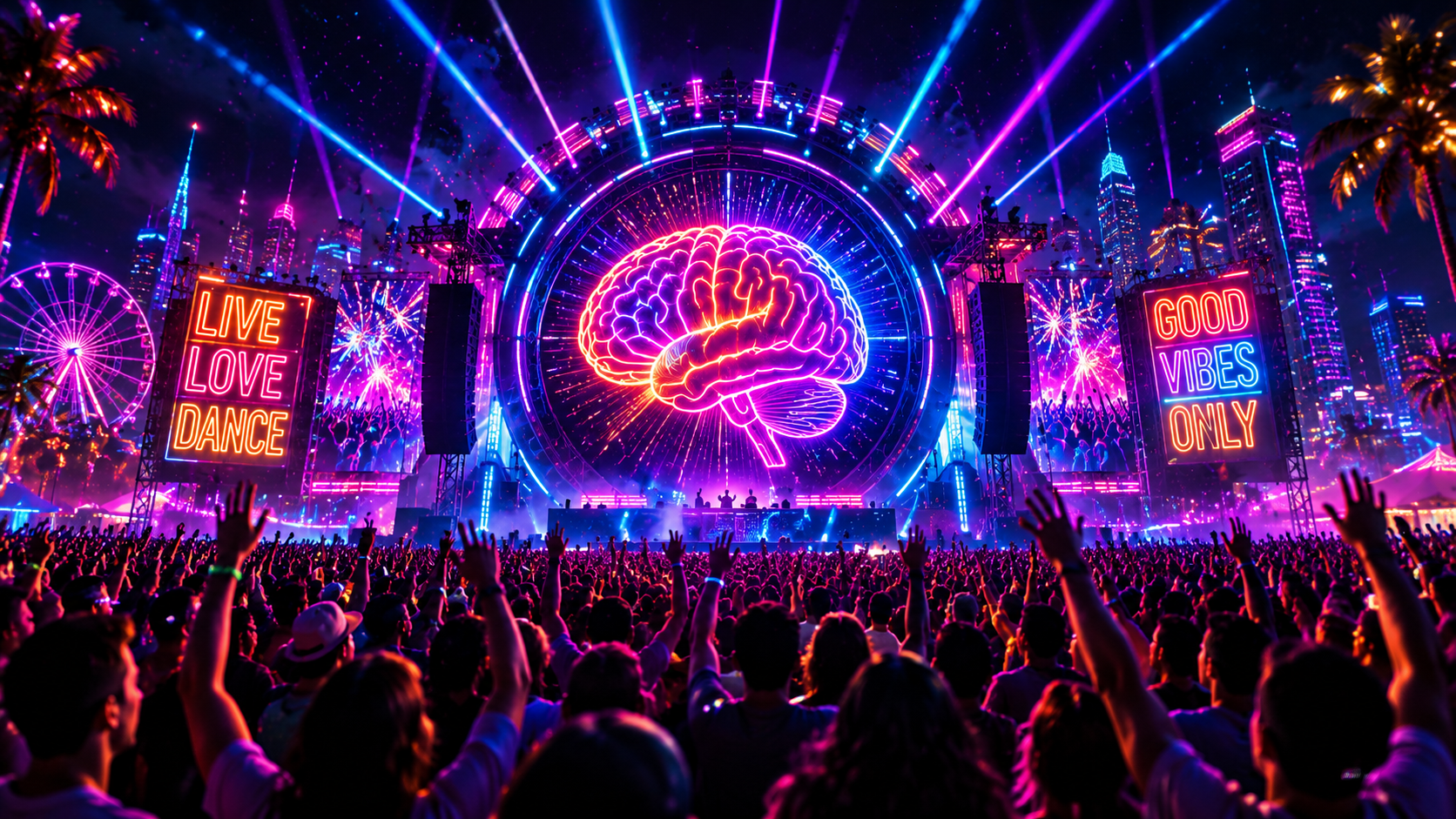
In our modern digital society, our internal reward systems are routinely exposed to fragmented, artificial triggers. However, large-scale experiential environments, such as live concerts and music festivals, offer a completely different level of neurochemical engagement. By presenting the brain with complex, changing sensory patterns, these high-energy environments stimulate the reward circuit in a profound, holistic way. Understanding how the brain translates coordinated sensory assets into dopamine spikes allows neuroscientists, audio-visual creators, and experiential designers to deliberately construct media systems that optimize motivation, alleviate mental fatigue, and maximize long-term emotional well-being.
How Neon Lighting Influences the Human Brain
Visual inputs exert an immediate, deep influence on human neurobiology and emotional perception. Human eyes contain specialized sensory cells called intrinsically photosensitive retinal ganglion cells (ipRGCs), which project directly to the suprachiasmatic nucleus—the brain’s master biological clock—and the amygdala, the primary center for emotional processing. Unlike the standard rods and cones used for basic vision, these cells are uniquely tuned to monitor changes in environmental light wavelengths and light intensity, altering our internal chemistry on a subconscious level.
Vibrant neon lighting environments utilize intense, highly saturated monochromatic wavelengths that stimulate these neural pathways in specific ways. High-intensity neon blue and deep violet lights carry short, energetic wavelengths that strongly suppress the brain’s production of melatonin, the hormone responsible for sleep. This suppression instantly activates the reticular activating system, boosting cortisol levels, increasing physical alertness, and sharpening processing speeds. When the brain is exposed to these rich, electric hues, it enters a state of heightened sensory readiness, magnifying the perceived importance of surrounding events.
Concurrently, color psychology operates deeply within these luminous environments. Bright neon pinks, deep purples, and rich amber backdrops activate the brain’s novelty-detection networks. Because these electric colors rarely occur in standard natural landscapes, the visual cortex flags them as highly unusual, meaningful, and exciting assets. This neural framing opens up the reward circuit, making the surrounding environment feel intensely vibrant, creative, and memorable, while lowering the cognitive barriers associated with daily anxiety and mental fatigue.
The Psychological Power of Festival Atmospheres
Music festivals, high-energy concerts, and modern nightlife environments are systematically engineered to construct an oasis of intense psychological escape. These celebratory environments remove individuals from the rigid, predictable boundaries of everyday life, presenting them with a massive, multi-sensory landscape designed to maximize human joy. The overarching psychology of these spaces relies on breaking down normal social barriers, allowing participants to enter a shared state of pure, uninhibited presence.
A primary driver of this emotional transformation is the psychological phenomenon known as collective effervescence. Moving, celebrating, and experiencing intense sensory inputs alongside thousands of peers triggers a massive wave of oxytocin—the hormone responsible for interpersonal trust, empathy, and social bonding. This shared synchronization lowers social anxiety, minimizes feelings of urban isolation, and helps individuals build a supportive, temporary social safety net. The collective energy of the crowd amplifies the emotional weight of the event, transforming a standard musical performance into a profound, unifying life milestone.
Furthermore, festivals operate as immersive spaces of sensory novelty. The scale of the stage setups, the power of the live sound systems, and the dynamic movement of automated laser arrays overwhelm our analytical filters. This intentional sensory overload temporarily deactivates the default mode network—the neural network responsible for looping anxious thoughts, self-criticism, and future projections. By quietening this analytical inner voice, festival environments anchor your awareness entirely in the present moment, delivering deep psychological relief and emotional restoration.
Rhythm, Music, and Dopamine Release
The relationship between rhythmic sound design and human neurochemistry is deeply rooted in our evolutionary biology. The human brain is an intensely predictive organ, constantly analyzing the surrounding environment to anticipate future events. When we listen to upbeat festival music, characterized by clear syncopated percussion and repetitive electronic tempos, our brain’s internal timing networks are forced into a highly engaging game of pattern prediction.
This cognitive game operates via a precise neurochemical mechanism called syncopation and structural resolution. As a musical track builds tension—utilizing rising melodic progressions, sweeping filters, and accelerating drum patterns—the prefrontal cortex eagerly anticipates the return of the steady downbeat. During this tension-building phase, dopamine production climbs steadily within the reward circuit, generating an intense state of physical and emotional anticipation. When the track finally resolves and drops the primary bassline, the brain experiences a rewarding release of dopamine, triggering a powerful wave of physical euphoria.
Furthermore, fast-tempo music (typically ranging from 120 to 140 beats per minute) activates a biological process known as auditory neural entrainment. The electrical networks of the motor cortex automatically adjust their firing rates to synchronize with the external musical pulse. This rhythmic entrainment makes physical movement feel completely effortless and deeply satisfying, encouraging listeners to dance, jump, and sing along. By transforming abstract sound waves into direct physical energy, rhythmic music acts as an exceptional engine for generating dopamine and boosting physical vitality.
Multisensory Experiences and Emotional Engagement
While high-fidelity audio and vibrant lighting are powerful on their own, combining them into a synchronized audio-visual ecosystem amplifies their individual impact exponentially. Multi-sensory integration occurs when the brain processes matching inputs from the eyes and ears simultaneously, a cross-modal blending that occurs within the superior colliculus and the association cortices.
When an intense percussive downbeat is perfectly synchronized with a sudden flash of bright neon light or a sharp laser sweep, the brain experiences an intense spike in neural activation. This audio-visual harmony makes the sensory asset feel incredibly unified, impactful, and clear. The brain records this synchronized moment as a highly significant event, releasing an extra wave of dopamine that etches the memory deep into long-term storage networks, ensuring the experience sticks over time.
This multi-sensory alignment also triggers the immediate release of endorphins—the body’s natural pain-relieving chemicals—and elevates baseline serotonin levels, which stabilizes mood and reduces stress. By fully capturing human attention across multiple sensory fields simultaneously, synchronized environments leave no room for digital distraction or mental fatigue. This total immersive engagement fosters deep emotional connection, helping participants feel a profound sense of vitality, freedom, and inner alignment.
The Benefits of Upbeat Festival Music
Integrating the high-energy sounds of upbeat festival music into your daily life can be a highly effective way to manage stress, fight cognitive fatigue, and boost overall productivity. While slow ambient music is fantastic for quiet evening wind-down hours, fast-paced syncopated rhythms serve as an exceptional tool for generating immediate physical energy and sharpening mental focus during active daytime tasks.
Listening to high-tempo instrumental tracks during intense work blocks provides a powerful cognitive shield against environmental distractions. The steady, predictable percussive drive masks sudden chaotic background noises, such as traffic or office chatter, allowing your mind to enter a state of deep, uninterrupted creative flow. This consistent auditory backdrop keeps your prefrontal cortex alert, helping remote professionals and digital creators maintain high productivity levels for hours without experiencing mental exhaustion.
Additionally, using upbeat festival music as an accompaniment for aerobic exercise or daily household chores transforms routine work into an engaging, low-stress game. The rhythmic music lowers your perceived level of physical exertion, masking muscle fatigue and joint discomfort by flooding the brain with endorphins and dopamine. This biochemical shift turns necessary physical tasks into positive, refreshing habits, helping individuals lower their daily anxiety and maintain a healthy, active lifestyle.
AI-Generated Festival Experiences
The entertainment landscape is entering an exciting era of transformation, driven by the rapid growth of advanced generative artificial intelligence and automated media production tools. Modern content creators, music producers, and experiential designers can now use sophisticated AI models to construct highly immersive, customized audio-visual experiences that bring the energy of a live global festival straight into a residential home.
Advanced AI music generation platforms can instantly render complex, multi-layered electronic music tracks, allowing creators to specify precise tempos, instrument choices, and emotional changes through simple text prompts. When these energetic audio assets are paired with loopable AI video art—such as abstract geometric visuals, flashing digital fractals, and automated light shows—they construct a powerful, dopamine-friendly environment that fully captures human attention, making them excellent tools for deep work and rapid stress recovery.
To use these automated production systems effectively, digital creators must guide their AI generators using explicit, science-backed cinematic language. Prompts should specify strict framing rules (like the Rule of Thirds), dynamic camera physics (like smooth horizontal sweeps), and highly controlled color palettes (such as electric neon purples and rich amber lights). Merging modern AI efficiency with timeless visual psychology allows independent publishers to produce premium mindfulness and motivation assets that stand out across digital platforms.
Future Trends in Immersive Entertainment
The future of global entertainment will be shaped by the convergence of real-time generative audio systems and biometric monitoring devices. Within the coming years, immersive digital art will move away from static, pre-recorded media files and evolve into highly adaptive, intelligent environments that respond instantly to the listener’s immediate physiological needs.
Tomorrow’s advanced entertainment systems will connect seamlessly with consumer smartwatches and bio-sensors to monitor real-time health data, such as heart rate variability (HRV), skin conductance, and brainwave activity. If an AI entertainment engine detects an oncoming spike in stress or fatigue during a intense work block, it will automatically modify the audio-visual track—adjusting the lighting hues to soothing deep purples, softening the drum patterns, and embedding custom alpha-wave entrainment tones to pull your body back to a calm state.
Furthermore, the integration of 3D spatial audio and interactive virtual reality will allow homebound individuals to experience the joy of a massive global music festival or a cutting-edge nightclub right from their living rooms. By automating and personalizing sensory therapy, we can make advanced stress-management tools and high-energy motivation experiences accessible to everyone, helping modern societies maintain mental clarity and emotional well-being in an increasingly complex digital world.
Sensory Stimulation Comparison Matrix
The table below provides a scannable comparison of the distinct sensory stimuli found within modern festival environments, detailing their primary neurobiological mechanisms, emotional impacts, and ideal applications:
| Sensory Stimulus |
Neurobiological Mechanism |
Primary Emotional Effect |
Best Experience Application |
| Saturated Neon Light |
Suppression of melatonin, activation of retinal ipRGC pathways |
Immediate physical alertness, high focus, curiosity |
Nightlife design, visual branding, creative workspaces |
| Syncopated Audio Drops |
Mesolimbic reward circuit activation, predictive tracking |
Intense physical anticipation, thrill, motivation |
Live festival stages, high-intensity workouts |
| Rhythmic Entrainment |
Motor cortex synchronization with external audio pulse |
Effortless movement, high physical endurance, joy |
Aerobic dancing, group fitness, household chores |
| Synchronized Multi-Flash |
Cross-modal superior colliculus brain activation |
Euphoria, total presence, deep memory encoding |
Climax moments in video art, concert finales |
Frequently Asked Questions
1. How does neon lighting actively increase human focus and mental alertness?
Bright neon blue and violet lights carry short, highly energetic wavelengths that directly suppress the brain’s production of melatonin, the hormone responsible for sleepiness. This suppression activates your reticular activating system, which naturally raises cortisol levels, sharpens focus, and increases cognitive processing speeds.
2. Is dopamine released only after a satisfying musical drop occurs?
No, dopamine is primarily the molecule of anticipation. While a substantial wave of dopamine is released during the satisfying resolution of a musical drop, studies show that dopamine production climbs steadily during the tension-building phase, driving the intense physical excitement and focus felt before the beat returns.
3. Why do large music festivals feel so emotionally therapeutic for many individuals?
Festivals operate as powerful spaces of sensory novelty that temporarily deactivate the brain’s default mode network—the system responsible for self-criticism, future anxieties, and looping negative thoughts. Additionally, moving alongside thousands of peers triggers a massive release of oxytocin, which lowers social anxiety and reduces feelings of isolation.
4. Can listening to fast festival music help improve work productivity?
Yes, provided the music is non-lyrical. Fast, steady electronic rhythms block out sudden, unpredictable environmental background noises like office chatter or traffic. This consistent acoustic background keeps your prefrontal cortex alert, helping you maintain stable states of deep creative flow for hours.
5. What is auditory neural entrainment, and how does it change physical movement?
Auditory neural entrainment occurs when the brain’s internal electrical networks automatically adjust their firing rates to coordinate with a steady external rhythm. This synchronization primes the motor cortex, making physical movements like dancing, running, or working feel completely natural and deeply satisfying.
6. Why do synchronized lights and music feel much more impactful than audio alone?
When visual and auditory inputs occur in perfect synchronization, the brain processes them simultaneously within the superior colliculus using cross-modal integration. This multi-sensory blending makes the asset feel incredibly unified and clear, triggering an intense spike in neural activation and dopamine release.
7. Can everyday creators build dopamine-friendly audio-visual content at home?
Yes. Digital creators can easily achieve this by designing highly unified media assets. Always plan your video edits so that major visual cuts, laser transitions, and color flashes align perfectly with the rhythmic accents and bass drops of your background audio track, avoiding sensory confusion.
8. Do different neon colors trigger different neurochemical reactions in the brain?
Yes. Saturated neon blues and purples enhance focus and physical alertness by suppressing sleep hormones. Bright neon pinks, oranges, and warm ambers activate the brain’s novelty-detection networks by standing out from standard natural environments, which triggers curiosity, warmth, and high commercial energy.
9. How does physical dancing benefit long-term neurological health?
Dancing forces the brain to perform rapid, split-second calculations regarding spatial orientation, balance, and motor coordination while tracking an external beat. This continuous physical training thickens gray matter volumes inside the cerebellum, which significantly protects against cognitive decline and improves balance.
10. Can AI-generated music carry the same therapeutic value as live instruments?
AI tools can instantly generate high-quality percussive loops, precise tempos, and custom audio backdrops that efficiently drive neural entrainment and dopamine production. However, to maintain true emotional depth and creative focus, these automated tools work best when guided by human engineering and clear visual design rules.
Final Summary
Optimizing your internal chemistry is not about seeking constant, superficial stimulation; it is about building an intentional approach to how you treat your mind, eyes, and ears. By mastering the core principles of multi-sensory synchronization and integrating the vibrant energy of neon lighting and upbeat festival rhythms into your active hours, you build a powerful cognitive engine that boosts motivation and lowers stress. These accessible, high-energy practices provide an exceptional, science-backed framework for managing cognitive fatigue and reclaiming your physical vitality.
Do not let your daily environments become sterile, uninspiring, or filled with chaotic digital noise. Take charge of your sensory wellness today by introducing structured, energetic audio-visual blocks into your active workspaces. Start exploring the power of non-lyrical percussive tracks, use electric colored lighting to shift your morning mood, and construct an intentional, high-retention lifestyle hub that secures your mental clarity, physical agility, and long-term emotional well-being.
Related Videos
Sources & Further Reading