Tag: Blood Pressure

  • CDC Heart Health: Everyday Habits That Lower Your Risk of Heart Disease

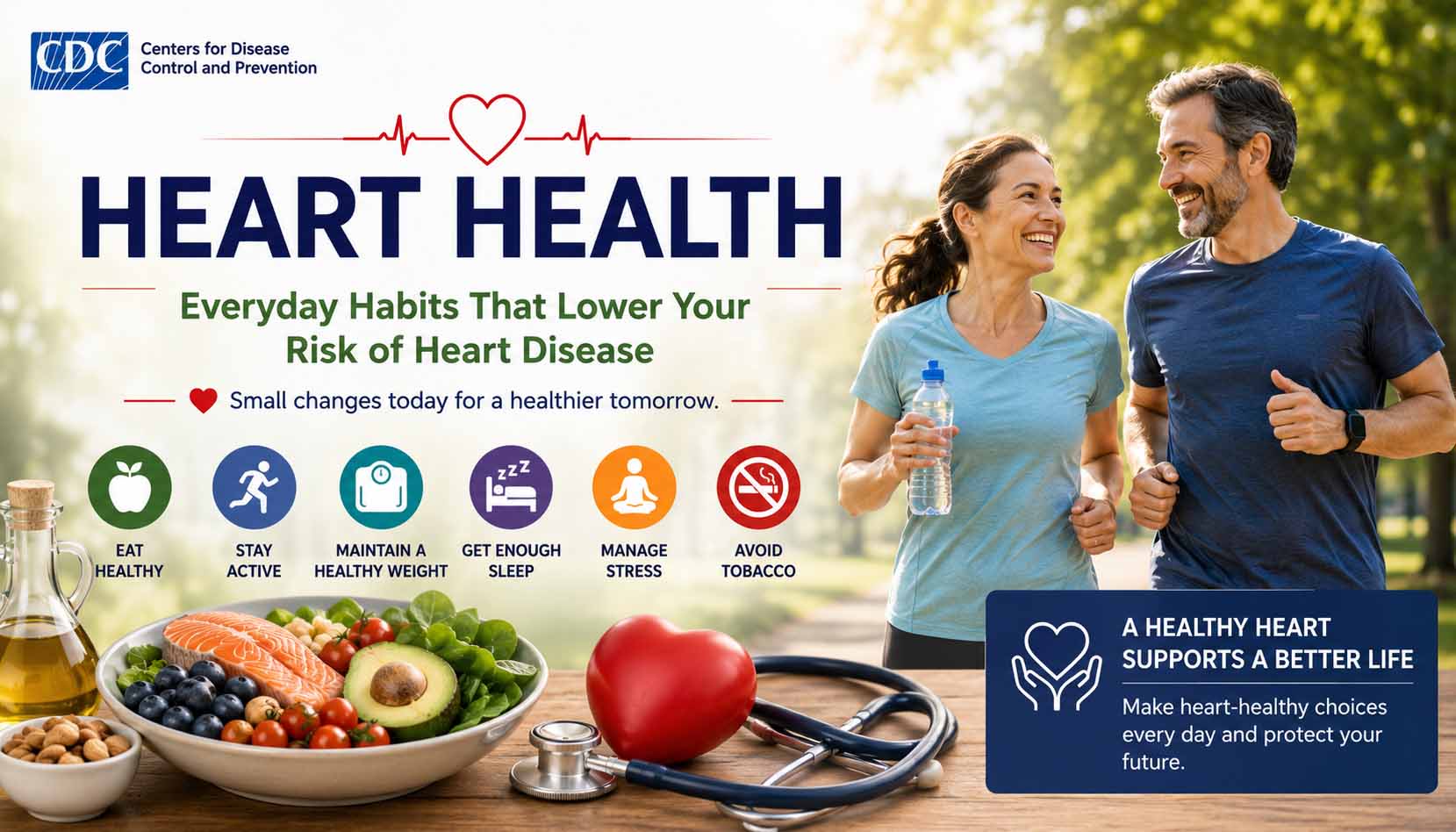
    CDC Heart Health: Everyday Habits That Lower Your Risk of Heart Disease

    Meta Description: Discover expert-backed heart health tips based on CDC and AHA guidelines. Learn everyday habits for heart disease prevention, managing blood pressure, and lowering cholesterol.

    The human heart is an engineering marvel. Beating approximately 100,000 times a day, this vital muscle pumps roughly 2,000 gallons of blood through a vast, 60,000-mile network of blood vessels. It delivers life-sustaining oxygen and essential nutrients to every cell in your body. Yet, despite its resilience, the heart is deeply vulnerable to the cumulative effects of our daily choices.

    According to the U.S. Centers for Disease Control and Prevention (CDC) and the American Heart Association (AHA), cardiovascular disease remains the leading cause of death globally. In the United States alone, one person dies every 33 seconds from cardiovascular disease. These global health statistics are sobering, but they come with a powerful and empowering caveat: up to 80% of premature heart disease and strokes are entirely preventable.

    The key to preventive health lies in understanding your risks and making conscious, sustainable lifestyle changes. You do not need to overhaul your entire life overnight. Instead, building a healthy heart is about consistency. In this comprehensive guide, we will explore the core tenets of CDC heart health, break down the major risk factors, and provide actionable, everyday habits to help you lower your risk and embrace a vibrant, healthy lifestyle.

    Why Heart Health Matters

    When we talk about heart health, we are not just talking about extending your lifespan; we are talking about preserving your “healthspan”—the number of years you live free from debilitating disease and physical limitations.

    Your cardiovascular system is the central highway of your body. When your heart functions optimally, you have the energy to play with your children, the stamina to travel, and the physical capacity to maintain your independence as you age. Conversely, when cardiovascular health declines, it creates a domino effect. Poor blood circulation impairs cognitive function, damages the kidneys, reduces mobility, and significantly lowers your overall quality of life.

    Heart disease is often a silent progression. Conditions like high blood pressure and elevated cholesterol rarely show visible symptoms until they cause a catastrophic event, such as a heart attack or stroke. By prioritizing heart disease prevention today, you are investing in a future where you remain active, independent, and resilient.

    Major Risk Factors

    To protect your heart, you must first understand what threatens it. The CDC and AHA categorize cardiovascular risks into two groups: non-modifiable risks (like age, gender, and family genetics) and modifiable risks (lifestyle and environmental factors you can change). Focusing on the modifiable risk factors is the cornerstone of preventive health.

    High Blood Pressure (Hypertension)

    Often referred to as the “silent killer,” high blood pressure forces your heart to work overtime to pump blood through your body. Over time, this excessive force damages the delicate inner lining of your arteries, making them stiff and narrow. This condition, known as atherosclerosis, drastically increases the risk of a heart attack or stroke.

    High Cholesterol

    Cholesterol is a waxy substance your body needs to build cells, but too much of the wrong kind is dangerous. Low-density lipoprotein (LDL), or “bad” cholesterol, can build up as hard plaques in your artery walls. High-density lipoprotein (HDL), or “good” cholesterol, helps carry LDL away from the arteries. When LDL levels are high and HDL levels are low, the risk of arterial blockages skyrockets.

    Smoking

    Tobacco use is catastrophic for cardiovascular health. The chemicals in cigarette smoke damage blood vessels, lower your good cholesterol, and make your blood more likely to clot. Smoking also reduces the amount of oxygen your blood can carry, forcing your heart to beat faster and work harder.

    Diabetes

    People with diabetes are twice as likely to have heart disease or a stroke than those without it. Chronically high blood sugar levels damage blood vessels and the nerves that control your heart. Diabetes is also closely linked with other risk factors, including obesity and high blood pressure.

    Obesity

    Carrying excess body weight, particularly visceral fat around the abdomen, puts immense mechanical strain on the heart. Obesity is a driving force behind insulin resistance, systemic inflammation, high blood pressure, and abnormal cholesterol levels.

    Physical Inactivity

    The heart is a muscle, and like any muscle, it requires regular exercise to stay strong and efficient. A sedentary lifestyle weakens the heart, reduces blood flow, and contributes to weight gain and metabolic dysfunction.

    Unhealthy Diet

    Diets high in sodium, saturated fats, trans fats, and added sugars are the primary culprits behind poor cardiovascular health. High sodium intake directly spikes blood pressure, while unhealthy fats drive up LDL cholesterol levels.

    Chronic Stress

    While short-term stress is a normal biological response, chronic stress keeps your body flooded with cortisol and adrenaline. This constant state of “fight or flight” elevates your heart rate, spikes your blood pressure, and often leads to unhealthy coping mechanisms like overeating, smoking, or excessive alcohol consumption.

    Everyday Habits That Protect Your Heart

    Transforming your cardiovascular health does not require extreme diets or exhausting marathon training. According to CDC heart health guidelines, adopting simple, consistent daily habits is the most effective way to lower your risk of heart disease.

    Eat a Heart-Healthy Diet

    Healthy nutrition is your first line of defense. The AHA recommends dietary patterns like the Mediterranean Diet or the DASH (Dietary Approaches to Stop Hypertension) Diet.

    • Focus on Whole Foods: Fill half your plate with colorful fruits and vegetables. They are rich in fiber, potassium, and antioxidants that protect blood vessels.
    • Choose Lean Proteins: Opt for poultry, beans, legumes, and fish. Fatty fish like salmon and mackerel are high in Omega-3 fatty acids, which lower triglycerides and reduce inflammation.
    • Embrace Whole Grains: Swap refined white carbohydrates for oats, brown rice, quinoa, and 100% whole wheat to manage blood sugar and lower cholesterol.
    • Watch the Sodium: The CDC recommends consuming less than 2,300 milligrams of sodium per day (ideally closer to 1,500 mg for most adults). Read nutrition labels carefully, as up to 70% of sodium in the American diet comes from packaged and restaurant foods.

    Exercise Regularly

    Regular physical activity trains your heart to pump more blood with less effort. The AHA recommends at least 150 minutes of moderate-intensity aerobic exercise (such as brisk walking, swimming, or cycling) or 75 minutes of vigorous-intensity aerobic exercise (like running) every week. Additionally, incorporate muscle-strengthening activities at least two days a week. Resistance training improves your body’s ability to use insulin and regulates blood sugar, taking the pressure off your cardiovascular system.

    Maintain a Healthy Weight

    Losing just 5% to 10% of your body weight can result in significant improvements in blood pressure, blood cholesterol, and blood sugar. Instead of focusing on restrictive fad diets, focus on sustainable calorie control, portion management, and consistent physical activity.

    Get Enough Sleep

    Sleep is no longer considered a luxury; it is a biological necessity for a healthy heart. The AHA recently added sleep to its “Life’s Essential 8” checklist for cardiovascular health. Adults should aim for 7 to 9 hours of uninterrupted sleep per night. During deep sleep, your heart rate slows, and your blood pressure drops, giving your cardiovascular system a much-needed period of recovery and repair.

    Manage Stress

    You cannot eliminate stress from modern life, but you can change how your body responds to it. Incorporate stress-management techniques into your daily routine. Mindfulness meditation, deep breathing exercises, yoga, and spending time in nature are proven ways to lower cortisol levels, reduce resting heart rate, and stabilize blood pressure.

    Avoid Tobacco

    If you smoke, quitting is the single best thing you can do for your heart. The benefits are almost immediate. Within 20 minutes of quitting, your heart rate and blood pressure drop. Within a year, your risk of coronary heart disease is cut in half compared to a smoker’s. Avoid secondhand smoke as well, as it carries similar cardiovascular risks.

    Limit Alcohol

    Excessive alcohol consumption can raise blood pressure, increase triglycerides, and add empty calories that lead to weight gain. If you choose to drink, do so in moderation. The CDC defines moderation as up to one drink per day for women and up to two drinks per day for men.

    Stay Hydrated

    Proper hydration makes the heart’s job easier. When you are dehydrated, your blood volume decreases, causing your blood to become thicker. This forces your heart to pump harder to push blood through your vessels. Make water your primary beverage, aiming for a pale yellow urine color as an indicator of good hydration.

    Warning Signs You Should Never Ignore

    Even with the best preventive health measures, emergencies can happen. Knowing the warning signs of a heart attack can be the difference between life and death. The CDC urges everyone to recognize these symptoms and call emergency services (like 911 in the U.S.) immediately if they occur.

    • Chest Pain or Discomfort: Most heart attacks involve discomfort in the center or left side of the chest that lasts for more than a few minutes or goes away and comes back. It can feel like uncomfortable pressure, squeezing, fullness, or pain.
    • Shortness of Breath: This can occur with or without chest discomfort and often happens when you are resting or doing minimal physical activity.
    • Dizziness or Lightheadedness: Feeling faint, dizzy, or breaking out in a cold sweat are common warning signs.
    • Pain in the Arm, Jaw, or Back: Pain or discomfort can radiate to one or both arms, the back, neck, jaw, or stomach.
    • Unusual Fatigue: Profound, unexplained exhaustion, particularly in women, can be an early indicator of a heart attack, sometimes occurring days before the actual event.

    Note: Women may experience heart attacks differently than men. While chest pain is still the most common symptom, women are more likely to experience shortness of breath, nausea, vomiting, and back or jaw pain.

    Regular Health Screenings

    You cannot manage what you do not measure. Because the primary drivers of cardiovascular disease are “silent,” regular health screenings are the only way to truly know your risk. The AHA refers to this as “knowing your numbers.”

    Blood Pressure

    Blood pressure is measured using two numbers: systolic (the pressure when your heart beats) and diastolic (the pressure when your heart rests). A normal blood pressure reading is less than 120/80 mm Hg. Adults should have their blood pressure checked at least once a year, or more frequently if it is elevated.

    Cholesterol

    A fasting lipoprotein panel measures your total cholesterol, LDL (bad) cholesterol, HDL (good) cholesterol, and triglycerides. High LDL cholesterol forms dangerous plaques in your arteries. Healthy adults should have their cholesterol checked every 4 to 6 years starting at age 20, and more frequently after age 40 or if they have other risk factors.

    Blood Sugar

    High blood glucose levels indicate prediabetes or diabetes. A fasting blood sugar test or an A1C test (which measures your average blood sugar over the past 2 to 3 months) can identify insulin resistance early. The CDC recommends regular screening for diabetes starting at age 35, or earlier if you are overweight.

    Body Weight

    Checking your Body Mass Index (BMI) and measuring your waist circumference during annual checkups helps your doctor assess your risk for metabolic syndrome. A waist circumference of more than 40 inches for men and 35 inches for women indicates a higher risk of heart disease.

    Frequently Asked Questions

    1. What is a normal blood pressure reading? According to the CDC and AHA, a normal blood pressure reading is less than 120 systolic and less than 80 diastolic (120/80 mm Hg). Elevated blood pressure is a systolic reading between 120-129 and a diastolic reading less than 80. Hypertension (high blood pressure) begins at 130/80 mm Hg.

    2. Can I improve my heart health if I already have heart disease? Absolutely. Adopting a healthy lifestyle, participating in cardiac rehabilitation, taking prescribed medications, and working closely with your cardiologist can halt or even reverse the progression of cardiovascular disease and prevent future heart attacks.

    3. Are eggs bad for my cholesterol? For decades, dietary cholesterol was thought to heavily influence blood cholesterol. However, modern science shows that saturated fats and trans fats have a much greater impact on raising your blood cholesterol. For most healthy people, eating eggs in moderation is perfectly safe and can be part of a heart-healthy diet.

    4. How much exercise do I actually need to protect my heart? The American Heart Association recommends at least 150 minutes of moderate-intensity aerobic activity per week. You can break this down into 30 minutes a day, five days a week. Even light activities, such as brisk walking, gardening, or dancing, provide significant cardiovascular benefits.

    5. What is the best diet for a healthy heart? There is no single “magic” diet, but dietary patterns like the Mediterranean Diet and the DASH Diet are consistently ranked as the best for cardiovascular health. Both emphasize whole grains, fruits, vegetables, lean proteins, and healthy fats (like olive oil and nuts) while strictly limiting sodium, added sugars, and highly processed foods.

    Conclusion

    Heart disease may be the leading cause of death worldwide, but it does not have to be your destiny. The science of heart disease prevention is clear: your daily habits wield extraordinary power over your cardiovascular health.

    By actively monitoring your blood pressure and cholesterol, embracing a nutrient-dense diet, prioritizing daily movement, managing your stress, and getting adequate sleep, you build an internal environment where your heart can thrive. Remember, healthy aging and preventive health are lifelong journeys. You do not have to be perfect; you just need to be consistent. Start by making one small change today—whether it is taking a 15-minute walk after dinner, swapping a sugary soda for water, or scheduling that overdue doctor’s appointment. Your heart will thank you for years to come.

    Disclaimer: This article is intended for educational and informational purposes only and does not constitute medical advice, diagnosis, or treatment. Always consult with a qualified healthcare provider, cardiologist, or registered dietitian before making significant changes to your diet, exercise routine, or medical treatment plan.


    🌟 Add More Fun & Useful Information to Your Everyday Life

    🎵 Plus-1 (Shorts)
    https://www.youtube.com/@플러스-1/shorts

    🎼 DMC-6
    https://www.youtube.com/@DMC-6

    🚀 77-DMC
    https://www.youtube.com/@77-DMC

    🎧 PlusMusic KR
    https://www.youtube.com/@PlusMusic_KR

    🎵 TikTok
    https://www.tiktok.com/@leew2968292

  • New WHO Dementia Prevention Guidelines 2026: Can Nearly 45% of Dementia Cases Be Prevented?

    New WHO Dementia Prevention Guidelines 2026: Can Nearly 45% of Dementia Cases Be Prevented?

    Introduction

    Artificial intelligence has evolved from an experimental tech demo into an indispensable companion for daily productivity, creative work, and complex decision-making. As we navigate 2026, generative AI assistants are integrated into web browsers, mobile operating systems, office suites, and enterprise workflows. Millions of users rely on AI every single day to summarize complex documents, write production-grade code, draft strategic plans, and generate visual artwork.

    At the forefront of this AI revolution stand two undisputed titans: Google Gemini and OpenAI ChatGPT. Both platforms have invested billions of dollars into research, expanding context windows, introducing real-time voice and video multimodal capabilities, and integrating complex reasoning architectures.

    However, as both tools become increasingly sophisticated, choosing the right assistant for your specific workflow has become more challenging. Is Google’s deep integration with Search and Workspace superior, or does OpenAI’s specialized reasoning and developer ecosystem hold the crown? This comprehensive head-to-head comparison evaluates features, performance, pricing, and real-world usability to help you determine which AI assistant reigns supreme in 2026.

    What is Google Gemini?

    Google Gemini is Google’s flagship multimodal AI model, designed from the ground up to seamlessly process and combine different types of information, including text, code, audio, images, and video. Integrated deeply into Google’s vast consumer and enterprise ecosystem, Gemini powers search features, Google Workspace apps (Docs, Gmail, Drive, Slides), and Android mobile devices.

    Key Features and Strengths

    • Massive Context Window: Gemini leads the industry with native support for processing millions of tokens of context in a single prompt. This allows users to upload entire books, hours of video, or massive code repositories for instant analysis.
    • Native Ecosystem Integration: Gemini connects directly to Google Drive, Gmail, Docs, Maps, and YouTube, allowing the assistant to pull real-time personal data and web information without switching tabs.
    • Multimodal Native Architecture: Unlike models that stitch separate vision or speech modules onto a text core, Gemini was trained multimodally from inception, delivering smooth, real-time voice conversations and precise visual recognition.
    • Deep Web Grounding: Leveraging Google’s search index, Gemini offers reliable, up-to-the-minute web retrieval with direct source citations.

    Supported Platforms and Use Cases

    Gemini is available via a dedicated web web interface, native mobile applications on Android and iOS, and direct integration within Google Workspace for Business and Education. Typical use cases include research over massive document sets, automated email drafting, real-time trip planning with Google Maps, and enterprise data analysis.

    What is ChatGPT?

    ChatGPT, developed by OpenAI, is the revolutionary conversational AI assistant that sparked the generative AI boom. In 2026, ChatGPT operates on OpenAI’s state-of-the-art model lineup, combining flagship multimodal intelligence with specialized reasoning architectures that mimic step-by-step human problem-solving.

    Key Features and Strengths

    • Advanced Reasoning Engine: OpenAI’s reasoning series allows ChatGPT to execute deliberate, multi-step logical chains before responding, making it exceptionally strong in advanced mathematics, science, and complex logic puzzles.
    • The Canvas Interface: ChatGPT features an interactive workspace called Canvas, designed specifically for writing and coding projects. It enables side-by-side editing, inline feedback, and granular revisions without rewriting whole prompts.
    • Custom GPTs and Store: Users can build and deploy custom-tailored GPT assistants with specialized knowledge bases and custom actions, tapping into a massive public directory of community-built tools.
    • Advanced Voice Mode: Delivering near-zero latency, human-like cadence, emotional tone modulation, and real-time interruption capabilities, ChatGPT’s voice interface remains a benchmark for natural voice interaction.

    Supported Platforms and Use Cases

    ChatGPT is accessible via web browsers, native desktop apps for macOS and Windows, mobile apps for iOS and Android, and enterprise API endpoints. Common applications include software development, creative writing, instructional tutoring, complex data transformation, and workflow automation.

    Feature Comparison

    To help you quickly gauge how both platforms perform across core tasks, here is a breakdown of their primary capabilities:

    Feature CategoryGoogle GeminiOpenAI ChatGPTWinner
    Writing & ToneHighly natural, objective, customizable tone slidersFluid, highly creative, excellent structural adaptabilityTie
    Coding & RefactoringStrong code generation, huge context for full reposExceptional debugging, step-by-step reasoning, Canvas editorChatGPT
    Image GenerationPowered by Imagen 3; high photorealism & text renderingPowered by DALL-E 3; high artistic precision & prompt adherenceTie
    Deep ResearchIngests up to 2M tokens; direct access to live Google SearchStrong web browser; excellent synthesis of academic papersGemini
    Reasoning & LogicStrong general logic; fast processing speedsSpecialized reasoning models for STEM and complex logicChatGPT
    Processing SpeedExtremely fast throughput, near-instant responsesFast standard output; slower deliberate reasoning modesGemini
    Factual AccuracyHigh grounding with real-time web citationsHigh accuracy; occasional hallucinations in non-reasoning modeGemini
    User ExperienceClean, minimalist, deeply tied to Google WorkspaceFeature-rich, customizable, dedicated workspace modesChatGPT

    Writing and Editing

    Both AI assistants excel at natural language generation, but they approach tone and structure differently.

    Google Gemini leans toward a clean, concise, and structured writing style. It excels at synthesizing technical documentation into clear, bulleted executive summaries. Its direct integration with Google Docs means you can draft, edit, and format documents right inside your workspace without copying and pasting.

    ChatGPT, on the other hand, exhibits greater stylistic flexibility. Whether you need a formal grant proposal, a dramatic narrative, or an engaging marketing script, ChatGPT adapts quickly to nuanced persona requests. Its Canvas interface provides a dedicated side-by-side editor where you can highlight specific paragraphs to adjust reading levels, edit line by line, or polish prose with fine control.

    Coding and Software Engineering

    For developers, both tools offer powerful assistance, but their strengths diverge based on project scale.

    Gemini’s massive context window is a game-changer for large-scale codebase analysis. You can upload an entire repository or a 500-page API documentation framework, and Gemini will accurately map dependencies, identify bugs, or explain legacy functions across thousands of lines of code simultaneously.

    ChatGPT remains the preferred choice for active development and complex debugging. Its dedicated reasoning capabilities break down intricate algorithmic problems step-by-step before writing code. Combined with the coding Canvas, developers can review code diffs, run inline refactoring, and generate unit tests seamlessly.

    Image Generation and Media Capabilities

    Visual asset creation is a core component of both AI suites.

    Gemini utilizes Google’s Imagen 3 engine, producing crisp, photorealistic images with remarkable handling of complex lighting, textures, and legible text within images. It excels at generating realistic stock photography, promotional material, and natural landscapes.

    ChatGPT leverages DALL-E 3, which stands out for strict prompt adherence and artistic imagination. DALL-E 3 understands complex spatial relationships and stylized artistic directions exceptionally well, making it ideal for conceptual art, vector-style illustrations, and creative branding concepts.

    Deep Research and Context Handling

    When analyzing massive quantities of information, Gemini holds a distinct structural advantage. With native support for context windows spanning up to two million tokens, Gemini can swallow dense legal briefs, academic textbooks, or hours of recorded audio in a single prompt. It reads through raw data rapidly and cross-references facts against Google’s real-time search index.

    ChatGPT approaches deep research through structured web search modules and academic search tools. While its standard context window is smaller than Gemini’s, its ability to iteratively search the web, evaluate source credibility, and synthesize multi-page research digests makes it a powerful academic companion.

    Reasoning and Problem Solving

    In advanced mathematical proofs, symbolic logic, and multi-variable problem-solving, ChatGPT’s dedicated reasoning architecture gives it an edge. When faced with complex logic puzzles or graduate-level science questions, ChatGPT pauses to construct a silent chain of thought, checking its own work before presenting the final answer.

    Gemini offers robust general reasoning and rapid calculation speed, making it highly effective for everyday business logic, financial forecasting, and general analysis. However, for deep multi-step algorithmic challenges, ChatGPT provides slightly higher consistency.

    Pricing Comparison

    Both platforms offer robust free tiers alongside premium subscription plans tailored for power users, teams, and enterprises.

    Google Gemini Pricing Structure:
    ├── Free Tier: Access to standard Gemini model, basic Google extensions, standard context limits.
    ├── Gemini Advanced (Google One AI Premium): ~$19.99/month
    │   ├── Access to flagship Gemini models
    │   ├── 2 Million token context window
    │   ├── 2TB Google One cloud storage included
    │   └── Workspace integration (Docs, Gmail, Drive)
    └── Business & Enterprise: Custom seat-based enterprise pricing with admin controls and data privacy guarantees.
    
    OpenAI ChatGPT Pricing Structure:
    ├── Free Tier: Access to standard GPT models, limited custom GPT usage, standard voice capabilities.
    ├── ChatGPT Plus: ~$20.00/month
    │   ├── Priority access to flagship models & reasoning series
    │   ├── Full access to Canvas editor, DALL-E 3, and Advanced Voice
    │   ├── Higher messaging limits and custom GPT creation
    └── ChatGPT Team & Enterprise: $25–$30+/user/month with team workspaces, administrative analytics, and zero data training policies.
    

    If you are already paying for extra Google Drive storage, Gemini Advanced offers tremendous value because it bundles a 2TB Google One storage plan into the $19.99 monthly fee. ChatGPT Plus costs virtually the same but focuses all its value directly on standalone AI productivity tools.

    Which AI is Better for Students?

    For academic research, study planning, and homework assistance, both tools offer unique advantages depending on your field of study.

    • Choose Google Gemini if: You are conducting extensive literature reviews or reading long textbooks. Gemini allows you to upload entire PDFs, lecture recordings, and slide decks at once, turning them into instant study guides, flashcards, or practice quizzes.
    • Choose ChatGPT if: You are studying STEM subjects, computer science, or advanced mathematics. ChatGPT’s step-by-step reasoning engine acts as an interactive tutor, walking you through complex equations, physics problems, and logic proofs without jumping straight to the answer.

    Which AI is Better for Businesses?

    For corporate productivity, enterprise communication, and workflow automation, the deciding factor often comes down to your existing software stack.

    • Choose Google Gemini if: Your company is fully invested in Google Workspace (Gmail, Google Docs, Drive, Sheets, and Meet). Gemini operates directly inside your daily workflow—it can draft email replies based on previous email threads, summarize long Google Meet recordings, and build Google Slides presentations automatically from Drive documents.
    • Choose ChatGPT if: Your business requires customized workflow assistants and standalone creative tools. With Custom GPTs, companies can build internal knowledge bots trained on HR policies, customer support guidelines, or sales playbooks without writing code.

    Which AI is Better for Content Creators?

    Digital marketers, YouTubers, bloggers, and copywriters need AI assistants that can brainstorm ideas, write compelling copy, and assist with multimedia production.

    • Choose Google Gemini if: You produce video content or rely heavily on real-time trends. Gemini can analyze YouTube videos directly via URL, draft SEO-optimized video scripts, generate realistic promotional images via Imagen 3, and verify facts using live Google Search data.
    • Choose ChatGPT if: You write long-form articles, creative stories, or social media campaigns. The Canvas editor makes refining prose effortless, while DALL-E 3 allows you to maintain stylistic consistency across graphic design assets.

    Which AI is Better for Developers?

    Software engineers, data scientists, and DevOps professionals demand precision, fast execution, and excellent code comprehension from an AI tool.

    Developer Decision Matrix:
    
    Large Codebase Auditing / Heavy Documentation ──> Google Gemini (2M Token Window)
    Complex Algorithmic Logic / Interactive Refactoring ──> ChatGPT (Canvas & Reasoning Series)
    
    • Choose Google Gemini if: You need to refactor legacy code, analyze massive full-stack repositories, or digest thousands of pages of API documentation in one go.
    • Choose ChatGPT if: You want an interactive pair-programmer. The Canvas interface lets you debug code side-by-side, generate comprehensive unit tests, translate code between programming languages, and solve complex architectural bottlenecks.

    Pros and Cons

    Google Gemini

    Pros

    • Massive 2M token context window handles enormous files effortlessly.
    • Seamless integration with Google Workspace, Android, and Google Search.
    • Gemini Advanced includes 2TB of Google One cloud storage.
    • Ultra-fast generation speeds and real-time multimodal capabilities.

    Cons

    • Fewer specialized creative writing modes compared to ChatGPT.
    • Lacks a dedicated community marketplace for custom user-built bots.
    • Can occasionally be over-conservative in safety guardrails for creative prompts.

    OpenAI ChatGPT

    Pros

    • Exceptional reasoning capabilities for complex logic, math, and coding.
    • Interactive Canvas workspace simplifies writing and code editing.
    • Vast ecosystem of Custom GPTs and community plugins.
    • Superior Advanced Voice mode with expressive emotional range.

    Cons

    • Standard context window is smaller than Gemini’s flagship offering.
    • No bundled cloud storage or native Google Workspace integration.
    • Deliberate reasoning modes can take longer to process responses.

    Expert Analysis

    When evaluating Google Gemini and OpenAI ChatGPT side-by-side in 2026, it becomes clear that there is no single “winner” for every user. Instead, the AI landscape has bifurcated into two distinct operational paradigms: Ecosystem Integration vs. Standalone Intelligence.

    Google Gemini represents the ultimate ecosystem assistant. By embedding AI directly into Google Search, Gmail, Docs, and Android, Google has minimized friction. Users do not need to alter their habits; Gemini meets them inside the apps they already use every day. Its ability to process millions of tokens makes it an unmatched research engine for digesting heavy media and enterprise documentation.

    OpenAI ChatGPT represents the quintessential standalone AI toolkit. OpenAI has focused on deepening the core problem-solving capabilities of its models. With specialized reasoning architectures, the Canvas editing environment, and an expressive voice engine, ChatGPT feels like a dedicated, highly skilled digital partner. It excels when you need deep, focused work—whether that means architecting complex software or writing a novel.

    Rather than competing on identical grounds, Gemini has become the ultimate assistant for information retrieval and workflow integration, while ChatGPT remains the premier tool for creative iteration and complex reasoning.

    Frequently Asked Questions

    1. Which AI is more accurate in 2026, Gemini or ChatGPT?

    Both systems have drastically reduced hallucination rates compared to earlier generations. Gemini generally offers stronger real-time factual accuracy for current events due to its direct integration with Google Search. ChatGPT provides higher accuracy in formal logic, mathematics, and complex code execution due to its deliberate reasoning modes.

    2. Can I use Google Gemini and ChatGPT for free?

    Yes, both platforms offer robust free tiers. Free users can access conversational text generation, basic web browsing, image creation, and standard mobile app functionality on both services.

    3. What is the main benefit of Gemini’s 2 million token context window?

    A 2 million token context window allows you to feed the AI massive amounts of information in a single prompt—such as a 1,500-page book, an entire software code repository, or a 1-hour video file—and ask specific questions or generate summaries without losing context.

    4. Is ChatGPT Plus worth $20 a month in 2026?

    If you rely heavily on advanced coding, creative writing, step-by-step logic, or frequent voice interactions, ChatGPT Plus remains one of the best productivity investments available. Access to Canvas, reasoning models, and Custom GPTs easily justifies the cost for power users.

    5. Does Google Gemini Advanced include Google One storage?

    Yes. The Gemini Advanced subscription is bundled into the Google One AI Premium Plan, which includes 2TB of cloud storage for Google Drive, Gmail, and Google Photos, adding significant value for existing Google users.

    6. Which AI generates better images, Imagen 3 or DALL-E 3?

    Imagen 3 (in Gemini) generally produces higher photorealism, natural textures, and cleaner typography within images. DALL-E 3 (in ChatGPT) excels at understanding complex, stylized prompts, artistic directions, and imaginative concepts.

    7. Can ChatGPT access real-time internet information?

    Yes, ChatGPT has integrated web browsing capabilities that allow it to search the live internet, summarize current news, and cite sources with links.

    8. Which AI assistant is better for privacy and data security?

    Both Google and OpenAI offer enterprise-grade privacy plans (Gemini for Google Workspace and ChatGPT Enterprise) where user data and prompts are strictly excluded from AI model training datasets. Free and standard consumer tiers may use non-sensitive interaction data for model improvement unless opted out.

    9. Can Gemini analyze YouTube videos directly?

    Yes. Because Gemini is built by Google, you can paste a YouTube URL into Gemini and ask it to summarize the video, highlight key timestamps, or extract specific information from the audio transcript.

    10. Can I create my own custom AI tools on these platforms?

    ChatGPT allows users to create “Custom GPTs” with unique instructions, uploaded reference files, and API actions. Gemini offers customized “Gems,” allowing users to tailor system prompts and behaviors for repetitive tasks.

    Conclusion

    Choosing between Google Gemini and OpenAI ChatGPT in 2026 depends entirely on your daily tools, primary goals, and personal workflow preference.

    • Get Google Gemini if: You live inside the Google ecosystem, rely on Google Workspace apps, frequently analyze massive documents or video files, and want an AI assistant that seamlessly handles real-time web information while giving you 2TB of cloud storage.
    • Get OpenAI ChatGPT if: You need an elite pair-programmer, a sophisticated writing partner, an interactive tutor for STEM subjects, or a customizable AI tool with dedicated workspace environments like Canvas.

    Both AI assistants represent the pinnacle of modern technology. For many professionals, the ideal setup isn’t choosing one over the other, but using Gemini for information gathering and document management while leveraging ChatGPT for deep reasoning, drafting, and problem-solving.

    SEO Requirements

    • SEO Title: Google Gemini vs ChatGPT in 2026: Which AI Assistant Is Better?
    • Meta Description: Compare Google Gemini vs ChatGPT in 2026. Discover which AI assistant wins in coding, writing, reasoning, pricing, and productivity for your workflow.
    • URL Slug: google-gemini-vs-chatgpt-2026-comparison
    • Image ALT text: A split illustration showing the Google Gemini star logo on the left and the OpenAI ChatGPT logo on the right, symbolizing the 2026 AI assistant comparison.

    Suggested Internal Links:

    • Link to a guide on “Top Productivity AI Tools for Businesses in 2026.”
    • Link to an article on “How to Use Generative Engine Optimization (GEO) for AI Search.”
    • Link to a resource covering “The Best Free AI Coding Assistants for Developers.”

    Suggested External Sources:

    • Google DeepMind Official Research & Product Blog
    • OpenAI Official Announcements & Research Papers
    • MIT Technology Review (Artificial Intelligence Section)

    20 SEO Tags: Google Gemini, ChatGPT, Gemini vs ChatGPT, Best AI Assistant, AI Comparison, Artificial Intelligence, Productivity AI, AI Tools, Google Gemini Advanced, ChatGPT Plus, OpenAI, Google DeepMind, AI for Students, AI for Developers, Generative AI 2026, LLM Comparison, Imagen 3 vs DALLE 3, AI Reasoning Models, AI Context Window, Workspace AI.


    🌟 Add More Joy & Useful Information to Your Everyday Life

    Explore our YouTube channels and TikTok for relaxing music, trending products, helpful tips, and inspiring content updated regularly.


    ✨ Adding Joy & Useful Information to Your Everyday Life ✨

    Thank you for visiting. We hope you enjoyed this article and found it helpful.