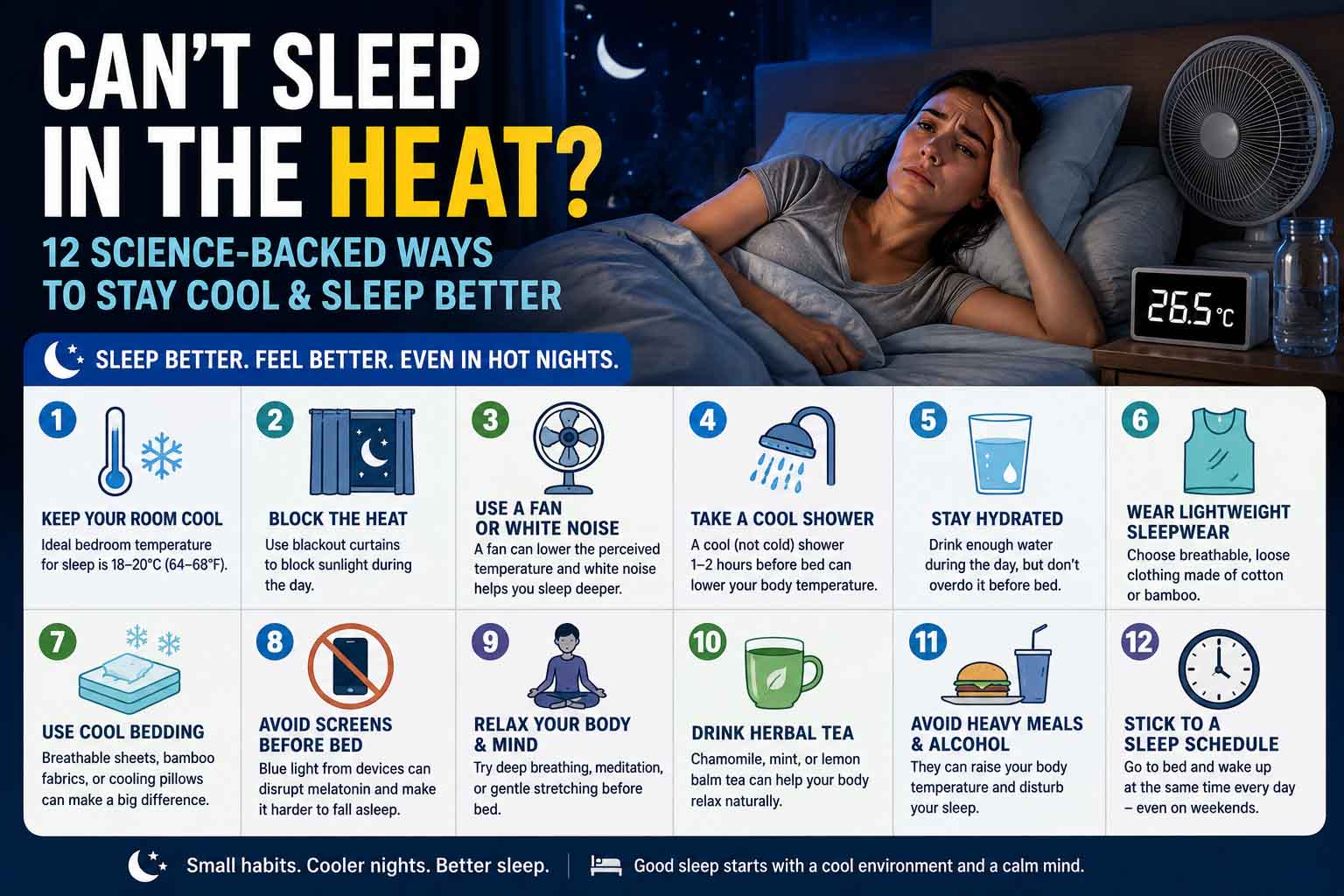
Deep Sleep Heatwave. Finding a deep sleep heatwave solution is essential for surviving the hot summer nights.
Deep Sleep Heatwave. Meta Description: A highly detailed guide covering 12 scientifically proven methods to achieve deep sleep despite summer heatwaves and tropical nights. This ultimate guide includes expert know-how on physical temperature control, physiological optimization, and securing sleep time through the latest AI task automation.
Deep Sleep Heatwave. As the intense summer approaches, the number of people suffering from sleep disorders due to soaring temperatures and high humidity increases rapidly. It is generally known that our bodies must naturally lower their core temperature to enter recovery mode during sleep, but when the external temperature is excessively high, this temperature regulation system malfunctions.
This goes beyond simple fatigue, leading to a weakened immune system, decreased cognitive function, and chronic stress.
Proven Deep Sleep Heatwave Strategies
Deep Sleep Heatwave. Especially for office workers, freelancers, and content creators who must exert high levels of concentration in front of a monitor until late at night, tropical nights are a fatal factor that drastically reduces work efficiency.
Many experts emphasize that rather than relying on short-term sleeping pills or the excessive use of air conditioning, a comprehensive approach that simultaneously controls the physical environment of the bedroom and regulates the physiological rhythm of the human body is necessary.
Deep Sleep Heatwave. This guide goes beyond simple tips for beating the heat. It provides a deep analysis of 12 methods to perfectly control and optimize your sleep environment based on scientific evidence. Structured around real-world production fields and various practical cases, it offers specific execution guidelines that you can apply starting tonight.
By controlling various variables that can change depending on the situation, we hope you regain your perfect sleep cycle.
Scientific Approach to Bedroom Environment and Physical Temperature Control
Deep Sleep Heatwave. The most direct factor determining the quality of sleep is the physical environment of the bedroom. The human body must lower its core temperature by about 1 to 1.5 degrees Celsius to initiate sleep, and for this to happen, the temperature of the external environment must be properly controlled.
Some studies suggest that the most ideal sleep structure is formed when the bedroom temperature is between 18 and 22 degrees Celsius. However, blindly lowering the temperature can cause “air-conditioning sickness” or have the adverse effect of waking you up in the middle of the night. Therefore, a sophisticated approach is required to comprehensively control the direction of airflow, the heat dissipation characteristics of bedding, and indoor heat-generating factors.
Deep Sleep Heatwave. Depending on the purpose, the choices will vary, but understanding physical thermodynamics and setting up the space is the first step to a good night’s sleep.
Optimal Combination of AC and Fans & Indirect Airflow Control
Deep Sleep Heatwave. The core of cooling a bedroom in the summer lies in evaporating sweat from the skin’s surface without rapidly dropping body temperature. Running only the air conditioner can dry out the indoor air and irritate the respiratory mucous membranes, while using only a fan has limitations as it cannot fundamentally lower the indoor temperature.
- Expert Know-how: Set the air conditioner to 24-26 degrees with the dehumidification function running, and direct the fan or air circulator towards the ceiling or walls to create indirect airflow. Lowering the overall temperature of the room evenly through air circulation (convection) is the key.
- Common Beginner Mistake: Deep Sleep Heatwave. Fixing the air conditioner or fan so that the wind blows directly onto the sleeping body. This causes an abnormal drop in core body temperature during sleep, leading to muscle contraction and blood circulation disorders, which induces extreme fatigue the next day.
- Real-World Example: In actual video editing studios, experts who have to catch a quick nap after working all night actively utilize a method of reflecting an air circulator off a wall corner to form a gentle airflow to avoid direct wind in a narrow space.
- Practical Tip: If you set the air conditioner’s sleep timer to turn off after 2 hours before going to bed, and set the fan to run all night on a gentle or sleep breeze mode, you can prevent waking up due to a drop in body temperature at dawn.
Utilizing the Heat Dissipation Characteristics of Mattresses and Bedding
Deep Sleep Heatwave. Bedding forms a microclimate that absorbs and releases heat and sweat generated by the body during sleep. No matter how much you lower the room temperature, if the breathability of the mattress or blanket directly touching your body is poor, the humidity on your skin’s surface will rise, increasing the discomfort index and disrupting sleep.
- Expert Know-how: In summer, you should choose materials with a bumpy texture that have a small contact area with the skin and excellent heat dissipation, such as linen, modal, or seersucker. It is recommended to place a cooling gel pad or a bamboo cooling mat on top of the mattress to dissipate heat.
- Common Beginner Mistake: Preferring hotel-style bedding and covering yourself with densely woven cotton materials with an excessively high thread count even in the middle of summer. The denser the weave, the lower the breathability, trapping heat inside.
- Real-World Example: Deep Sleep Heatwave. Looking at cases of patients at sleep clinics in areas with severe tropical nights, just replacing the bedding material with a functional cooling material that quickly absorbs and dries sweat resulted in a more than 40% reduction in tossing and turning during sleep.
- Practical Tip: Keep the covering blanket thin, but be sure to cover your stomach and chest to prevent excessive loss of core body temperature. This maintains smooth bowel movements and prevents sleep disturbance due to indigestion.
Completely Blocking Outside Heat with Blackout Curtains and Insulation
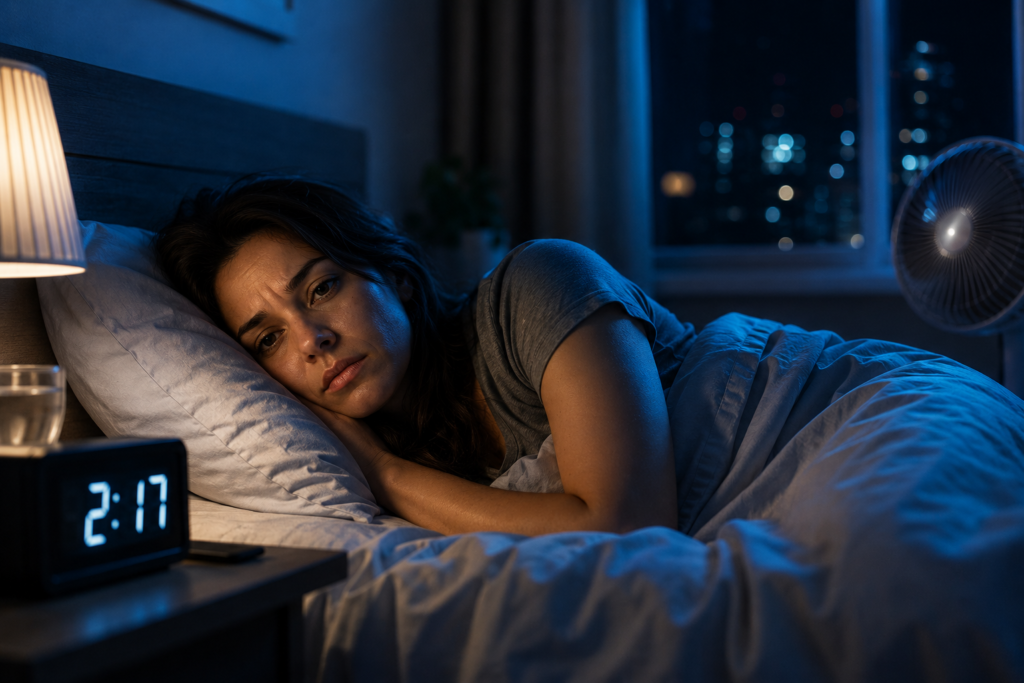
Deep Sleep Heatwave. To keep the bedroom temperature low, blocking radiant heat entering from the outside is just as important as running cooling devices. Especially for bedrooms with large windows or facing west/south, the heat that enters through the glass windows during the day accumulates in the walls and floors, and slowly radiates out at night, exacerbating the tropical night effect.
- Expert Know-how: Install thermal insulation film (Low-E film) on the windows or high-functional blackout curtains that block both ultraviolet and infrared rays simultaneously. The most efficient curtain color scheme is a combination of a bright-toned outer lining with high light reflectance and a dark inner lining that completely blocks light.
- Common Beginner Mistake: Opening the windows and closing the curtains only when night falls. You must preemptively defend against heat absorption into the room by keeping the curtains closed during the hottest part of the day, between 2 PM and 4 PM.
- Practical Tip: To block even the slightest heat coming in through the window frames, utilizing weather stripping or thermal bubble wrap (air caps) even in the summer is the secret to maximizing cooling efficiency.
- Actual Work Application Example: Deep Sleep Heatwave. Shift workers with reversed day and night schedules or highly light-sensitive freelancers induce deep sleep by custom-making a thermal blackout board that perfectly fits the window frame size, completely blocking 100% of outside heat and light.
Managing Indoor Heat Generation in High-Spec Equipment Environments
Deep Sleep Heatwave. Recently, it has become common to use homes as office spaces or studios. In particular, computers and monitors left on for video editing, 3D rendering, or high-spec gaming emit massive amounts of heat, becoming the main culprits that raise the bedroom temperature.
- Actual Shooting and Work Example: The task of rendering massive amounts of 9:16 vertical short-form content or exporting 4K resolution videos pushes the GPU and CPU usage to the extreme, instantly raising the room temperature by more than 2-3 degrees. In one-room apartments or studios where the workspace and bedroom are not separated, this heat completely destroys the sleep environment.
- Problem Solving During Production: Deep Sleep Heatwave. All rendering tasks must be completed at least 2 hours before sleep, or you should utilize cloud-based rendering servers to minimize the heat generated by your local PC. Place the PC main body as far away from the bed as possible or near the window, and adjust it so the exhaust fan does not face the bed.
- Expert Know-how: Immediately after high-performance work is finished, you must go through a “ventilation then cooling” cycle. Open the windows in the room to create a cross-breeze and forcefully ventilate the stagnant hot air, then close the windows again and run the air conditioner to stabilize the temperature.
- Common Beginner Mistake: Deep Sleep Heatwave. Leaving rendering or file uploads running all night and trying to sleep right next to it. The combination of mechanical noise, heat generation, and faint lights seriously prevents the brain from entering the deep sleep (slow-wave sleep) stage.
Physiological Optimization Techniques for Body Temperature Regulation
Deep Sleep Heatwave. Once you have controlled the physical temperature of your bedroom, the next step is to optimize the physiological temperature regulation mechanisms inside your body. The human biological clock (Circadian Rhythm) reacts most sensitively to light and temperature.
Deep Sleep Heatwave. It is generally known that to fall asleep, our brain’s hypothalamus dilates peripheral blood vessels, such as those in the hands and feet, to circulate blood from the torso outwards, thereby dissipating core body temperature. In summer, this dissipation process does not occur properly because the surrounding air is hot, making it difficult to fall asleep.
Therefore, a strategy is needed to intentionally induce a drop in core body temperature and eliminate physiological factors that interfere with sleep. You must comprehensively manage temperature, hydration, nutrition, and sensory organ stress.
The Paradox of Warm Showers to Induce Core Body Temperature Drop Before Bed
Deep Sleep Heatwave. Taking a cold shower on a hot summer day can give you temporary coolness, but from a sleep physiology perspective, it can actually act as a poison.
- Expert Know-how: Take a half-bath or shower with lukewarm water at 38-40 degrees, similar to body temperature, for 10-15 minutes, 90 to 120 minutes before bedtime. Warm water expands the blood vessels on the surface of the skin, temporarily raising body temperature, but once you step out of the bathroom, internal body heat rapidly evaporates through the dilated blood vessels, causing a dramatic drop in core body temperature and inducing strong sleepiness.
- Common Beginner Mistake: Taking a shower with ice-cold water to cool down. Cold water rapidly constricts the blood vessels on the skin’s surface, blocking the internal body heat from escaping. Eventually, as soon as you lie in bed, your temperature starts to rise again, making you feel even hotter.
- Practical Tip: Vigorously wiping off moisture with a towel after a shower generates friction heat. Therefore, it is better to lightly pat dry to remove moisture and let natural drying lower body temperature through the heat of vaporization.
- Real-World Example: Deep Sleep Heatwave. According to experiments in the sleep medicine community, the group that took a warm bath before bed experienced an average reduction of more than 10 minutes in the time it took to fall asleep (sleep latency) compared to the group that did not, and the proportion of deep sleep also increased.
Restricting Fluid Intake Right Before Sleep and Controlling Nighttime Sweating
Deep Sleep Heatwave. In summer, hydration is essential due to heavy sweating, but depending on the time and type of intake, the quality of nighttime sleep can change completely.
- Expert Know-how: To compensate for the moisture excreted through sweat during sleep, it is most ideal to drink about half a cup (approx. 100-150ml) of lukewarm water 1 hour before falling asleep. If you lack hydration, your blood becomes sticky, increasing your heart rate and decreasing your temperature regulation ability.
- Common Beginner Mistake: Deep Sleep Heatwave. Gulping down a large amount of water or drinking ice-cold water right before bed because you feel thirsty. This induces nocturia, forcing you to go to the bathroom in the middle of your sleep, and cold water stimulates the gastrointestinal tract, exciting the sympathetic nervous system.
- Practical Tip: Drinking water containing trace amounts of electrolytes (a pinch of salt or lemon juice) rather than plain water is highly effective in increasing the intracellular moisture absorption rate, preventing thirst during sleep.
- Caution: Deep Sleep Heatwave. Fruits with an overwhelmingly high water content, such as watermelon or melon, which are popular in summer, must be strictly restricted from 3 hours before bedtime to prevent nighttime frequent urination.
Evening Diet and Nutrient Composition to Aid Melatonin Secretion
Deep Sleep Heatwave. The food we consume is directly used as raw material in the synthesis process of the sleep hormone, melatonin. Especially in summer, when energy is depleted due to sweating, the evening diet should be structured around nutrients that aid sleep.
- Expert Know-how: Deep Sleep Heatwave. Include foods rich in tryptophan, a precursor to melatonin, in your dinner, such as chicken breast, bananas, cherries, almonds, and milk. Because it takes time for tryptophan to convert to serotonin and then to melatonin, it is important to finish your meal 3 to 4 hours before bedtime.
- Real-World Example: Professional athletes and workers in physically demanding professions often drink cherry juice (tart cherry) for dinner in the summer. Tart cherries contain large amounts of natural melatonin, demonstrating an excellent effect in regulating the biological clock and inducing sleep.
- Common Beginner Mistake: Ordering and eating spicy, salty, and stimulating late-night delivery foods because the heat has ruined your appetite. Capsaicin and excessive sodium trigger gastric acid secretion and raise core body temperature, putting the brain in an aroused state.
- Practical Tip: Deep Sleep Heatwave. Lying down when food is not fully digested causes blood to rush to the stomach, preventing the core body temperature from dropping. For dinner, try to reduce carbohydrates and eat light meals focused on easily digestible proteins.
Stabilizing the Autonomic Nervous System through Auditory Fatigue Reduction
Deep Sleep Heatwave. Auditory stimuli, as well as visual ones, raise our brain’s arousal level and secrete stress hormones, causing a rise in body temperature.
- Actual Work Application Example: Workers who perform long hours of short-form video editing or sound mixing—where they maximize tension by completely excluding background music and maximizing only sound effects and vocal impact (e.g., following directives like “No background music, loud sound effects only”)—are constantly exposed to sharp, high-frequency ranges, making their autonomic nervous system extremely hypersensitive.
- Expert Know-how: Deep Sleep Heatwave. After stimulating auditory work, you need at least 1 hour of ‘Sound Detox’ time to soothe the brain’s auditory cortex. Take off all earphones and headphones, and maintain complete silence, or play sounds of nature (sound of rain, waves, etc.) through speakers at a very low volume to relax the sympathetic nervous system.
- Problem Solving During Production: During editing work, lower the monitoring volume by 20% from your standard level, and periodically wear noise-canceling headphones to block external noise while taking auditory breaks where you listen to absolutely nothing.
- Common Beginner Mistake: Deep Sleep Heatwave. Turning on podcasts or stimulating YouTube videos while lying in bed to erase the intense sounds lingering in your ears. This keeps the brain constantly in an information-processing state, severely disrupting deep sleep.
Overcoming Tropical Nights through Brain Rest and Psychological Stability
Deep Sleep Heatwave. Even if a cool and comfortable environment is created, if the brain remains in an aroused state, deep sleep is impossible. The brain consumes massive amounts of energy and generates heat not only during physical activities but also during high-level cognitive activities, creative conception, and stressful situations. Modern people, in particular, overwork their brains by swimming in an endless sea of information right until they fall asleep.
Deep Sleep Heatwave. For successful sleep, a psychological relaxation technique that turns the brain to an ‘offline’ state is essential, along with external environmental control.
Deep Sleep Heatwave. Many experts agree that how you utilize the 1 hour before bed completely dictates the quality of sleep for that night. Let’s look at methods to turn off the brain’s switch through blocking visual stimuli, auditory therapy, and active meditation and breathing.
The Science of Blue Light Blocking and Minimizing Visual Stimuli
Deep Sleep Heatwave. Blue light (short-wavelength light) emitted from the displays of digital devices is transmitted to the brain through the retina of the eye, sending a false signal that it is still ‘daytime.’ This is a primary cause of strongly suppressing melatonin secretion.
- Expert Know-how: Deep Sleep Heatwave. It is best to completely stop using smartphones, tablets, and PCs starting 2 hours before bedtime. If you inevitably have to look at a screen, fully activate the ‘Night Shift’ mode in the device settings to make the screen a reddish tone, and make sure to wear blue light blocking glasses (Amber Glasses).
- Real-World Example: Deep Sleep Heatwave. Developers in Silicon Valley or those in professions with frequent night shifts commonly use dedicated blue light blocking glasses with amber lenses to physically block short wavelengths from reaching the retina. This is a frequently used technique to trick the biological rhythm so they can immediately enter sleep after leaving work.
- Common Beginner Mistake: Deep Sleep Heatwave. Turning off all the lights in the room and leaving only the bright smartphone screen on to watch. When the surroundings are dark, the pupils dilate, allowing significantly more blue light to penetrate the eyes, which completely collapses the sleep hormone system.
- Practical Tip: Deep Sleep Heatwave. Instead of bright, white fluorescent lights on the ceiling, replace bedroom lighting with warm-toned (2700K~3000K) indirect lighting or mood lamps located closer to the floor to gradually release visual tension.
Relieving Brain Fatigue and Relaxing After High-Intensity Planning Work
Deep Sleep Heatwave. Parody planning in the form of pantomime or slapstick comedy—which conveys a story purely through visual reactions and motions without dialogue or text—places a tremendous load on the creator’s brain. This is because, rather than general linguistic thinking, you must constantly simulate spatial perception abilities, timing, and character movement trajectories in your head.
- Problem Solving During Production: Deep Sleep Heatwave. After pushing visual brain activity to the extreme—such as planning a short-form video where a Joseon-era scholar or an animal character from traditional folktales moves rapidly in a cybernetic environment without text, purely through silent slapstick—you need training to block visual associations before bed. Close your eyes and imagine a black screen, or focus your consciousness solely on one very simple, static landscape.
- Expert Know-how: Deep Sleep Heatwave. Do not agonize late at night over complex work instructions or storyboard revisions (e.g., “Remove dialogue, keep it fast-paced focusing only on visual reactions”). Before bed, write all your ideas down by hand in a notebook to empty the brain’s working memory, undergoing a ‘Brain Dump’ process.
- Practical Tip: Deep Sleep Heatwave. When the brain continuously tries to generate images, reading an unstimulating paper book or listening to an audiobook to forcefully rest the brain’s visual processor is a huge help for deep sleep.
Controlling Heart Rate through Meditation and Breathing Techniques
Deep Sleep Heatwave. When the sympathetic nervous system is activated due to stress or heat, the heart rate quickens and blood pressure rises. To intentionally calm this down, breathing techniques that stimulate the parasympathetic nervous system are highly effective.
- Expert Know-how: Deep Sleep Heatwave. Practice the ‘4-7-8 Breathing Technique’ devised by Dr. Andrew Weil of Harvard Medical School. Inhale deeply through your nose for 4 seconds while expanding your belly, hold your breath for 7 seconds, and slowly exhale long through your mouth for 8 seconds. Repeat this 4 to 5 times. This supplies more oxygen to the lungs and stimulates the vagus nerve, bringing an immediate relaxation effect.
- Common Beginner Mistake: Deep Sleep Heatwave. Suffering from the pressure that you must force yourself to sleep, thereby counting sheep or constantly checking the clock. This aggravates sleep anxiety, actually promoting the secretion of adrenaline.
- Practical Tip: Deep Sleep Heatwave. Combining breathing with Progressive Muscle Relaxation, where you sequentially tense and relax each part of your body, is extremely useful for forgetting physical tension and the heat, and falling asleep. Start from your toes and proceed in the order of calves, thighs, abdomen, shoulders, and face.
Utilizing White Noise and ASMR for Autonomic Nervous System Stability
Deep Sleep Heatwave. When sleeping with the windows open due to tropical nights, sudden external noises such as midnight traffic noise or motorcycle exhaust sounds greatly disrupt sleep. Masking these irregular noises is crucial.
- Expert Know-how: Deep Sleep Heatwave. White Noise or Pink Noise with a constant frequency covers up sharp external noises, helping the brain stay relaxed and maintain sleep stages. The sound of a fan motor or air purifier can serve as excellent substitutes.
- Real-World Example: Deep Sleep Heatwave. Many modern people who have difficulty sleeping set up ASMR like the sound of a crackling campfire or gentle rain, or low-frequency soundtracks on a sleep timer, utilizing them to boost the proportion of deep Non-REM sleep.
- Common Beginner Mistake: Deep Sleep Heatwave. Setting the volume too high, or playing audiobooks or podcasts containing spoken dialogue. Sounds involving language force the brain to continuously try to interpret meaning, which acts as an absolute hindrance to sleep.
Systematic Restructuring of Sleep Hygiene and Lifestyle
Deep Sleep Heatwave. Sleep is not just an independent event that occurs at night, but rather a report card showing how we lived during the day.
Deep Sleep Heatwave. Even if you have established both the bedroom environment and psychological stability, you cannot overcome tropical nights if you repeat bad lifestyle habits during the day or if your sleep schedule has collapsed.
Deep Sleep Heatwave. In particular, professions with irregular commuting hours, like freelancers and content creators, must establish and strictly follow principles of Sleep Hygiene. It is absolutely necessary to implement a strategic lifestyle restructuring that smartly utilizes modern technology, especially AI automation tools, to compress working hours and strongly synchronize your biological clock in everyday life.
Maintaining a Consistent Sleep Schedule and Synchronizing the Biological Clock
Deep Sleep Heatwave. Our body’s biological clock (Circadian Rhythm) loves consistency above all else. Melatonin secretion and the temperature regulation system operate most perfectly when you go to bed and wake up at the exact same time every day.
- Expert Know-how: Deep Sleep Heatwave. You must maintain the exact same wake-up time on weekends and holidays as on weekdays. Sleeping in lowers that night’s Sleep Drive, making it harder to fall asleep at night, which is a core cause of “Social Jetlag” (Monday sickness).
- Common Beginner Mistake: Taking long naps of 2-3 hours during the day just because you tossed and turned the previous night due to the heat. This preemptively depletes the fatigue substances (adenosine) needed for nighttime sleep, creating a vicious cycle that worsens sleep that very night. Naps must be strictly limited to under 20 minutes and taken before 3 PM.
- Practical Tip: Deep Sleep Heatwave. Receive bright sunlight through your eyes within 30 minutes of waking up. The moment morning sunlight hits the retina, the brain stops secreting melatonin and sets the biological clock’s timer to secrete melatonin again exactly 14 to 16 hours later.
Shortening Late-Night Work and Securing Sleep Time Using AI Automation Tools
Deep Sleep Heatwave. In content production and planning fields, working all night due to deadline pressure is a frequent occurrence. However, sleep deprivation directly leads to a drop in quality.
- Latest Trends and AI Utilization: Deep Sleep Heatwave. Recently, AI music generation tools like Suno and Mureka, AI scriptwriting assistants like Grok, and automated cut-editing programs like CapCut have advanced tremendously. You must actively introduce these generative AI tools into your pipeline to drastically reduce physical working time.
- Actual Work Application Example: Deep Sleep Heatwave. Unlike the past when background music was composed and mixed manually, creators can now instantly generate audio tracks of the desired tempo and mood with just a few lines of prompt. By utilizing automatic subtitle functions to cut post-production time by more than 60% compared to traditional methods, producers can now get off work before midnight and secure a stable sleep pattern.
- Expert Know-how: Deep Sleep Heatwave. Employ a ‘Work-Shift’ strategy where at night, you only set up repetitive, mechanical rendering tasks or initial draft generation prompts via AI tools, and defer final review and revision tasks requiring human creative judgment to the morning hours when your brain is clearest.
- Problem Solving During Production: Deep Sleep Heatwave. Instead of blindly staying up all night monitoring in case an error occurs in the AI-generated output, setting up an automated system to receive notifications upon errors while you sleep is overwhelmingly advantageous for long-term health and maintaining content quality.
The Impact of Increased Daytime Physical Activity on Nighttime Core Body Temperature
Deep Sleep Heatwave. Actively moving your body during the day to consume energy and sufficiently raise your body temperature is, paradoxically, an excellent way to promote sleep by widening the gap when your core body temperature drastically drops at night.
- Expert Know-how: Deep Sleep Heatwave. Do cardiovascular exercises that make you sweat for more than 30 minutes in the early morning or before dinner (around 5-6 PM). The elevated core body temperature at this time slowly drops over about 3 to 4 hours, naturally inducing sleepiness.
- Common Beginner Mistake: Sitting in front of the air conditioner all day because it’s hot, or conversely, doing high-intensity workouts late at night (after 9 PM) to avoid the heat. Late-night exercise secretes adrenaline, pushes your body temperature to its peak, keeps the sympathetic nervous system in an aroused state, and completely ruins your sleep.
- Practical Tip: Deep Sleep Heatwave. During heatwaves when outdoor activities are burdensome, it is highly recommended to properly build physical fatigue indoors through static yet full-body muscle exercises such as foam roller stretching, yoga, and core workouts.
Strategic Control of Caffeine and Alcohol Intake
Deep Sleep Heatwave. Coffee and alcohol, essential stimulants for modern people, are the most powerful enemies of sleep during the hot summer.
- Expert Know-how: Deep Sleep Heatwave. The half-life of caffeine varies by person, but it usually lasts from 5 hours up to a maximum of 8 hours. For the caffeine in your body to be completely broken down and not affect your sleep, you must stop all caffeine intake (including coffee, black tea, energy drinks, cola, and chocolate) after 2 PM.
- Common Beginner Mistake: The habit of ‘drinking alone’ (having a cold can of beer) right before bed because you can’t fall asleep. Alcohol acts as a nerve depressant and can temporarily make you fall asleep faster; however, in the process of the liver breaking down the alcohol, it arouses the brain, induces thirst, makes you wake up continuously at dawn, and destroys deep REM sleep.
- Practical Tip: Deep Sleep Heatwave. When lethargy and fatigue rush in during the afternoon and you can’t concentrate, you must establish an alternative routine to refresh yourself, such as washing your face with cold water or drinking decaffeinated herbal teas like peppermint or chamomile, instead of coffee.
□ Checklist for Perfect Sleep in the Summer
- □ Is the air conditioner set to 24-26 degrees on dehumidification mode, and the fan set to indirect airflow?
- □ Did you finish all rendering and high-spec PC work 2 hours before getting into bed?
- □ 90 minutes before bedtime, did you take a shower with lukewarm water around 38 degrees, not cold water?
- □ Did you close the blackout curtains during the day to block the influx of outside heat?
- □ Did you stop using your smartphone before bed and apply a blue light blocker?
- □ Did you avoid eating late-night snacks or drinking beer late at night just because it’s hot and humid?
- □ Did you stop tasks that heighten your senses, such as sight and sound, and have some quiet time?
- □ Are you maintaining the same wake-up time on weekends as you do on weekdays?
Deep Sleep Heatwave. In conclusion, a good night’s sleep during tropical nights is not simply a matter of luck or physical condition, but depends entirely on how scientifically you control your environment and body.
Deep Sleep Heatwave. You must fulfill all four areas: controlling the physical bedroom temperature, understanding the physiological body temperature regulation mechanism, inducing psychological brain rest, and properly setting up your daytime lifestyle.
Deep Sleep Heatwave. We encourage you to apply the 12 methods and checklist presented above one by one, tailored to your own lifestyle patterns and work environment. A small detail difference in improving your sleep environment will completely change your vitality and work performance the next day.
FAQ
Q1. What is the most ideal indoor temperature for a bedroom in summer?
Generally, sleep experts recommend between 18 and 22 degrees Celsius, but in summer, when using thin bedding, maintaining a level of 24 to 26 degrees and creating an indirect airflow with a fan is the most appropriate way to keep the skin surface temperature pleasant.
Q2. Will taking a cold shower make me sleep better because it’s so hot?
No. Taking a cold shower causes the blood vessels in your skin to constrict rapidly, preventing the heat inside your body from escaping. Taking a lukewarm shower at 38-40 degrees 90 minutes before bed to dilate blood vessels, then naturally lowering your core body temperature through the heat of vaporization, is a scientific way to sleep soundly.
Q3. Why am I so tired the next day if I sleep with the air conditioner blowing directly on me?
If cold wind directly hits your body, your body’s muscles continuously tense and contract to maintain body temperature. Because of this, energy is consumed even during sleep, and blood circulation decreases, causing you to feel extreme muscle pain and fatigue in the morning.
Q4. How should I hydrate during tropical nights?
Hydration is essential due to heavy sweating, but a large amount of water right before bedtime causes nighttime urination. It is best to drink only about half a cup of lukewarm water (containing a little electrolyte) 1 hour before falling asleep to prevent thirst.
Q5. Is it helpful to drink a can of beer when I can’t sleep because of the heat?
It is absolutely not helpful. Alcohol may shorten the time it takes to fall asleep, but it drastically drops the quality of sleep. Its diuretic effect makes you go to the bathroom, raises body temperature, and disrupts REM sleep, making you more tired the next day.
Q6. How do you manage the temperature when there is a high-spec PC or work equipment in the room?
The heat emitted by equipment significantly raises the indoor temperature. After working, it is absolutely necessary to open the windows to ventilate the heat outside, then close the windows again and run the air conditioner to cool the room. Heavy tasks like rendering right before sleep should be avoided.
Q7. Is there a reason why the blue light from smartphones is more fatal to sleep in summer?
Tropical nights alone leave the sympathetic nervous system in an excited state, but when blue light reaches the brain as well, melatonin secretion is completely suppressed, collapsing your biological clock. Under adverse conditions, you must minimize even visual stimuli to fall asleep.
Q8. What bedding material is most suitable for a good night’s sleep in summer?
You need highly breathable materials that can quickly release heat and sweat. Thin blankets made of linen, modal, or seersucker are good, and laying down a cooling gel pad or cool mat will keep the microclimate between your skin and the mattress pleasant.
Q9. Why is white noise helpful for sleep during tropical nights?
In summer, you are likely to leave windows open, or there is mechanical noise from fans and air conditioners. White noise at a constant frequency masks stimulating and irregular outside noises, preventing the brain from reacting to sounds and waking up.
Q10. Is it harder to fall asleep at night if I take a nap during the day?
Yes. If you take a long nap, your Sleep Drive (the desire to sleep at night) is depleted. If you are too tired, it is best to take a light nap of no more than 20 minutes before 3 PM.
Q11. Does the dinner menu affect sleep?
It has a very big impact. Spicy, salty, and greasy foods cause excessive secretion of stomach acid and raise body temperature. It is best to eat foods rich in tryptophan, like chicken breasts and bananas, 3 to 4 hours before bedtime to help produce melatonin.
Q12. If I exercise late at night, will I not be able to sleep because of the heat?
That is correct. Exercise raises your core body temperature and secretes adrenaline. For the sake of sleep, it is ideal to finish your workout at least 3 to 4 hours before bedtime so that you can go to bed just when your elevated core body temperature is slowly dropping.
Q13. Is it bad to look at the clock when I wake up in the middle of the night because of the heat?
The moment you check the clock, your brain calculates the time remaining until wake-up and secretes stress hormones. This induces sleep anxiety, so even if you wake up, it is important not to look at the clock, take a deep breath, and close your eyes again.
Q14. Why is reducing working hours using AI tools important for sleep?
If you manually edit or plan all night long like in the past, your sleep schedule itself will collapse. You can only maintain a healthy biological rhythm by actively utilizing automation tools to finish work before midnight and keeping the ‘sleep hygiene’ of going to bed at a consistent time.
Q15. Is it better to close blackout curtains during the day or at night?
In summer, closing the blackout curtains in advance during the day (2-4 PM) to prevent solar radiant heat from entering the house is far more effective in preemptively preventing the room temperature from rising.
Internal Link
2026 Global Cat Festival Guide: Trends in Korea, USA, and Canada
References
- National Sleep Foundation (NSF) – The Ideal Room Temperature for Sleep
- Journal of Physiological Anthropology – Effects of Thermal Environment on Sleep and Circadian Rhythm
[Site Operating Policy]
■ About Us We provide verified professional information related to health, climate change, and field practice.
■ Contact www6812@naver.com
■ Privacy Policy This website uses visitor cookies to provide personalized Google AdSense advertisements. If you do not wish to, you can block cookie storage through your browser settings.
■ Disclaimer All information on this site is for reference and educational purposes only and does not replace professional medical or legal advice. The operator assumes no legal responsibility for any results arising from the use of the information on this site.
📌 함께 보면 좋은 글
- Ultimate Guide to Chronic Summer Fatigue
- The Fatal Impact of Heatwaves on Heart Health
- 15 Scientific Ways to Stay Cool Without Air Conditioning
- Safest Time to Exercise During a Heatwave
- Ultimate Guide to the UV Index
- Pet Safety Guide During Heatwaves
- 12 Scientifically Proven Methods for Deep Sleep
- Ultimate Hydration Guide
- Heat Stroke Symptoms: 10 Warning Signs
- 2026 Extreme Heat Wave Guide