Tag: Google Gemini

  • Google Gemini vs ChatGPT in 2026: Which AI Assistant Is Better?

    Google Gemini vs ChatGPT in 2026: Which AI Assistant Is Better?

    Introduction

    Artificial intelligence has evolved from an experimental tech demo into an indispensable companion for daily productivity, creative work, and complex decision-making. As we navigate 2026, generative AI assistants are integrated into web browsers, mobile operating systems, office suites, and enterprise workflows. Millions of users rely on AI every single day to summarize complex documents, write production-grade code, draft strategic plans, and generate visual artwork.

    At the forefront of this AI revolution stand two undisputed titans: Google Gemini and OpenAI ChatGPT. Both platforms have invested billions of dollars into research, expanding context windows, introducing real-time voice and video multimodal capabilities, and integrating complex reasoning architectures.

    However, as both tools become increasingly sophisticated, choosing the right assistant for your specific workflow has become more challenging. Is Google’s deep integration with Search and Workspace superior, or does OpenAI’s specialized reasoning and developer ecosystem hold the crown? This comprehensive head-to-head comparison evaluates features, performance, pricing, and real-world usability to help you determine which AI assistant reigns supreme in 2026.

    What is Google Gemini?

    Google Gemini is Google’s flagship multimodal AI model, designed from the ground up to seamlessly process and combine different types of information, including text, code, audio, images, and video. Integrated deeply into Google’s vast consumer and enterprise ecosystem, Gemini powers search features, Google Workspace apps (Docs, Gmail, Drive, Slides), and Android mobile devices.

    Key Features and Strengths

    • Massive Context Window: Gemini leads the industry with native support for processing millions of tokens of context in a single prompt. This allows users to upload entire books, hours of video, or massive code repositories for instant analysis.
    • Native Ecosystem Integration: Gemini connects directly to Google Drive, Gmail, Docs, Maps, and YouTube, allowing the assistant to pull real-time personal data and web information without switching tabs.
    • Multimodal Native Architecture: Unlike models that stitch separate vision or speech modules onto a text core, Gemini was trained multimodally from inception, delivering smooth, real-time voice conversations and precise visual recognition.
    • Deep Web Grounding: Leveraging Google’s search index, Gemini offers reliable, up-to-the-minute web retrieval with direct source citations.

    Supported Platforms and Use Cases

    Gemini is available via a dedicated web web interface, native mobile applications on Android and iOS, and direct integration within Google Workspace for Business and Education. Typical use cases include research over massive document sets, automated email drafting, real-time trip planning with Google Maps, and enterprise data analysis.

    What is ChatGPT?

    ChatGPT, developed by OpenAI, is the revolutionary conversational AI assistant that sparked the generative AI boom. In 2026, ChatGPT operates on OpenAI’s state-of-the-art model lineup, combining flagship multimodal intelligence with specialized reasoning architectures that mimic step-by-step human problem-solving.

    Key Features and Strengths

    • Advanced Reasoning Engine: OpenAI’s reasoning series allows ChatGPT to execute deliberate, multi-step logical chains before responding, making it exceptionally strong in advanced mathematics, science, and complex logic puzzles.
    • The Canvas Interface: ChatGPT features an interactive workspace called Canvas, designed specifically for writing and coding projects. It enables side-by-side editing, inline feedback, and granular revisions without rewriting whole prompts.
    • Custom GPTs and Store: Users can build and deploy custom-tailored GPT assistants with specialized knowledge bases and custom actions, tapping into a massive public directory of community-built tools.
    • Advanced Voice Mode: Delivering near-zero latency, human-like cadence, emotional tone modulation, and real-time interruption capabilities, ChatGPT’s voice interface remains a benchmark for natural voice interaction.

    Supported Platforms and Use Cases

    ChatGPT is accessible via web browsers, native desktop apps for macOS and Windows, mobile apps for iOS and Android, and enterprise API endpoints. Common applications include software development, creative writing, instructional tutoring, complex data transformation, and workflow automation.

    Feature Comparison

    To help you quickly gauge how both platforms perform across core tasks, here is a breakdown of their primary capabilities:

    Feature CategoryGoogle GeminiOpenAI ChatGPTWinner
    Writing & ToneHighly natural, objective, customizable tone slidersFluid, highly creative, excellent structural adaptabilityTie
    Coding & RefactoringStrong code generation, huge context for full reposExceptional debugging, step-by-step reasoning, Canvas editorChatGPT
    Image GenerationPowered by Imagen 3; high photorealism & text renderingPowered by DALL-E 3; high artistic precision & prompt adherenceTie
    Deep ResearchIngests up to 2M tokens; direct access to live Google SearchStrong web browser; excellent synthesis of academic papersGemini
    Reasoning & LogicStrong general logic; fast processing speedsSpecialized reasoning models for STEM and complex logicChatGPT
    Processing SpeedExtremely fast throughput, near-instant responsesFast standard output; slower deliberate reasoning modesGemini
    Factual AccuracyHigh grounding with real-time web citationsHigh accuracy; occasional hallucinations in non-reasoning modeGemini
    User ExperienceClean, minimalist, deeply tied to Google WorkspaceFeature-rich, customizable, dedicated workspace modesChatGPT

    Writing and Editing

    Both AI assistants excel at natural language generation, but they approach tone and structure differently.

    Google Gemini leans toward a clean, concise, and structured writing style. It excels at synthesizing technical documentation into clear, bulleted executive summaries. Its direct integration with Google Docs means you can draft, edit, and format documents right inside your workspace without copying and pasting.

    ChatGPT, on the other hand, exhibits greater stylistic flexibility. Whether you need a formal grant proposal, a dramatic narrative, or an engaging marketing script, ChatGPT adapts quickly to nuanced persona requests. Its Canvas interface provides a dedicated side-by-side editor where you can highlight specific paragraphs to adjust reading levels, edit line by line, or polish prose with fine control.

    Coding and Software Engineering

    For developers, both tools offer powerful assistance, but their strengths diverge based on project scale.

    Gemini’s massive context window is a game-changer for large-scale codebase analysis. You can upload an entire repository or a 500-page API documentation framework, and Gemini will accurately map dependencies, identify bugs, or explain legacy functions across thousands of lines of code simultaneously.

    ChatGPT remains the preferred choice for active development and complex debugging. Its dedicated reasoning capabilities break down intricate algorithmic problems step-by-step before writing code. Combined with the coding Canvas, developers can review code diffs, run inline refactoring, and generate unit tests seamlessly.

    Image Generation and Media Capabilities

    Visual asset creation is a core component of both AI suites.

    Gemini utilizes Google’s Imagen 3 engine, producing crisp, photorealistic images with remarkable handling of complex lighting, textures, and legible text within images. It excels at generating realistic stock photography, promotional material, and natural landscapes.

    ChatGPT leverages DALL-E 3, which stands out for strict prompt adherence and artistic imagination. DALL-E 3 understands complex spatial relationships and stylized artistic directions exceptionally well, making it ideal for conceptual art, vector-style illustrations, and creative branding concepts.

    Deep Research and Context Handling

    When analyzing massive quantities of information, Gemini holds a distinct structural advantage. With native support for context windows spanning up to two million tokens, Gemini can swallow dense legal briefs, academic textbooks, or hours of recorded audio in a single prompt. It reads through raw data rapidly and cross-references facts against Google’s real-time search index.

    ChatGPT approaches deep research through structured web search modules and academic search tools. While its standard context window is smaller than Gemini’s, its ability to iteratively search the web, evaluate source credibility, and synthesize multi-page research digests makes it a powerful academic companion.

    Reasoning and Problem Solving

    In advanced mathematical proofs, symbolic logic, and multi-variable problem-solving, ChatGPT’s dedicated reasoning architecture gives it an edge. When faced with complex logic puzzles or graduate-level science questions, ChatGPT pauses to construct a silent chain of thought, checking its own work before presenting the final answer.

    Gemini offers robust general reasoning and rapid calculation speed, making it highly effective for everyday business logic, financial forecasting, and general analysis. However, for deep multi-step algorithmic challenges, ChatGPT provides slightly higher consistency.

    Pricing Comparison

    Both platforms offer robust free tiers alongside premium subscription plans tailored for power users, teams, and enterprises.

    Google Gemini Pricing Structure:
    ├── Free Tier: Access to standard Gemini model, basic Google extensions, standard context limits.
    ├── Gemini Advanced (Google One AI Premium): ~$19.99/month
    │   ├── Access to flagship Gemini models
    │   ├── 2 Million token context window
    │   ├── 2TB Google One cloud storage included
    │   └── Workspace integration (Docs, Gmail, Drive)
    └── Business & Enterprise: Custom seat-based enterprise pricing with admin controls and data privacy guarantees.
    
    OpenAI ChatGPT Pricing Structure:
    ├── Free Tier: Access to standard GPT models, limited custom GPT usage, standard voice capabilities.
    ├── ChatGPT Plus: ~$20.00/month
    │   ├── Priority access to flagship models & reasoning series
    │   ├── Full access to Canvas editor, DALL-E 3, and Advanced Voice
    │   ├── Higher messaging limits and custom GPT creation
    └── ChatGPT Team & Enterprise: $25–$30+/user/month with team workspaces, administrative analytics, and zero data training policies.
    

    If you are already paying for extra Google Drive storage, Gemini Advanced offers tremendous value because it bundles a 2TB Google One storage plan into the $19.99 monthly fee. ChatGPT Plus costs virtually the same but focuses all its value directly on standalone AI productivity tools.

    Which AI is Better for Students?

    For academic research, study planning, and homework assistance, both tools offer unique advantages depending on your field of study.

    • Choose Google Gemini if: You are conducting extensive literature reviews or reading long textbooks. Gemini allows you to upload entire PDFs, lecture recordings, and slide decks at once, turning them into instant study guides, flashcards, or practice quizzes.
    • Choose ChatGPT if: You are studying STEM subjects, computer science, or advanced mathematics. ChatGPT’s step-by-step reasoning engine acts as an interactive tutor, walking you through complex equations, physics problems, and logic proofs without jumping straight to the answer.

    Which AI is Better for Businesses?

    For corporate productivity, enterprise communication, and workflow automation, the deciding factor often comes down to your existing software stack.

    • Choose Google Gemini if: Your company is fully invested in Google Workspace (Gmail, Google Docs, Drive, Sheets, and Meet). Gemini operates directly inside your daily workflow—it can draft email replies based on previous email threads, summarize long Google Meet recordings, and build Google Slides presentations automatically from Drive documents.
    • Choose ChatGPT if: Your business requires customized workflow assistants and standalone creative tools. With Custom GPTs, companies can build internal knowledge bots trained on HR policies, customer support guidelines, or sales playbooks without writing code.

    Which AI is Better for Content Creators?

    Digital marketers, YouTubers, bloggers, and copywriters need AI assistants that can brainstorm ideas, write compelling copy, and assist with multimedia production.

    • Choose Google Gemini if: You produce video content or rely heavily on real-time trends. Gemini can analyze YouTube videos directly via URL, draft SEO-optimized video scripts, generate realistic promotional images via Imagen 3, and verify facts using live Google Search data.
    • Choose ChatGPT if: You write long-form articles, creative stories, or social media campaigns. The Canvas editor makes refining prose effortless, while DALL-E 3 allows you to maintain stylistic consistency across graphic design assets.

    Which AI is Better for Developers?

    Software engineers, data scientists, and DevOps professionals demand precision, fast execution, and excellent code comprehension from an AI tool.

    Developer Decision Matrix:
    
    Large Codebase Auditing / Heavy Documentation ──> Google Gemini (2M Token Window)
    Complex Algorithmic Logic / Interactive Refactoring ──> ChatGPT (Canvas & Reasoning Series)
    
    • Choose Google Gemini if: You need to refactor legacy code, analyze massive full-stack repositories, or digest thousands of pages of API documentation in one go.
    • Choose ChatGPT if: You want an interactive pair-programmer. The Canvas interface lets you debug code side-by-side, generate comprehensive unit tests, translate code between programming languages, and solve complex architectural bottlenecks.

    Pros and Cons

    Google Gemini

    Pros

    • Massive 2M token context window handles enormous files effortlessly.
    • Seamless integration with Google Workspace, Android, and Google Search.
    • Gemini Advanced includes 2TB of Google One cloud storage.
    • Ultra-fast generation speeds and real-time multimodal capabilities.

    Cons

    • Fewer specialized creative writing modes compared to ChatGPT.
    • Lacks a dedicated community marketplace for custom user-built bots.
    • Can occasionally be over-conservative in safety guardrails for creative prompts.

    OpenAI ChatGPT

    Pros

    • Exceptional reasoning capabilities for complex logic, math, and coding.
    • Interactive Canvas workspace simplifies writing and code editing.
    • Vast ecosystem of Custom GPTs and community plugins.
    • Superior Advanced Voice mode with expressive emotional range.

    Cons

    • Standard context window is smaller than Gemini’s flagship offering.
    • No bundled cloud storage or native Google Workspace integration.
    • Deliberate reasoning modes can take longer to process responses.

    Expert Analysis

    When evaluating Google Gemini and OpenAI ChatGPT side-by-side in 2026, it becomes clear that there is no single “winner” for every user. Instead, the AI landscape has bifurcated into two distinct operational paradigms: Ecosystem Integration vs. Standalone Intelligence.

    Google Gemini represents the ultimate ecosystem assistant. By embedding AI directly into Google Search, Gmail, Docs, and Android, Google has minimized friction. Users do not need to alter their habits; Gemini meets them inside the apps they already use every day. Its ability to process millions of tokens makes it an unmatched research engine for digesting heavy media and enterprise documentation.

    OpenAI ChatGPT represents the quintessential standalone AI toolkit. OpenAI has focused on deepening the core problem-solving capabilities of its models. With specialized reasoning architectures, the Canvas editing environment, and an expressive voice engine, ChatGPT feels like a dedicated, highly skilled digital partner. It excels when you need deep, focused work—whether that means architecting complex software or writing a novel.

    Rather than competing on identical grounds, Gemini has become the ultimate assistant for information retrieval and workflow integration, while ChatGPT remains the premier tool for creative iteration and complex reasoning.

    Frequently Asked Questions

    1. Which AI is more accurate in 2026, Gemini or ChatGPT?

    Both systems have drastically reduced hallucination rates compared to earlier generations. Gemini generally offers stronger real-time factual accuracy for current events due to its direct integration with Google Search. ChatGPT provides higher accuracy in formal logic, mathematics, and complex code execution due to its deliberate reasoning modes.

    2. Can I use Google Gemini and ChatGPT for free?

    Yes, both platforms offer robust free tiers. Free users can access conversational text generation, basic web browsing, image creation, and standard mobile app functionality on both services.

    3. What is the main benefit of Gemini’s 2 million token context window?

    A 2 million token context window allows you to feed the AI massive amounts of information in a single prompt—such as a 1,500-page book, an entire software code repository, or a 1-hour video file—and ask specific questions or generate summaries without losing context.

    4. Is ChatGPT Plus worth $20 a month in 2026?

    If you rely heavily on advanced coding, creative writing, step-by-step logic, or frequent voice interactions, ChatGPT Plus remains one of the best productivity investments available. Access to Canvas, reasoning models, and Custom GPTs easily justifies the cost for power users.

    5. Does Google Gemini Advanced include Google One storage?

    Yes. The Gemini Advanced subscription is bundled into the Google One AI Premium Plan, which includes 2TB of cloud storage for Google Drive, Gmail, and Google Photos, adding significant value for existing Google users.

    6. Which AI generates better images, Imagen 3 or DALL-E 3?

    Imagen 3 (in Gemini) generally produces higher photorealism, natural textures, and cleaner typography within images. DALL-E 3 (in ChatGPT) excels at understanding complex, stylized prompts, artistic directions, and imaginative concepts.

    7. Can ChatGPT access real-time internet information?

    Yes, ChatGPT has integrated web browsing capabilities that allow it to search the live internet, summarize current news, and cite sources with links.

    8. Which AI assistant is better for privacy and data security?

    Both Google and OpenAI offer enterprise-grade privacy plans (Gemini for Google Workspace and ChatGPT Enterprise) where user data and prompts are strictly excluded from AI model training datasets. Free and standard consumer tiers may use non-sensitive interaction data for model improvement unless opted out.

    9. Can Gemini analyze YouTube videos directly?

    Yes. Because Gemini is built by Google, you can paste a YouTube URL into Gemini and ask it to summarize the video, highlight key timestamps, or extract specific information from the audio transcript.

    10. Can I create my own custom AI tools on these platforms?

    ChatGPT allows users to create “Custom GPTs” with unique instructions, uploaded reference files, and API actions. Gemini offers customized “Gems,” allowing users to tailor system prompts and behaviors for repetitive tasks.

    Conclusion

    Choosing between Google Gemini and OpenAI ChatGPT in 2026 depends entirely on your daily tools, primary goals, and personal workflow preference.

    • Get Google Gemini if: You live inside the Google ecosystem, rely on Google Workspace apps, frequently analyze massive documents or video files, and want an AI assistant that seamlessly handles real-time web information while giving you 2TB of cloud storage.
    • Get OpenAI ChatGPT if: You need an elite pair-programmer, a sophisticated writing partner, an interactive tutor for STEM subjects, or a customizable AI tool with dedicated workspace environments like Canvas.

    Both AI assistants represent the pinnacle of modern technology. For many professionals, the ideal setup isn’t choosing one over the other, but using Gemini for information gathering and document management while leveraging ChatGPT for deep reasoning, drafting, and problem-solving.

    SEO Requirements

    • SEO Title: Google Gemini vs ChatGPT in 2026: Which AI Assistant Is Better?
    • Meta Description: Compare Google Gemini vs ChatGPT in 2026. Discover which AI assistant wins in coding, writing, reasoning, pricing, and productivity for your workflow.
    • URL Slug: google-gemini-vs-chatgpt-2026-comparison
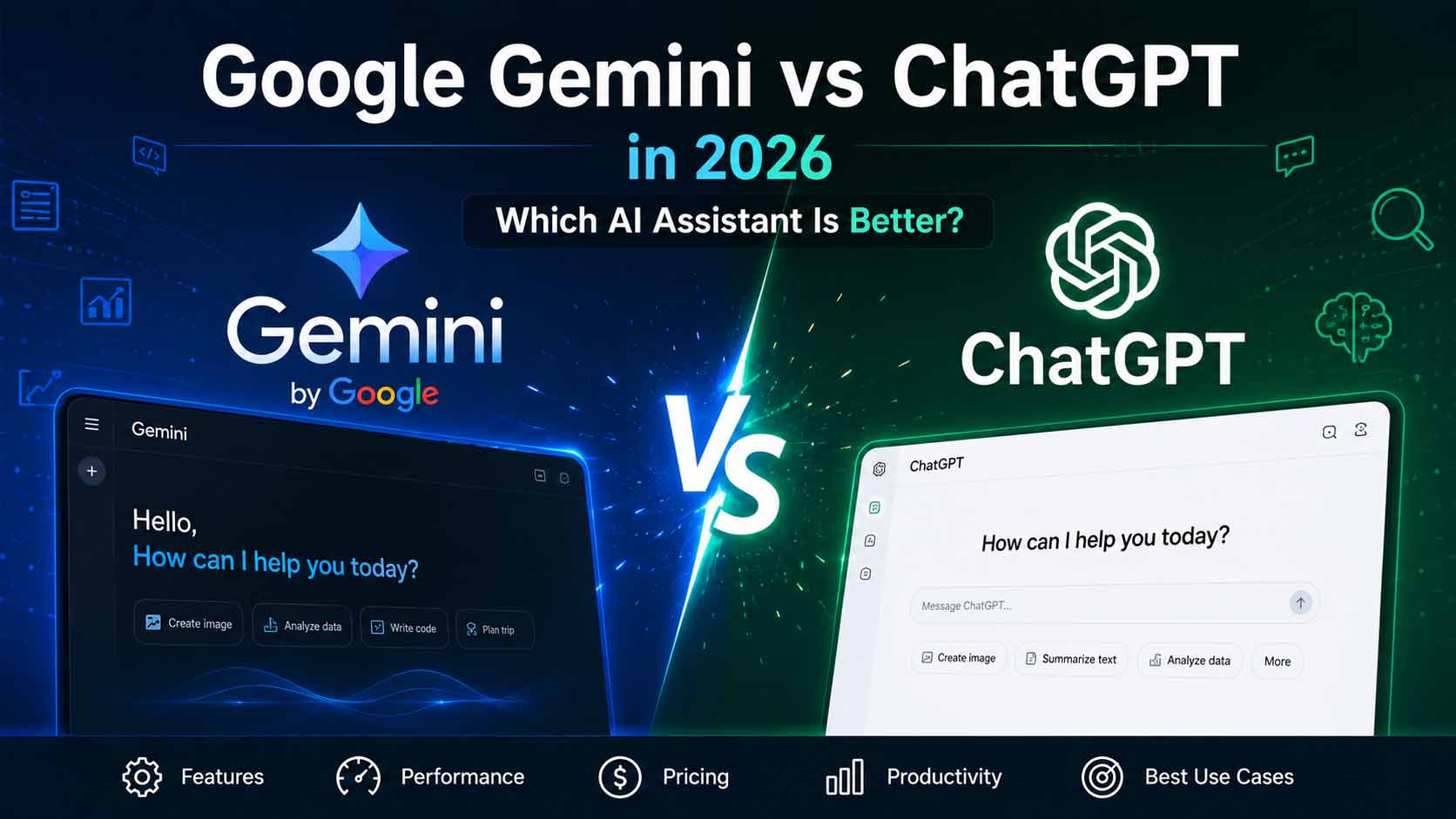
    • Image ALT text: A split illustration showing the Google Gemini star logo on the left and the OpenAI ChatGPT logo on the right, symbolizing the 2026 AI assistant comparison.

    Suggested Internal Links:

    • Link to a guide on “Top Productivity AI Tools for Businesses in 2026.”
    • Link to an article on “How to Use Generative Engine Optimization (GEO) for AI Search.”
    • Link to a resource covering “The Best Free AI Coding Assistants for Developers.”

    Suggested External Sources:

    • Google DeepMind Official Research & Product Blog
    • OpenAI Official Announcements & Research Papers
    • MIT Technology Review (Artificial Intelligence Section)

    20 SEO Tags:

    Google Gemini, ChatGPT, Gemini vs ChatGPT, Best AI Assistant, AI Comparison, Artificial Intelligence, Productivity AI, AI Tools, Google Gemini Advanced, ChatGPT Plus, OpenAI, Google DeepMind, AI for Students, AI for Developers, Generative AI 2026, LLM Comparison, Imagen 3 vs DALLE 3, AI Reasoning Models, AI Context Window, Workspace AI.


    🌟 Add More Joy & Useful Information to Your Everyday Life

    Explore our YouTube channels and TikTok for relaxing music, trending products, helpful tips, and inspiring content updated regularly.


    ✨ Adding Joy & Useful Information to Your Everyday Life ✨

    Thank you for visiting. We hope you enjoyed this article and found it helpful.

  • Google Faces Major AI Training Lawsuit: What It Means for the Future of Generative AI

    Google Faces Major AI Training Lawsuit: What It Means for the Future of Generative AI

    Introduction

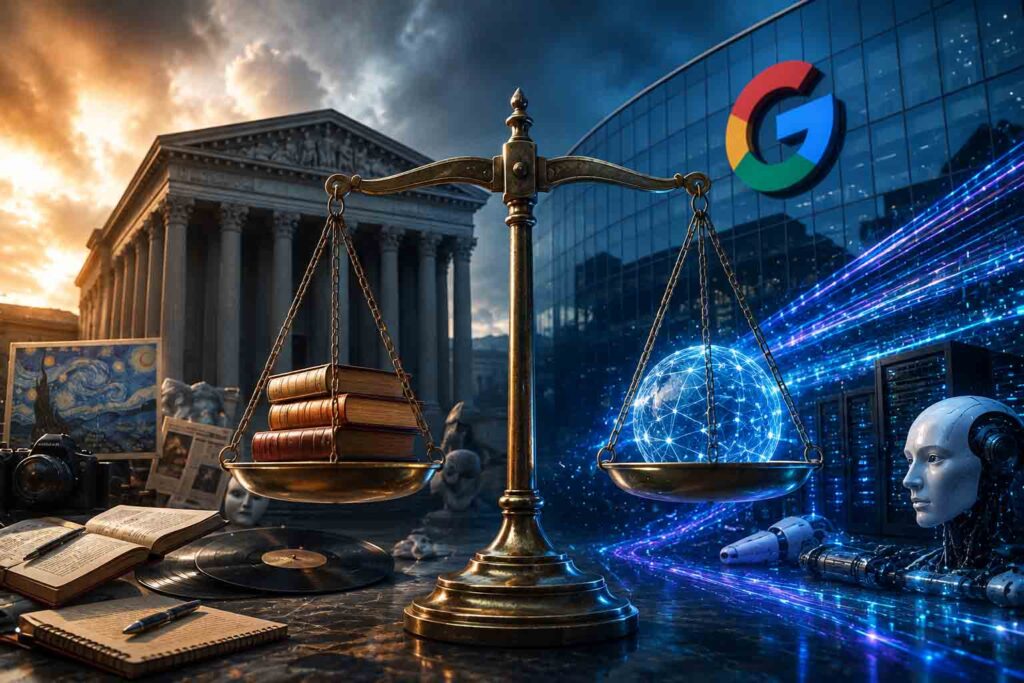
    The rapid evolution of artificial intelligence has brought about unprecedented technological breakthroughs, but it has also ignited some of the most complex legal battles of the 21st century. At the center of this legal storm is a massive Google AI lawsuit that threatens to reshape the landscape of machine learning, copyright law, and the digital economy. As artificial intelligence models transition from experimental novelties to everyday utilities, the foundational question of how these models learn has come under intense scrutiny.

    Generative AI models are incredibly powerful, capable of writing essays, coding software, and generating photorealistic images in seconds. However, these systems do not possess innate knowledge; they are trained on vast datasets scraped from the internet. This process has led to a colossal clash between tech giants and content creators. The current Google copyright lawsuit represents a watershed moment. It is not just about a single company or a single algorithm; it is a fundamental debate over who owns the internet’s data and how that data can be monetized.

    As we look at the core of this legal dispute, it becomes clear that the outcome will dictate the trajectory of AI regulation and set the standard for the future of AI. Whether you are a casual internet user, a digital publisher, or an AI developer, the implications of this lawsuit will inevitably affect how you interact with information online.

    What Happened?

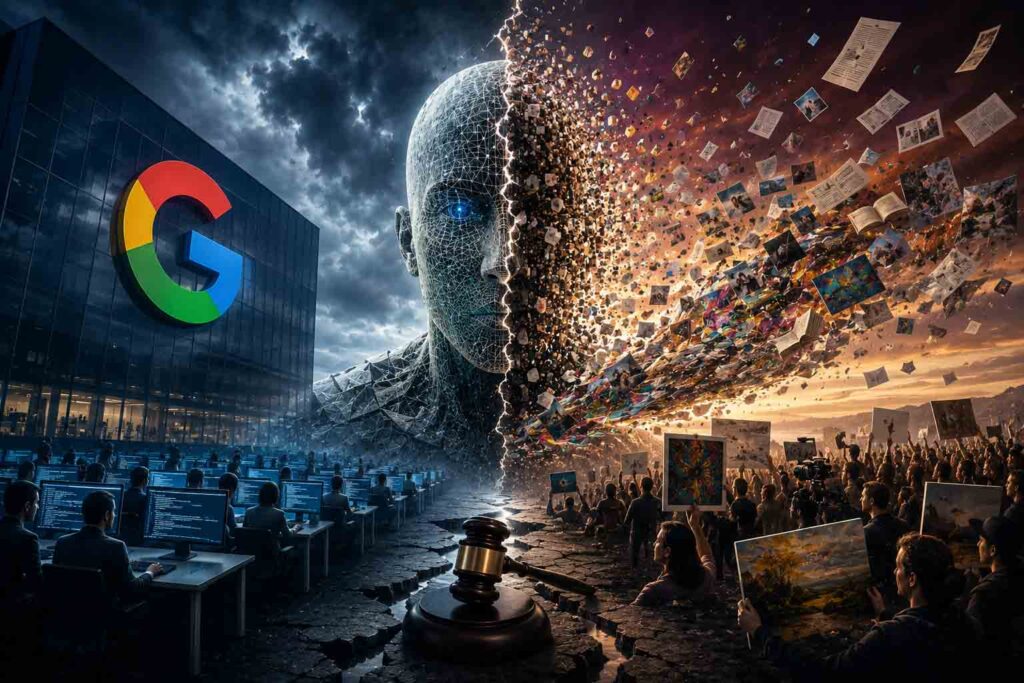
    The controversy surrounding AI training data has been brewing for years, culminating in a series of high-stakes lawsuits against major AI developers. In this specific legal battle, a coalition of prominent authors, news publishers, and media organizations has filed a sweeping lawsuit against Google. These plaintiffs allege that the tech giant unlawfully scraped, copied, and utilized their copyrighted materials to build and refine its generative AI systems, most notably Google Gemini.

    The Plaintiffs and the Allegations

    The plaintiffs involved in this lawsuit represent a broad spectrum of the publishing industry. They include independent authors, major book publishers like Hachette Book Group, Cengage Learning, and Elsevier, alongside prominent figures such as bestselling author Scott Turow. According to the lawsuit, Google is accused of ingesting massive quantities of copyrighted text—including books, paywalled news articles, opinion pieces, and digital media—without seeking permission or offering compensation.

    The core allegation is that Google Gemini and its underlying large language models (LLMs) were built on the backs of these creators. The plaintiffs argue that by using their protected works as AI training data, Google committed copyright infringement on a massive scale. They claim that the AI systems are not only copying their work during the training phase but also generating outputs that closely mimic the style, tone, and sometimes the exact phrasing of the original copyrighted materials.

    The Connection to Google Gemini

    Google Gemini, the company’s flagship multimodal AI model, is at the heart of this dispute. Designed to compete with and surpass other leading AI models, Gemini is deeply integrated into Google’s ecosystem, powering everything from search summaries to enterprise software. To achieve its high level of sophistication, Gemini required an astronomical amount of training data. The plaintiffs allege that this data pipeline indiscriminately vacuumed up copyrighted works, essentially turning the life’s work of human authors into free fuel for a highly profitable commercial product.

    Why This Lawsuit Matters

    This Google AI lawsuit is far more than a standard corporate dispute; it strikes at the very foundation of how the generative AI industry operates. The legal questions raised here will likely set binding precedents for decades to come.

    AI Model Training and the Scraping Economy

    To understand the gravity of the lawsuit, one must understand AI model training. Generative AI relies on scraping billions of parameters from the web. The models analyze this data to learn language patterns, grammar, facts, and reasoning capabilities. If courts rule that this ingestion process is inherently illegal without explicit licensing, the fundamental architecture of AI development will have to be rebuilt from the ground up.

    Copyright Law and the Fair Use Debate

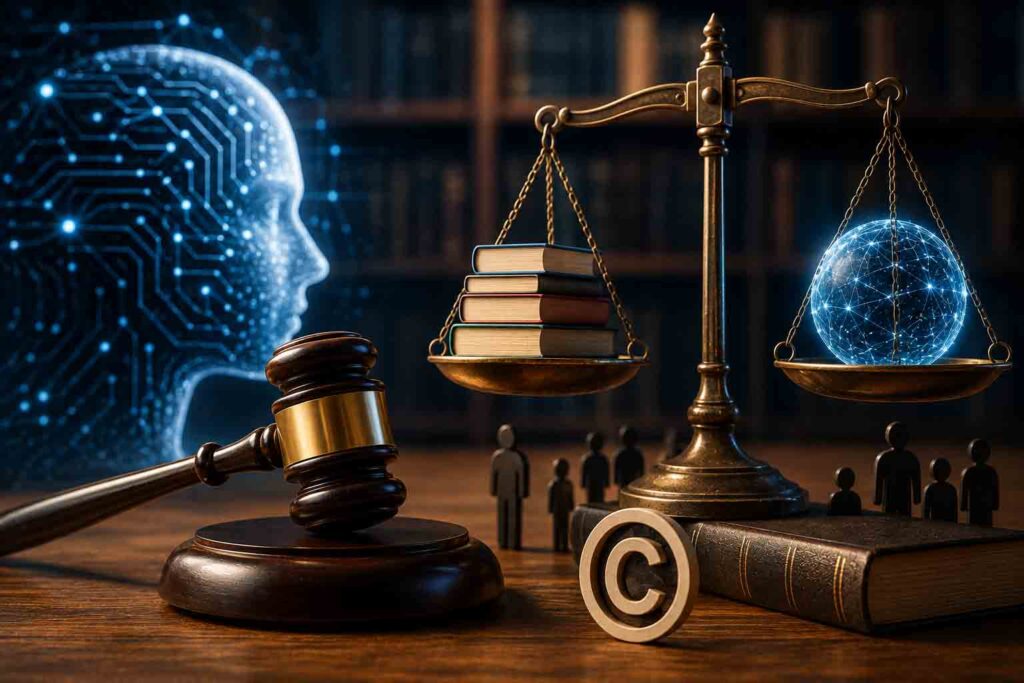
    The lawsuit places a spotlight on the limitations of current copyright law. Traditional copyright was designed to protect creators from direct piracy—someone copying a book and selling it. Generative AI complicates this because it does not simply copy and paste; it “learns” from the text. This brings us to the Fair Use debate. Does training a neural network constitute a transformative, fair use of copyrighted material, or is it merely high-tech plagiarism?

    Impact on Publishers and Authors

    For publishers and authors, this is an existential crisis. The internet is already a challenging environment for monetization. If an AI can read an entire news site and summarize its contents for a user in seconds, the user has no reason to click through to the original publisher. This deprives publishers of ad revenue, subscription conversions, and site traffic. Authors are similarly threatened by AI models that can mimic their unique writing styles and produce competing works, potentially devaluing human creativity.

    Ethical Concerns

    Beyond the legal framework, there are profound ethical concerns. Many creators feel violated knowing their hard work was used to train machines that might eventually replace them. The lawsuit highlights the need for an ethical approach to AI development, where consent and compensation are prioritized over rapid technological advancement.

    Google’s Possible Defense

    While the courts will ultimately decide the facts of the case, Google—like other AI giants facing similar litigation—has a robust set of legal arguments it could deploy. It is important to note that these are possible legal positions based on the framework of U.S. copyright law, not established judicial facts.

    The Fair Use Doctrine

    Google’s primary defense will likely center on the Fair Use doctrine. In the United States, Fair Use allows for the limited use of copyrighted material without permission for purposes such as criticism, news reporting, teaching, and research. Google could argue that training an AI model is a highly transformative use of the data.

    Transformative Use

    Under a transformative use defense, Google could assert that its AI does not reproduce the plaintiffs’ works to compete with them directly. Instead, the AI extracts statistical correlations, patterns, and linguistic structures to create something entirely new: a dynamic, interactive digital brain. Because the AI converts text into mathematical weights and biases within a neural network, Google could argue that it is not distributing copyrighted works, but rather learning from them in a way akin to a human reading a book at a public library.

    Publicly Available Information

    Another potential argument is the nature of the internet itself. Google could point out that much of the AI training data was freely accessible on the open web. The tech giant might argue that if a website does not explicitly block web crawlers, the data is fair game for indexing and analysis, an argument that has historically protected search engine operations.

    AI Innovation and Public Benefit

    Finally, Google may lean on the broader societal implications of the lawsuit. They could argue that overly restrictive interpretations of AI copyright would stifle American technological innovation. By framing generative AI as a critical tool for national competitiveness, scientific research, and economic growth, Google could position its data practices as a necessary step for the greater public good.

    How This Could Affect Generative AI

    The ripple effects of this Google copyright lawsuit will extend far beyond Mountain View. Every major player in the artificial intelligence sector is watching this case closely, as the verdict will directly impact their business models.

    Impact on Tech Giants (OpenAI, Anthropic, Meta, Microsoft)

    If the plaintiffs secure a decisive victory, it will set a legal precedent that will immediately threaten companies like OpenAI, Anthropic, Meta, and Microsoft. All of these companies rely on similar data-scraping methodologies to train their LLMs. A ruling against Google could trigger an avalanche of injunctions and copycat lawsuits across the industry, forcing these tech giants to completely halt training or retroactively purge copyrighted data from their existing models—a process known as “machine unlearning,” which is technically incredibly difficult, if not impossible.

    The Survival of AI Startups

    While companies with trillion-dollar market caps might be able to afford massive licensing fees to continue operating, AI startups could be devastated. If the future of AI requires paying millions of dollars to content conglomerates for clean, licensed training data, the barrier to entry will become insurmountable for small innovators. This could lead to an oligopoly where only the wealthiest tech companies can afford to develop foundational AI models.

    AI Regulation and the Future of AI

    This lawsuit may force the hand of lawmakers. Currently, AI regulation is a patchwork of disparate global policies. A messy, protracted legal battle could prompt Congress or international bodies to draft specific legislation regarding AI training data. We could see the creation of mandatory collective licensing systems, similar to how radio stations pay to broadcast music, ensuring that creators are compensated whenever their work is ingested by a machine.

    What It Means for Website Owners

    For digital publishers, bloggers, and website owners, the Google AI lawsuit touches on the very survival of their digital properties. The shift from traditional search engines to AI-driven answers is already altering the internet economy.

    AI-Generated Search and SEO

    Google is rapidly integrating AI into its search results, providing users with direct, synthesized answers rather than a list of blue links. If Google is allowed to train on publishers’ data indefinitely, website owners fear that traditional Search Engine Optimization (SEO) will become obsolete. Users will simply read the AI’s summary and leave, resulting in a massive loss of organic traffic.

    Generative Engine Optimization (GEO)

    Website owners are already pivoting from SEO to GEO (Generative Engine Optimization). GEO focuses on optimizing content so that AI models cite the website as a primary source in their generated responses. However, if the lawsuit forces Google to alter its algorithm or compensate creators, the entire strategy behind GEO could shift overnight.

    Content Ownership and Licensing

    A victory for the plaintiffs could empower website owners. It could lead to the development of standardized protocols where websites can easily opt-in or opt-out of AI training. More importantly, it could open up a lucrative new revenue stream: content licensing. Large publishing networks could negotiate exclusive data-sharing deals with AI companies, turning their archives into highly valuable assets.

    What It Means for Everyday Users

    While the lawsuit is a battle of billionaires and publishing titans, the outcome will directly affect everyday internet users, students, professionals, and creatives.

    The Future of AI Tools

    Millions of people rely on AI tools daily to draft emails, write code, plan itineraries, and brainstorm ideas. If the courts impose strict copyright limitations, the quality of these AI tools could degrade. Without access to a broad, diverse dataset of high-quality human writing, generative AI might become less accurate, more repetitive, and prone to hallucinations.

    The End of “Free” AI?

    Currently, many powerful AI models are available for free or for a relatively low monthly subscription. If AI companies are suddenly required to pay billions of dollars in licensing fees to authors and publishers, those costs will inevitably be passed down to the consumer. The era of free, unrestricted access to state-of-the-art AI could come to an end.

    Impact on Students and Businesses

    Students who use AI for research and businesses that integrate AI into their customer service and content creation workflows will need to navigate a new landscape. If AI outputs are deemed to contain unlicensed copyrighted material, end-users might face liability for using AI-generated content in commercial products.

    Protection for Content Creators

    On a positive note, for the millions of independent artists, writers, and musicians on the internet, this lawsuit offers hope. It represents a pushback against the non-consensual use of their art, potentially restoring their ability to control how their creations are used and ensuring they are fairly compensated in the digital age.

    Expert Analysis

    Legal scholars, technologists, and economists are deeply divided on the Google AI lawsuit. Analyzing the situation requires balancing the undeniable benefits of AI innovation against the fundamental rights of creators.

    On one side, copyright maximalists argue that theft is theft, regardless of how advanced the technology is. They point out that AI companies are building multi-billion-dollar empires using raw materials they acquired for free. From this perspective, requiring AI companies to license data is not just legally sound; it is morally necessary to prevent the collapse of the creative economy.

    On the other side, techno-optimists and some legal experts caution against applying 20th-century copyright paradigms to 21st-century technology. They argue that human authors read thousands of books to develop their own writing styles without paying royalties to the original authors. If the courts rule that an AI’s mathematical analysis of text is a copyright violation, it could effectively criminalize the core mechanism of machine learning, handing a massive geopolitical advantage to countries with looser intellectual property laws.

    Ultimately, experts suggest that a middle ground must be found—perhaps a modern digital framework that allows for the fair use of data for algorithmic training, coupled with a transparent royalty system that rewards the human creators whose work makes the AI intelligent in the first place.

    Frequently Asked Questions

    1. What is the Google AI lawsuit about? The lawsuit is a legal challenge brought by authors and publishers who allege that Google used their copyrighted books, articles, and content without permission or compensation to train its generative AI models, such as Google Gemini.

    2. How does AI training data relate to copyright infringement? Generative AI models learn by analyzing massive amounts of text. Plaintiffs argue that downloading and processing their copyrighted works to build a commercial AI product violates their exclusive rights to control and monetize their intellectual property.

    3. What is Google’s likely defense? Google is expected to argue that training an AI is protected under the Fair Use doctrine. They will likely claim that the process is “transformative” because it creates a new digital tool (a neural network) rather than distributing exact copies of the original works.

    4. How will this lawsuit affect Google Gemini? If Google loses, it may be forced to pay significant damages, alter how Gemini is trained, or even remove certain data from the model. This could temporarily affect the performance of Gemini and slow down future updates.

    5. Will this affect other AI companies like OpenAI? Yes. The legal precedent set by this Google copyright lawsuit will apply to the entire AI industry. OpenAI, Anthropic, and Meta use similar data-gathering methods, meaning a ruling against Google could trigger a wave of legal and operational challenges for them as well.

    6. Does this mean AI tools will become expensive? It is highly possible. If AI developers are legally required to license all training data, the massive costs of those licenses will likely be passed on to users through higher subscription fees for premium AI tools.

    7. How does this impact website owners and SEO? Website owners are concerned that AI will use their content to answer user queries directly, reducing website traffic. The lawsuit could force AI companies to cite sources better or pay websites for the right to use their data, fundamentally changing SEO strategies.

    8. What happens to the future of AI regulation? This lawsuit is pushing governments to act. It could lead to the establishment of new regulatory frameworks and copyright laws specifically designed for the AI era, ensuring a balance between technological innovation and creator compensation.

    Conclusion

    The Google AI lawsuit is much more than a legal squabble over licensing fees; it is a defining moment for the future of generative AI. As artificial intelligence becomes increasingly embedded in our daily lives, the tension between rapid technological progress and the protection of human creativity has reached a breaking point.

    The outcome of this Google copyright lawsuit will echo across the tech industry, influencing everything from AI regulation and AI model training to the future of search engines and digital publishing. Whether the courts side with the rights of content creators or prioritize the transformative potential of AI innovation, the verdict will establish the ground rules for the next era of the internet. As we watch this legal battle unfold, one thing is certain: the wild west of unregulated AI data scraping is rapidly coming to an end.

    SEO Requirements

    SEO Title: Google AI Lawsuit: How It Impacts the Future of Generative AI Meta Description: Explore the major Google AI lawsuit regarding AI training data and copyright. Learn how this legal battle impacts Google Gemini, SEO, and the future of AI. URL Slug: google-ai-lawsuit-generative-ai-copyright Image ALT text: A conceptual illustration of a digital gavel striking a computer keyboard, representing the Google AI copyright lawsuit and the future of generative AI.

    Suggested Internal Links:

    • Link to a guide on “What is Generative AI and How Does it Work?”

    • Link to an article on “The Evolution of Google Gemini.”

    • Link to a resource covering “SEO vs. GEO: Optimizing for AI Search.”

    Suggested External Sources:

    • The United States Copyright Office (Official Guidelines on AI)

    • Electronic Frontier Foundation (EFF articles on Fair Use and AI)

    • Reuters or Bloomberg Technology (For general ongoing legal tracking of tech lawsuits)

    20 SEO Tags: Google AI lawsuit, Google Gemini, AI copyright, Generative AI, AI training data, Google copyright lawsuit, AI regulation, Future of AI, machine learning law, AI model training, copyright infringement AI, Fair Use doctrine, tech lawsuit, AI ethics, digital publishing, SEO and AI, Generative Engine Optimization, OpenAI lawsuit, tech journalism, artificial intelligence legal battles.


    🌟 Add More Joy & Useful Information to Your Everyday Life

    Explore our YouTube channels and TikTok for relaxing music, trending products, helpful tips, and inspiring content updated regularly.


    ✨ Adding Joy & Useful Information to Your Everyday Life ✨

    Thank you for visiting. We hope you enjoyed this article and found it helpful.