초보 자전거 라이딩을 준비하시나요? 예쁜 자전거를 한 대 장만하고 나면 당장이라도 탁 트인 자전거 도로를 달리고 싶은 마음이 앞섭니다. 하지만 막상 페달을 밟으려다 보면…
자전거를 처음 시작하는 분들은 어떤 장비가 정말 필요한지 몰라 꼭 필요하지 않은 용품들까지 한꺼번에 구매하곤 합니다. 하지만 모든 장비를 처음부터 완벽하게 갖출 필요는 없습니다.
2026년 최신 트렌드와 라이딩 환경을 고려해, 이 글에서는 오직 ‘안전성’과 ‘실제 활용도’를 기준으로 초보 라이더가 꼭 챙겨야 할 자전거 라이딩 준비물을 정리해 드립니다.
1. 자전거 초보자가 라이딩 전에 확인해야 할 것
‘초보 자전거 라이딩’ 용품을 챙기기 전에 가장 먼저 해야 할 일은 내 자전거의 상태를 점검하는 것입니다. 아무리 좋은 장비가 있어도 자전거의 기본 상태가 불안정하면 위험할 수 있습니다.
타이어 상태: 적정 공기압이 유지되고 있는지 손으로 눌러 확인하고, 표면에 갈라진 곳은 없는지 살펴봅니다.
브레이크 상태: 양쪽 브레이크 레버를 잡았을 때 부드럽게 멈추는지, 밀리는 느낌은 없는지 주행 전 반드시 테스트하세요.
체인 상태: 체인이 녹슬거나 이물질이 끼어있지 않은지 확인합니다. 체인이 너무 헐겁거나 뻑뻑하다면 주행 중 이탈할 수 있습니다.
안장 높이: 페달을 가장 아래로 내렸을 때 무릎이 살짝 굽혀지는 정도가 이상적입니다.
날씨 및 주행 경로 확인: 출발 전 비 소식이나 강풍 주의보가 없는지 확인하고, 자신의 체력에 맞는 안전한 자전거 전용도로 위주의 경로를 선택하세요.
💡 주의: 자전거 상태 점검 중 브레이크 패드 마모나 기어 변속 불량 등 전문적인 정비가 필요한 문제를 발견했다면, 무리하게 직접 고치려 하지 말고 가까운 자전거 전문 매장에서 점검을 받는 것을 권장합니다.
2. ‘초보 자전거 라이딩’ 자전거 라이딩 필수 안전용품
자전거 용품 추천에서 가장 1순위는 언제나 ‘안전’과 직결된 아이템들입니다.
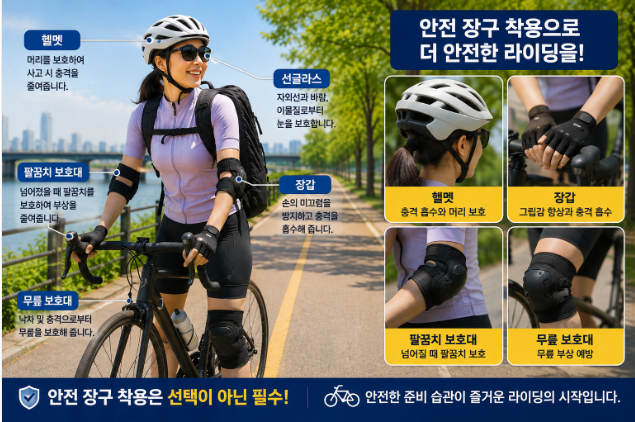
자전거 헬멧: 선택이 아닌 필수입니다. 가볍고 통풍이 잘 되며, 자신의 머리 둘레에 딱 맞는 제품을 골라 턱끈을 단단히 조여 매야 합니다.
전조등과 후미등: 야간은 물론 주간 라이딩 시에도 다른 자전거와 보행자에게 내 위치를 알리는 중요한 역할을 합니다.
반사 용품: 야간 라이딩 시 옷이나 가방에 부착하여 시인성을 높여줍니다.
스포츠 장갑: 넘어졌을 때 손을 보호하고, 핸들바의 진동을 흡수해 피로도를 줄여줍니다.
3. 스마트폰을 안전하게 사용하는 방법
라이딩 중 길을 찾거나 음악을 듣기 위해 스마트폰을 조작하는 행동은 매우 위험합니다. 주행 중에는 절대로 스마트폰을 손에 들고 사용해서는 안 됩니다.
경로 확인이나 메시지 확인이 필요하다면 반드시 자전거 도로 가장자리의 안전한 곳에 완전히 정차한 후 스마트폰을 사용하세요. 주행 중 내비게이션 화면을 참고해야 한다면, 시야를 크게 뺏지 않는 안전한 각도에 전용 거치대를 설치해 활용하는 것이 좋습니다.
4. ‘초보 자전거 라이딩’ 장거리 라이딩에서 유용한 준비물
동네 한 바퀴를 넘어 1~2시간 이상의 장거리 라이딩을 계획하고 있다면 다음 준비물들을 챙겨보세요.
필수품: 물(수분 보충을 위해 필수), 신분증, 약간의 비상금, 스마트폰.
선택품: 휴대용 펌프 및 펑크 패치 등 기본 공구, 간단한 에너지바, 얇은 바람막이, 보조배터리.
이러한 물품들을 주머니에 넣고 타면 페달링에 방해가 되므로, 몸에 밀착되는 작은 슬링백이나 자전거에 부착하는 가방을 활용하는 것이 좋습니다.
5. 🚲 ‘초보 자전거 라이딩’ 을 조금 더 편리하게 만드는 추천 아이템
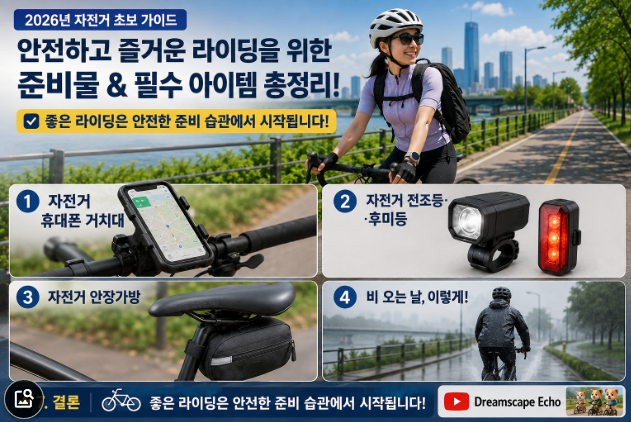
초보 라이더의 안전과 편의를 동시에 높여줄 2026년 필수 자전거 용품 3가지를 소개합니다.
① 자전거 휴대폰 거치대
초보 라이더는 길을 잃기 쉽기 때문에 내비게이션 활용을 위해 거치대가 필요합니다. 제품을 고를 때는 주행 중 진동에도 스마트폰을 꽉 잡아주는 고정력이 가장 중요합니다. 또한, 자신의 스마트폰 크기(케이스 포함)와 호환되는지, 핸들바에 흔들림 없이 장착되는 방식인지, 그리고 휴식 시 빠르게 스마트폰을 분리할 수 있는 탈착 편의성을 꼼꼼히 확인하세요.
② 자전거 전조등·후미등
어두운 곳에서 시야를 확보하는 것은 물론, 타인에게 나의 존재를 알리기 위해 앞뒤 라이트는 필수입니다. 전조등은 가로등이 없는 곳에서도 바닥을 비출 수 있는 충분한 밝기(루멘)를 갖춘 것이 좋으며, 후미등은 멀리서도 눈에 띄는 붉은색 점멸 기능이 있는 것이 좋습니다. USB 충전 방식의 배터리가 편리하며, 갑작스러운 비에 대비해 기본 방수 등급(IPX4 이상)을 갖춘 제품을 추천합니다.
③ 자전거 안장가방
장거리 라이딩 시 무거운 백팩을 메면 어깨와 허리에 무리가 갑니다. 자전거 안장 아래에 부착하는 안장가방(새들백)은 휴대용 공구, 여분의 튜브, 열쇠, 간단한 간식 등을 보관하기에 최적의 아이템입니다. 페달링에 방해가 되지 않는 콤팩트한 크기를 고르되, 벨크로나 버클로 안장 레일에 단단히 고정되는지 확인하세요. 빗물이나 진흙이 튀기 쉬운 위치이므로 방수 재질로 된 제품이 관리하기 편합니다.
6. ‘초보 자전거 라이딩’비 오는 날, 자전거 타도 괜찮을까요?
앞서 소개한 Dreamscape Echo의 첫 번째 영상처럼, 비 오는 날 고즈넉한 풍경 속을 달리는 낭만도 있습니다. 하지만 빗길 라이딩은 평소보다 각별한 주의가 필요합니다.
비가 오면 노면이 매우 미끄러워져 타이어 접지력이 떨어지고 제동거리가 평소보다 1.5배 이상 길어집니다. 또한 시야가 좁아져 돌발 상황에 대처하기 어렵습니다. 따라서 악천후에는 무리해서 라이딩을 나서기보다 안전하게 실내에서 쉬어가는 것을 권장합니다. 부득이하게 비를 맞으며 주행했다면, 귀가 후 체인과 기어에 묻은 물기를 닦아내고 오일을 발라주어야 자전거 수명을 유지할 수 있습니다.
7. 결론: 좋은 라이딩은 안전한 준비 습관에서 시작됩니다
처음 자전거를 탈 때는 남들이 가진 비싸고 화려한 장비가 부러워 보일 수 있습니다. 하지만 진정으로 즐겁고 건강한 라이딩은 비싼 장비가 아니라, 타이어 공기압을 한 번 더 확인하고 내 몸에 맞는 안전용품을 챙기는 작은 습관에서 시작됩니다.
오늘 소개해 드린 자전거 초보 준비물들을 참고하셔서 2026년에는 더욱 안전하고 상쾌한 라이딩을 즐기시길 바랍니다. 글 중간에 소개했던 Dreamscape Echo 채널의 동물 친구들 영상 외에도 재미있고 힐링되는 자전거 영상들이 준비되어 있으니, 라이딩을 마치고 여유롭게 둘러보시는 것도 추천해 드립니다!
💡 자주 묻는 질문 (FAQ)
Q1. 자전거 초보자에게 가장 먼저 필요한 용품은 무엇인가요? A: 생명과 직결되는 ‘자전거 헬멧’과 야간 및 주간 안전을 위한 ‘전조등·후미등’이 가장 1순위로 준비해야 할 필수 용품입니다.
Q2. 낮에도 자전거 전조등과 후미등이 필요한가요? A: 네, 필요합니다. 주간이라도 흐린 날씨나 터널, 그늘진 곳에서는 시인성이 떨어지므로, 주간 주행등(점멸 모드)을 켜두면 자동차나 다른 라이더가 나의 위치를 더 빨리 파악할 수 있어 사고를 예방하는 데 도움이 됩니다.
Q3. 자전거 휴대폰 거치대는 어떤 제품을 골라야 하나요? A: 주행 중 충격과 진동에도 스마트폰이 이탈하지 않도록 4면을 단단히 잡아주거나 락(Lock) 기능이 있는 제품, 그리고 핸들바 굵기에 맞춰 흔들림 없이 고정되는 제품을 선택하는 것이 좋습니다.
Q4. 자전거 안장가방에는 무엇을 넣으면 좋나요? A: 부피가 작고 무겁지 않은 물품 위주로 수납합니다. 예비용 튜브, 다목적 공구(멀티툴), 펑크 패치, 타이어 주걱, 작은 보조배터리나 열쇠 등을 보관하기 좋습니다.
Q5. 비 오는 날 자전거를 타도 괜찮나요? A: 빗길은 미끄럽고 제동거리가 길어지며 시야 확보가 어려워 사고 위험이 큽니다. 가급적 라이딩을 피하는 것이 좋으며, 주행 중 비를 만났다면 속도를 줄이고 평소보다 앞차와의 간격을 충분히 유지하며 안전하게 복귀해야 합니다.
올려주신 자전거 초보자 가이드 글 확인했습니다!
말씀하신 대로 앞의 본문은 그대로 두시고, 글의 맨 밑부분(📑 관련기사 및 📚 참고자료)만 싹 지우신 다음 아래 내용을 복사해서 그대로 덮어쓰기 하시면 됩니다.
공식 사이트 주소 매칭은 물론, 직전에 만들어드렸던 ‘함께 보면 좋은 글’ HTML 코드까지 한 번에 묶어서 정리해 두었습니다!
메타 설명: 돌아온 백구 실화 1993년, 대전으로 팔려간 진돗개 백구가 300km를 달려 진도의 할머니에게 돌아온 감동적인 실화. 진돗개의 귀소본능과 충성심, 그리고 반려견 실종을 예방하는 필수 안전 가이드를 확인해 보세요.
“팔려간 백구가 어떻게 다시 주인을 찾아 돌아올 수 있었을까?”
1993년, 대한민국을 눈물바다로 만들었던 돌아온 백구 실화를 기억하시나요? 전라남도 진도에서 대전으로 팔려 갔던 백구가 무려 300km가 넘는 거리를 7개월 동안 헤매다 본래 주인이던 할머니의 품으로 돌아온 이 사건은, 당시 큰 화제가 되며 동화와 광고로도 제작되었습니다.
돌아온 백구 실화, 단순한 전설이나 지어낸 이야기가 아닌, 명백한 진도개 실화인 이 사건은 우리에게 반려견의 깊은 사랑과 놀라운 능력을 다시금 깨닫게 합니다. 백구는 도대체 어떻게 그 먼 길을 기억하고 주인을 찾아온 강아지가 될 수 있었을까요? 감동적인 스토리 이면에 숨겨진 진돗개의 특성과, 우리가 사랑하는 반려견을 잃어버리지 않기 위해 꼭 알아야 할 예방 수칙을 정리해 드립니다.
백구의 기적 같은 300km 여정과 할머니와의 눈물겨운 재회 장면은 글로 다 담아내기 어려울 만큼 깊은 감동을 줍니다. 이미 40만 명이 넘는 분들이 시청하고 눈물 흘린 백구의 생생한 실화를 아래 영상에서 먼저 확인해 보세요.
1. 돌아온 백구 이야기는 무엇인가?
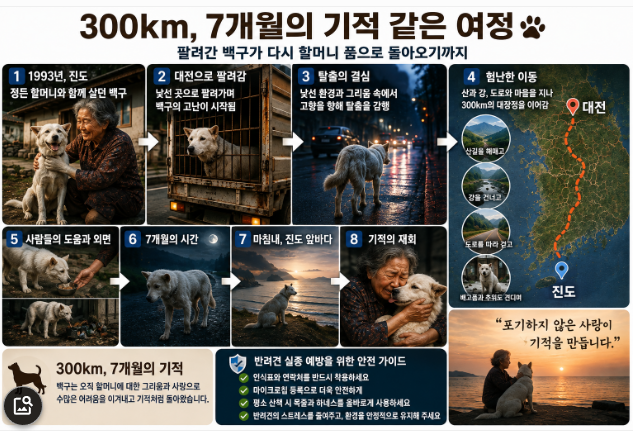
1988년 전남 진도군에서 태어난 백구는 박복단 할머니의 따뜻한 보살핌을 받으며 자랐습니다. 하지만 돌아온 백구 실화, 1993년 3월, 어려운 형편 때문에 백구는 대전의 한 애견가에게 팔려가게 됩니다. 새로운 환경에 적응하지 못하던 백구는 결국 목줄을 끊고 탈출했고, 그로부터 7개월 뒤인 1993년 10월, 뼈가 앙상하게 드러난 모습으로 진도의 할머니 집 마당에 나타났습니다.
약 300km에 달하는 낯선 길을, 그것도 바다로 둘러싸인 섬까지 스스로 찾아온 이 사건은 수많은 사람들에게 충격과 감동을 주었습니다. 백구가 2000년 12살의 나이로 무지개다리를 건널 때까지, 이 특별한 주인을 찾아온 강아지 이야기는 진돗개 충성심의 대명사로 역사에 남게 되었습니다.
2. 백구의 기적, 과학적으로 가능할까?
돌아온 백구가 오랫동안 사람들에게 기억되는 이유는 기적 같은 스토리 때문이기도 하지만, 개라는 동물이 가진 놀라운 능력에 대한 경이로움 때문이기도 합니다.
돌아온 백구 실화, 진돗개가 충성심이 강하다고 알려진 이유
진돗개는 평생 한 명의 보호자, 혹은 하나의 가족만을 섬기는 성향이 강한 것으로 잘 알려져 있습니다. 이는 진돗개가 지닌 강한 경계심과 독립성 때문이기도 합니다. 낯선 사람에게는 쉽게 곁을 내어주지 않지만, 자신이 신뢰하고 애착을 형성한 보호자에게는 맹목적인 충성심과 깊은 애정을 보입니다.
진돗개의 귀소본능은 실제로 가능한가?
진돗개 귀소본능은 수많은 사례를 통해 입증되어 왔습니다. 개들은 인간보다 수천 배 이상 발달한 후각과 뛰어난 청각을 지니고 있습니다. 일부 동물학자들은 개가 지구의 자기장을 감지하는 능력이 있어 방향을 잡을 수 있다는 가설을 제기하기도 합니다. 백구 역시 뛰어난 본능과 감각, 그리고 무엇보다 ‘할머니에게 돌아가겠다’는 강렬한 애착과 기억이 시너지를 내어 기적을 만든 것으로 전문가들은 분석합니다.
돌아온 백구 실화, 강아지는 주인과 가족을 어떻게 기억하는가?
반려견은 보호자를 주로 ‘냄새’와 ‘목소리’로 기억합니다. 개의 뇌 구조상 후각과 관련된 영역은 감정과 기억을 담당하는 편도체와 직접적으로 연결되어 있습니다. 보호자와 함께했던 공간의 냄새, 칭찬해주던 목소리의 톤은 반려견의 뇌리에 깊게 각인되어 수년이 지나도 잊히지 않습니다.
3. 기적을 바라기 전, 우리가 해야 할 일
백구의 이야기는 감동적이지만, 모든 반려견 실종 사건이 해피엔딩으로 끝나는 것은 아닙니다. 실제로 매년 수만 마리의 반려견이 길을 잃고 유기동물 보호소로 향합니다.
반려견이 길을 잃는 주요 상황
산책 중 돌발 상황: 큰 소리(오토바이, 천둥, 폭죽)에 놀라 목줄을 끊거나 하네스가 풀려 도망치는 경우.
열린 문 틈: 현관문이나 창문이 열린 틈을 타 호기심에 밖으로 나가는 경우.
발정기: 중성화를 하지 않은 강아지가 본능에 이끌려 집을 나서는 경우.
산책할 때 꼭 확인해야 할 안전수칙
동물등록(마이크로칩) 필수: 내장형 마이크로칩은 반려견을 잃어버렸을 때 가장 빠르고 확실하게 주인을 찾아주는 수단입니다.
외출 전 장비 점검: 하네스가 헐겁지 않은지, 리드줄 고리에 이상이 없는지 확인하세요.
시야 확보: 산책 중에는 항상 반려견을 시야 안에 두고 집중해야 합니다.
4. 반려견을 잃어버리지 않기 위해 준비하면 좋은 것들
돌아온 백구 실화 우리 강아지가 먼 길을 홀로 헤매게 두어서는 안 됩니다. 반려견 실종 예방은 작은 준비에서 시작됩니다. 실종 방지를 위해 실제 보호자분들이 필수적으로 구비해야 할 아이템들을 소개합니다.
마이크로칩과 별개로, 길을 잃은 강아지를 발견한 사람이 직관적으로 보호자의 연락처를 확인할 수 있도록 돕는 가장 일차적인 안전장치입니다. 하네스나 목걸이에 항상 부착해 두는 것이 좋습니다.
② 튼튼한 하네스와 안전한 리드줄
산책 중 강아지가 뒤로 물러서며 쏙 빠져버리는 사고를 막기 위해서는 체형에 맞고 벗겨짐을 방지하는 H형/Y형 하네스가 필요합니다. 또한 끊어질 염려가 없는 내구성 강한 리드줄을 사용해야 합니다.
③ 야간 산책용 LED 용품
어두운 저녁 산책 시 강아지가 시야에서 사라지는 것을 막아주고, 자동차나 자전거로부터 반려견을 보호해 줍니다.
④ 위치 확인용 반려견 추적 장치 (스마트 태그/GPS)
최근 보호자들 사이에서 필수품으로 자리 잡은 스마트 태그입니다. 강아지가 시야에서 사라졌을 때 스마트폰으로 실시간 위치나 마지막 신호 발생 위치를 파악할 수 있어 골든타임을 확보하는 데 큰 도움이 됩니다.
⑤ 산책용 휴대 물병 및 안전 이동가방
장거리 산책 시 탈진을 막아주는 물병과, 대중교통 이용이나 사람이 많은 곳에서 안전하게 강아지를 보호할 수 있는 이동가방도 돌발적인 실종을 막아주는 중요한 도구입니다.
5. 결론: 돌아오는 기적을 기다리기보다, 잃어버리지 않는 것이 먼저입니다
돌아온 백구 실화는 30여 년이 지난 지금까지도 우리에게 진한 감동을 선사합니다. 하지만 반려견이 길을 잃고 굶주림과 두려움 속에서 떠돌아야 했던 그 7개월의 시간은 분명 백구에게 너무나 가혹한 시련이었습니다.
우리 반려견이 기적처럼 돌아오기를 기도하는 상황은 애초에 만들지 않는 것이 최선입니다. 철저한 안전 장비 점검, 동물등록, 그리고 산책 시 주의를 기울이는 작은 습관이 여러분의 소중한 반려견을 지킬 수 있습니다.
감동적인 백구의 여정과 그 속에 담긴 따뜻한 털복숭이들의 이야기가 더 궁금하시다면, 40만 명이 시청한 백구 이야기 영상을 꼭 시청해 보세요! 채널을 방문하시면 더 다양하고 감동적인 반려견 스토리를 만나보실 수 있습니다.
💡 자주 묻는 질문 (FAQ)
Q1. 돌아온 백구 이야기는 실화인가요? 네, 1993년 전라남도 진도에서 실제로 일어난 사건입니다. 대전으로 팔려간 백구가 약 300km를 되돌아 진도의 할머니에게 7개월 만에 돌아온 100% 실화입니다.
Q2. 진돗개는 정말 주인을 잘 기억하나요? 진돗개는 첫 정을 준 보호자를 평생 기억하고 따르는 일편단심의 성향이 매우 강한 견종입니다. 뛰어난 후각과 기억력으로 보호자를 정확히 인지합니다.
Q3. 진돗개의 귀소본능은 특별한가요? 모든 개에게는 귀소본능이 있지만, 특히 진돗개는 귀소본능이 유독 강한 것으로 알려져 있습니다. 과거부터 수많은 진돗개가 수십~수백 킬로미터를 돌아온 사례가 기록되어 있습니다.
Q4. 강아지를 잃어버렸을 때 가장 먼저 무엇을 해야 하나요? 즉시 잃어버린 장소 주변을 탐색하며 강아지의 이름을 부르고, 동물보호관리시스템(APMS)에 실종 신고를 해야 합니다. 지역 당근마켓, SNS, 전단지 등을 활용해 빠르게 주변에 알리는 것이 중요합니다.
Q5. 반려견 실종 예방에 어떤 준비가 필요한가요? 내장형 마이크로칩 삽입(동물등록), 연락처가 적힌 인식표 착용, 체형에 맞는 튼튼한 하네스 및 리드줄 사용, 스마트 위치 추적기 장착 등이 필수적입니다.
집 안을 가만히 둘러보면 우리가 매일 무심코 사용하는 물건이 생각보다 참 많습니다. 아침에 일어나서 쓰는 화장지부터 세안 후 뽑아 쓰는 수건, 매일 입는 옷을 빠는 세탁세제, 주방 한편에 놓인 주방세제와 쓰레기봉투까지 우리 삶은 수많은 ‘생활용품’으로 채워져 있습니다.
이러한 물건들은 다 떨어지면 어김없이 다시 사야만 합니다. 한 번 구매할 때 나가는 돈은 불과 몇천 원에서 몇만 원 남짓이지만, 이 금액이 1년, 3년, 5년 동안 차곡차곡 쌓이면 가계 생활비에서 결코 무시할 수 없는 막대한 비중을 차지하게 됩니다.
문득 이런 의문이 들 수 있습니다.
“마트나 온라인에서 무조건 가장 저렴한 대용량 제품을 사는 것이 진짜 이득일까?”
“리뷰가 수만 개 달린 1위 상품이 과연 우리 집에도 완벽하게 맞을까?”
“1+1 행사 상품과 대용량 기획 상품 중 내 지갑을 지켜주는 진짜 효자는 무엇일까?”
이 글에서는 단순히 가격표만 보고 물건을 고르던 습관에서 벗어나, 사용 빈도, 용량, 보관 편의성, 후기 등을 종합적으로 따져보고 우리 집에 꼭 맞는 생활 필수템을 현명하게 선택하는 완벽한 가이드를 제시합니다.
생활 필수템, 어떻게 나누어 접근해야 할까?
가장 먼저 생활용품의 성격을 이해해야 합니다. 생활용품은 크게 두 가지로 나뉩니다.
반복 구매형 소모품: 화장지, 물티슈, 세제, 쓰레기봉투 등 한 번 쓰면 사라져서 주기적으로 다시 채워 넣어야 하는 제품입니다. (단위가격과 보관성이 핵심)
장기 사용형 편의용품: 빨래건조대, 리빙박스, 옷걸이, 청소용 밀대 등 한 번 사두면 고장 날 때까지 오랜 시간 곁에 두고 사용하는 제품입니다. (내구성과 공간 활용도가 핵심)
겉보기 가격에 속지 마세요: 핵심은 ‘단위가격’
온라인 쇼핑몰에서 15,000원짜리 A 화장지와 B 화장지가 있다고 가정해 보겠습니다. 가격이 같으니 아무거나 사도 이득일까요? 절대 그렇지 않습니다.
A 화장지는 30롤(2겹, 25m)이고, B 화장지는 24롤(도톰한 3겹, 30m)일 수 있습니다. 포장지에 적힌 가격은 같아도, 내가 실제로 사용할 수 있는 총량과 품질은 천차만별입니다. 세탁세제 역시 3리터짜리 일반 세제보다 2리터짜리 고농축 세제가 실제 세탁 횟수(가성비) 면에서 훨씬 뛰어날 수 있습니다.
💡 스마트 쇼핑의 제1원칙: 단위가격 계산하기
휴지를 살 때는 ‘10m당 가격’, 액체 세제는 ‘100ml당 가격’, 쓰레기봉투는 ‘1장당 가격’을 비교하는 습관을 들이세요. 1차 필터링은 무조건 단위가격 기준이어야 합니다.
생활용품 고르는 법, 대용량과 1+1 기획 상품의 숨은 함정
단위가격을 계산하다 보면 용량이 커질수록 저렴해진다는 것을 알게 됩니다. 하지만 대용량과 1+1 묶음 상품이 무조건 정답은 아닙니다.
가장 큰 문제는 ‘보관 공간’과 ‘품질 저하’입니다. 30롤 화장지 3팩을 싸게 샀지만 비좁은 베란다에 먼지를 맞으며 쌓아두어야 한다면 일상의 쾌적함을 잃게 됩니다. 또한 섬유유연제나 대용량 물티슈는 뚜껑을 열고 오래 방치하면 향이 날아가거나 물기가 말라버려 결국 다 쓰지 못하고 버리는 낭비가 발생합니다.
구매 유형
주요 장점
구매 시 주의점 및 단점
초저가 단품
초기 지출 비용이 매우 적음
소모 속도가 빨라 결국 더 자주 구매하게 됨
대용량 제품
단위가격이 가장 저렴함
좁은 집에서는 보관 공간을 크게 차지함
1+1 묶음
시각적 만족감 및 재고 확보
단품 가격을 꼼꼼히 비교하지 않으면 오히려 비쌀 수 있음
생활용품 고르는 법, 품목별 현명한 선택 가이드
1. 화장지와 물티슈
화장지: 롤 수만 보지 말고 ‘겹수(3겹 권장)’와 ‘길이(보통 25~30m)’, 그리고 천연 펄프 여부를 확인하세요.
물티슈: 바닥 청소용이라면 저렴한 제품을, 식사 전 손을 닦거나 피부에 닿는 용도라면 피부 자극 테스트를 거친 안전한 성분의 제품을 고르세요.
2. 세탁세제와 섬유유연제
세탁세제: 용량(ml)보다 ‘총 몇 회 세탁할 수 있는 분량인가’를 확인하세요. 고농축 여부와 세탁기 종류(드럼/통돌이) 호환성이 중요합니다.
향이 있는 제품: 샴푸나 섬유유연제처럼 향이 중요한 제품은 첫 구매부터 대용량을 사지 마세요. 작은 용량으로 테스트해 본 뒤 묶음 상품으로 넘어가야 돈 낭비를 막을 수 있습니다.
3. 수납함, 리빙박스, 옷걸이
수납용품: 쇼핑 전 줄자부터 꺼내세요. 제품 상세 페이지의 외부 실측 사이즈(가로/세로/높이)가 내 옷장이나 선반에 여유 있게 들어가는지 꼼꼼히 대조해야 합니다.
옷걸이: 용도에 맞게 분리하세요. 니트류는 목 늘어남을 방지하는 논슬립 옷걸이를, 겨울 코트는 어깨를 잡아주는 두툼한 정장용 옷걸이를 사용해야 옷을 망치지 않습니다.
생활용품 고르는 법, 실패를 줄이는 리뷰 분석법
수만 개의 리뷰가 달린 베스트셀러라도 우리 집에 완벽하다는 보장은 없습니다. 현명한 쇼핑객은 5점짜리 칭찬 리뷰보다 1~3점짜리 낮은 별점 리뷰를 집중적으로 탐독합니다.
“물티슈가 너무 얇아서 두 장씩 겹쳐 써야 해요.”
“밀대 손잡이가 약해서 힘을 주면 부러질 것 같아요.”
낮은 별점 리뷰에는 판매자가 감추고 싶어 하는 현실적인 단점이 적나라하게 드러납니다. 1만 명이 만족했더라도 내가 인내할 수 없는 공통된 단점이 있다면 과감히 피하는 것이 맞습니다.
생활용품 고르는 법, 생활비를 줄이는 가장 강력한 무기: ‘구매 기록’
복잡한 가계부를 쓰지 않고도 생활비를 획기적으로 줄이는 꿀팁이 있습니다. 바로 휴지, 물티슈, 세제 등 핵심 품목의 ‘구매 기록’을 스마트폰 메모장에 툭 적어두는 것입니다.
예: 10/1 – 두루마리 휴지 30롤 1팩 구매 (15,000원)
몇 달만 적어보면 우리 집이 30롤을 다 쓰는 데 정확히 며칠이 걸리는지 ‘소비 패턴’이 나옵니다. 내 패턴을 알면 세일이라는 말에 조급해져서 충동구매를 할 일이 완벽하게 사라집니다.
결제 전 마지막 점검! 필수템 구매 체크리스트
생활용품 고르는 법, 장바구니 결제 버튼을 누르기 전, 아래 항목들을 스스로에게 물어보세요.
[ ] 결제 전, 집 안 보관장소에 남은 재고가 없는지 확실히 점검했는가?
[ ] 묶음 상품의 화려함에 속지 않고 정확한 단위가격(개당/ml당)을 비교했는가?
[ ] 상세 페이지에서 줄자를 이용해 제품의 정확한 실측 규격을 파악했는가?
[ ] 눈속임 포장이 아닌, 실제로 내가 사용할 수 있는 총수량과 용량을 점검했는가?
[ ] 별점만 보지 않고 ‘최신순’ 및 ‘낮은 별점’ 리뷰를 꼼꼼히 읽어보았는가?
[ ] 배송비를 포함한 최종 결제 금액이 동네 마트보다 저렴한가?
[ ] 내 취향을 탈 수 있는 제품(향기 등)을 첫 구매부터 대량으로 주문하지 않았는가?
마무리하며
‘티끌 모아 태산’이라는 말은 생활용품 쇼핑에 가장 잘 어울리는 속담입니다. 쇼핑몰의 화려한 인기순위 1위 배너나 ‘1+1’이라는 기적 같은 할인율은 후보를 빠르게 추려내는 참고 자료로만 활용하세요.
생활용품 고르는 법, 가장 싼 가격표가 붙은 낯선 제품을 매번 헤매며 찾는 것보다, 비록 몇백 원 더 비싸더라도 우리 집에서 잔고장 없이 마지막 한 방울, 마지막 한 장까지 기분 좋게 사용할 수 있는 제품을 골라내는 안목. 그것이 바로 돈 낭비를 멈추고 삶의 질을 높이는 가장 현명한 소비입니다.
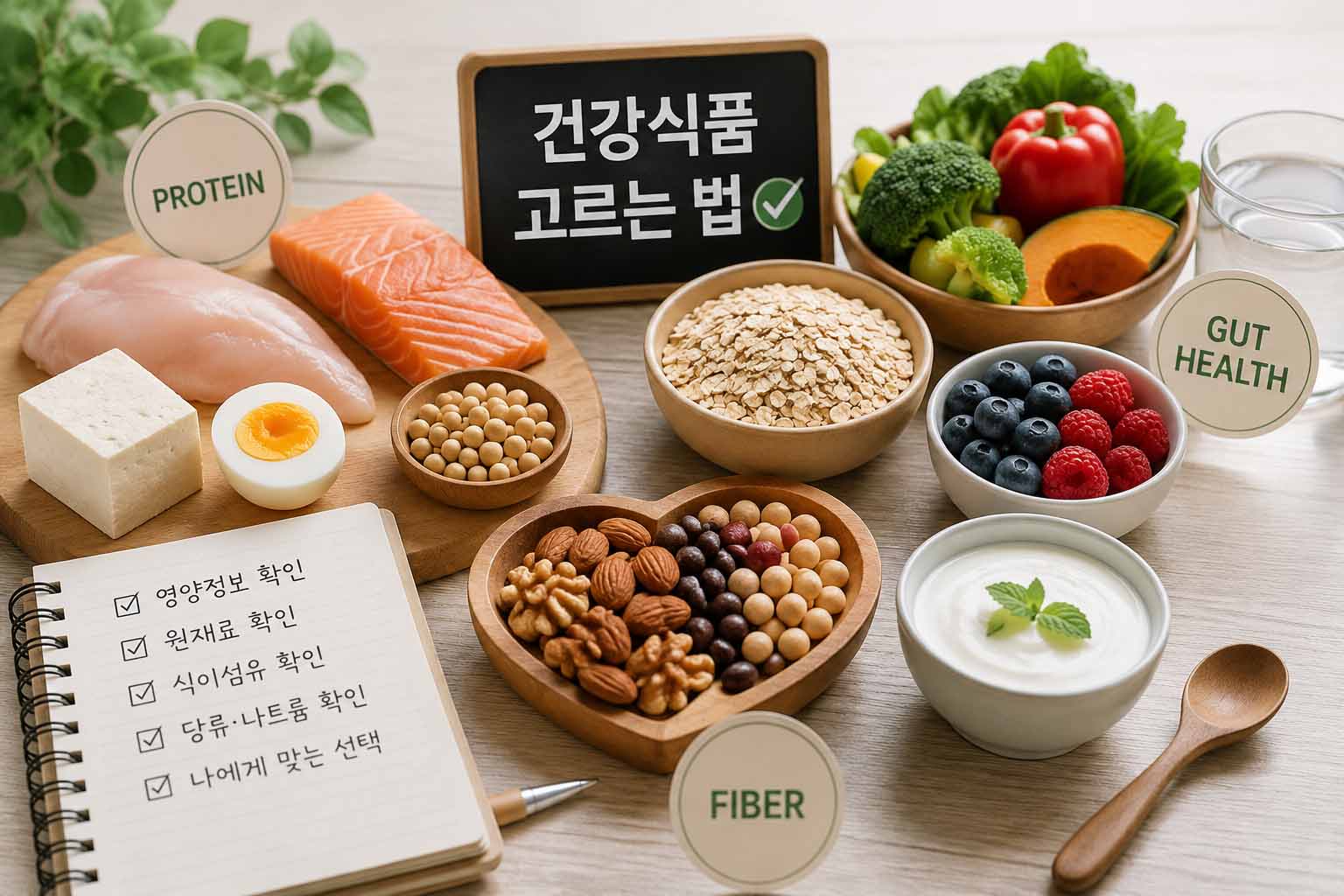
마트의 진열대나 온라인 쇼핑몰을 둘러보다 보면 수많은 건강 관련 제품들을 마주하게 됩니다. 제품의 포장지마다 큼직하게 적힌 ‘고단백’, ‘고식이섬유’, ‘프로바이오틱스’, ‘프리바이오틱스’, ‘장 건강’, ‘슈퍼푸드’ 등의 화려한 문구들은 소비자의 눈길을 사로잡기 충분합니다.
하지만 이런 문구가 눈에 띈다고 해서 그 제품이 무조건 건강에 좋거나, 지금 내 몸에 꼭 필요한 제품이라는 의미는 아닙니다. “건강에 좋다고 하는 제품이 너무 많은데, 도대체 무엇을 기준으로 골라야 할까?” 이것은 오늘날 수많은 소비자가 공통으로 겪고 있는 현실적인 고민입니다.
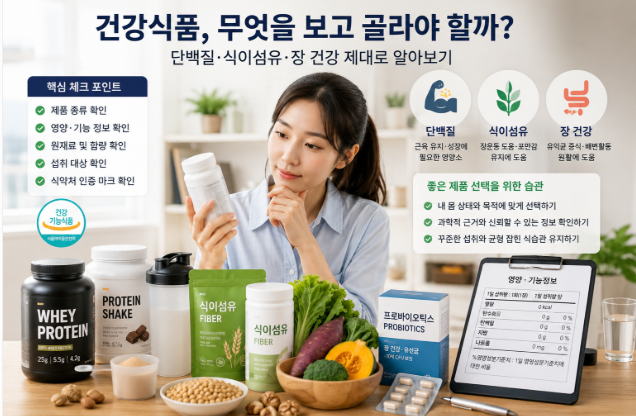
건강식품을 현명하게 선택하려면 겉면에 적힌 화려한 광고 문구에 시선을 빼앗기기보다, 제품의 정확한 종류, 영양정보, 원재료, 그리고 공식적인 표시사항을 먼저 꼼꼼히 확인하는 습관을 들이는 것이 중요합니다. 이 글에서는 건강에 관심이 많지만 어떤 제품을 선택해야 할지 막막한 분들을 위해, 실생활에서 바로 적용할 수 있는 건강식품 선택 가이드를 상세히 알아보겠습니다.
건강식품, 무엇을 보고 골라야 할까?
건강 관련 제품을 고를 때 가장 먼저 피해야 할 행동은 유명 브랜드의 인지도나 쇼핑몰의 인기 판매 순위만 보고 무작정 구매하는 것입니다. 그보다 앞서 ‘내가 지금 왜 이 제품을 찾고 있는지’ 그 목적을 스스로 명확히 생각해야 합니다.
목적에 따라 확인해야 할 최우선 정보가 완전히 달라질 수 있기 때문입니다.
평소 식사에서 부족한 부분을 보완하려는 경우: 평소 채소 섭취가 부족하다면 비타민이나 무기질, 식이섬유가 풍부한 제품을 찾아야 합니다.
간편한 식품을 찾는 경우: 바쁜 아침 식사 대용이라면 당류가 지나치게 높지 않으면서도 포만감을 줄 수 있는 식품 유형인지 확인해야 합니다.
단백질이 포함된 식품을 찾는 경우: 근육 건강이나 영양 보충을 원한다면 총 단백질 함량뿐만 아니라 지방과 콜레스테롤 수치도 함께 확인해야 합니다.
식이섬유가 포함된 식품을 찾는 경우: 소화나 장 건강 관리가 목적이라면 인공 첨가물보다는 자연 유래 식이섬유가 얼마나 들어 있는지 살펴봐야 합니다.
결국 가장 좋은 제품이란 남들이 많이 사는 제품이 아니라, 현재 나의 식습관과 부족한 영양을 채워줄 수 있는 ‘목적에 맞는 제품’입니다.
단백질, 무조건 많을수록 좋은 걸까?
최근 몇 년 사이 단백질 식품 시장이 크게 성장하면서 과자, 음료, 빵 등 거의 모든 식품군에서 ‘고단백’ 제품을 쉽게 찾아볼 수 있게 되었습니다.
단백질은 우리 몸의 근육을 형성하고 유지하는 것뿐만 아니라, 머리카락, 피부, 손톱을 구성하고 면역 항체와 각종 호르몬을 만드는 등 생명 유지에 없어서는 안 될 필수 영양소입니다. 일상생활에서 단백질을 얻을 수 있는 대표적인 자연식품으로는 육류, 생선, 달걀, 우유 및 유제품, 콩과 두부, 견과류 등이 있습니다.
그렇다면 시중에 파는 가공식품에 단백질이 많이 들어있을수록 무조건 몸에 좋은 것일까요? 그렇지 않습니다. ‘고단백’이라는 문구 하나만 보고 제품을 덥석 선택하는 것은 피해야 합니다.
예를 들어 단백질이 15g 들어있는 단백질 바(Protein Bar)가 있다고 가정해 봅시다. 만약 이 제품에 설탕이나 액상과당 같은 당류가 30g이나 들어있고 포화지방이 가득하다면, 이는 건강식품이라기보다는 단백질이 조금 첨가된 달콤한 간식에 가깝습니다. 따라서 제품 전체의 영양정보와 원재료를 함께 확인하여, 단백질을 섭취하려다 불필요한 당과 지방까지 과다 섭취하는 일이 없도록 주의해야 합니다.
또한, 사람마다 체중, 활동량, 나이, 건강 상태가 다르므로 개인별로 필요한 영양 섭취량은 다를 수 있습니다. 특정 섭취량이 모든 사람에게 똑같이 권장되는 것은 아니므로, 자신의 몸 상태에 맞는 적정량을 섭취하는 것이 바람직합니다.
요즘 많이 보이는 식이섬유란?
식이섬유는 사람의 소화효소로는 소화 및 분해되지 않고 몸 밖으로 배출되는 고분자 탄수화물입니다. 과거에는 몸에 흡수되지 않아 영양가가 없는 성분으로 여겨졌지만, 현재는 장 건강과 전반적인 신체 대사에 깊이 관여하는 매우 중요한 성분으로 인정받고 있습니다.
식이섬유를 풍부하게 얻을 수 있는 일반적인 자연식품은 다음과 같습니다.
채소류 (양배추, 브로콜리 등)
과일류 (사과, 배, 바나나 등)
콩류 (강낭콩, 렌틸콩 등)
통곡물 (현미, 귀리, 보리 등)
견과류 및 해조류
주의할 점은 ‘식이섬유 함유’라는 문구가 특정 가공식품 전체가 무조건 건강하다는 면죄부가 될 수는 없다는 것입니다. 설탕 덩어리 젤리나 기름에 튀긴 과자에 인공 식이섬유 성분을 약간 첨가해 놓고 건강식품인 것처럼 광고하는 경우도 있습니다. 제품을 구매할 때는 식이섬유 함량뿐만 아니라 당류, 포화지방, 나트륨 등 다른 영양정보와 원재료를 종합적으로 살펴보아야 합니다.
식이섬유와 장 건강은 어떤 관계가 있을까?
사람의 장 속에는 수조 마리에 달하는 장내 미생물이 살고 있으며, 이 미생물 생태계의 균형은 우리 몸 전체의 건강과 밀접하게 연결되어 있습니다.
우리가 섭취한 식이섬유는 소화기관을 통과하며 분해되지 않은 채 장까지 도달하게 됩니다. 이때 장내에 살고 있는 유익한 미생물들이 이 식이섬유를 분해하고 발효시켜 자신의 먹이로 삼습니다. 유익균이 식이섬유를 먹고 활동하면 장내 환경이 산성으로 유지되어 유해균이 번식하기 어려운 환경이 조성됩니다.
하지만 어려운 의학적, 영양학적 용어를 굳이 외울 필요는 없습니다. 쉽게 말해 식이섬유는 ‘내 장 속에 살고 있는 착한 미생물들에게 주는 질 좋은 식량’이라고 이해하시면 됩니다.
물론 특정 성분 하나나 제품 하나가 장 건강을 하루아침에 완전히 개선하거나 질병을 예방·치료해 줄 수는 없습니다. 장 건강 역시 훌륭한 제품 하나에 의존하기보다는, 평소 수분 섭취를 늘리고 걷기 등 가벼운 운동을 병행하며 스트레스를 관리하는 전체적인 생활 습관이 함께 뒷받침되어야 합니다.
프로바이오틱스와 프리바이오틱스, 무엇이 다를까?
유산균 관련 제품을 고를 때 가장 헷갈리는 두 용어가 바로 ‘프로바이오틱스’와 ‘프리바이오틱스’입니다. 이름은 비슷하지만 두 가지는 전혀 다른 역할을 합니다.
프로바이오틱스 (Probiotics): 적정량을 섭취했을 때 우리의 건강에 이로움을 주는 ‘살아있는 미생물(유익균)’ 그 자체를 뜻합니다. 식품의약품안전처는 일부 균주에 대해 장내 유익균 증식 및 유해균 억제, 배변 활동에 도움을 줄 수 있다는 기능성을 인정하고 있습니다.
프리바이오틱스 (Prebiotics): 인체에서 소화되지 않는 식이 성분으로, 장내 유익균의 성장과 활성을 돕는 ‘영양 공급원(먹이)’을 뜻합니다. 주로 과일, 채소, 통곡물에 들어있는 식이섬유와 프락토올리고당, 이눌린 등이 이에 해당합니다.
알기 쉽게 비유하자면, 프로바이오틱스는 밭에 심는 ‘좋은 씨앗(식물)’이고, 프리바이오틱스는 그 씨앗이 잘 자라도록 밭에 뿌려주는 ‘좋은 비료(양분)’입니다.
프로바이오틱스 vs 프리바이오틱스 비교표
비교 항목
프로바이오틱스 (Probiotics)
프리바이오틱스 (Prebiotics)
주요 특징
장에 정착하여 유익한 역할을 하는 살아있는 균 자체
유익균이 장에서 잘 살 수 있도록 돕는 균의 먹이
식품에서 확인하는 방법
락토바실러스, 비피도박테리움 등 다양한 균주 이름
프락토올리고당, 이눌린, 갈락토올리고당, 식이섬유 등
제품 구매 시 확인할 점
보장균수(유통기한까지 살아남는 균의 수)와 균주의 종류
당류가 지나치게 많이 섞이지 않은 성분인지 확인
이 두 가지를 아예 하나로 합쳐서 만든 제품을 ‘신바이오틱스(Synbiotics)’라고 부르기도 합니다.
건강식품 고르는 법: 단백질·식이섬유·장 건강 제대로 알아보기
건강식품 고르는 법을 제대로 알고 계신가요? 마트의 진열대나 온라인 쇼핑몰을 둘러보다 보면 수많은 건강 관련 제품들을 마주하게 됩니다. 제품의 포장지마다 큼직하게 적힌 ‘고단백’, ‘고식이섬유’, ‘프로바이오틱스’, ‘프리바이오틱스’, ‘장 건강’, ‘슈퍼푸드’ 등의 화려한 문구들은 소비자의 눈길을 사로잡기 충분합니다. 하지만 올바른 건강식품 고르는 법을 모른다면 마케팅 상술에 넘어가기 쉽습니다.
1. 광고 문구의 함정: 꼼꼼한 건강식품 고르는 법
이런 문구가 눈에 띈다고 해서 그 제품이 무조건 건강에 좋거나, 지금 내 몸에 꼭 필요한 제품이라는 의미는 아닙니다. “건강에 좋다고 하는 제품이 너무 많은데, 도대체 무엇을 기준으로 골라야 할까?” 이것은 올바른 건강식품 고르는 법을 찾고자 하는 오늘날 수많은 소비자가 공통으로 겪고 있는 현실적인 고민입니다.
2. 성분표와 표시사항 확인: 똑똑한 건강식품 고르는 법
건강식품을 현명하게 선택하려면 겉면에 적힌 화려한 광고 문구에 시선을 빼앗기기보다, 제품의 정확한 종류, 영양정보, 원재료, 그리고 공식적인 표시사항을 먼저 꼼꼼히 확인하는 습관을 들이는 것이 가장 중요한 건강식품 고르는 법입니다. 이 글에서는 건강에 관심이 많지만 어떤 제품을 선택해야 할지 막막한 분들을 위해, 실생활에서 바로 적용할 수 있는 건강식품 고르는 법과 선택 가이드를 상세히 알아보겠습니다.
3. 내 몸에 꼭 맞는 건강식품 고르는 법
그렇다면 건강식품, 무엇을 보고 골라야 할까요? 단백질과 식이섬유, 그리고 장 건강을 위한 제품을 고를 때는 본인의 평소 식단과 부족한 영양소를 정확히 파악하는 것이 건강식품 고르는 법의 핵심입니다. 무작정 남들이 좋다고 하는 것을 사기보다는, 내 몸의 상태를 객관적으로 분석하여 꼭 필요한 성분만 섭취하는 현명한 건강식품 고르는 법을 실천해 보세요.건강기능식품과 일반 건강식품은 다르다
한국의 소비자들이 가장 자주 혼동하는 부분입니다. 마트나 온라인에서 ‘건강식품’이라는 말은 흔하게 쓰이지만, 법적·제도적으로 ‘건강기능식품’과 ‘일반식품(일반 건강식품 포함)’은 엄격하게 구분됩니다.
식품의약품안전처(식약처)의 기준에 따르면, 건강기능식품은 인체에 유용한 기능을 가진 원료나 성분을 사용하여 제조한 식품으로, 동물시험이나 인체적용시험 등 과학적 근거를 바탕으로 식약처로부터 그 ‘기능성’을 공식적으로 인정받은 제품만을 의미합니다. 이런 제품 포장에는 반드시 『건강기능식품』이라는 문구와 공식 인증 마크가 표시되어 있으며, 영양기능정보가 상세히 적혀 있습니다.
반면, 일상적으로 우리가 몸에 좋다고 부르는 ‘건강식품’, ‘자연식품’, ‘천연식품’ 등의 명칭은 건강기능식품과는 다릅니다. 기능성 원료를 사용하지 않았거나 함량이 부족하여 식약처로부터 기능성을 인정받지 못한 제품은 단순한 일반식품(예: 기타가공품, 액상차 등)으로 분류됩니다. 이러한 일반식품은 제품 겉면에 건강기능식품 마크를 달 수 없습니다.
또한 한 가지 명심해야 할 점은, 건강기능식품이 의약품과 동일하지 않다는 것입니다. 건강기능식품의 목적은 질병의 직접적인 치료나 예방이 아니라, 인체의 정상적인 기능을 유지하거나 생리기능 활성화를 통해 전반적인 건강을 ‘유지하고 개선’하는 데 도움을 주는 것입니다.
제품 앞면보다 영양정보를 먼저 보세요
현명한 소비자는 화려한 이미지와 광고 문구가 가득한 제품의 ‘앞면’ 대신, 작고 빼곡한 글씨가 적힌 제품의 ‘뒷면(또는 옆면)’을 먼저 봅니다. 이곳에는 우리가 꼭 알아야 할 진실이 담겨 있습니다.
제품의 식품 유형: 이 제품이 식약처가 인정한 ‘건강기능식품’인지, 아니면 캔디류, 혼합음료, 기타가공품 같은 ‘일반식품’인지 확인할 수 있습니다.
원재료명: 제품을 만드는 데 사용된 모든 재료가 적혀 있습니다. 법적으로 가장 많이 들어간 재료부터 순서대로 적히므로, 앞쪽에 설탕이나 물엿이 있다면 주의해야 합니다.
영양정보: 칼로리와 필수 영양소의 함량을 보여줍니다.
표시 기준량: 1회 섭취 참량인지, 총 내용량 기준인지 반드시 확인해야 합니다. (예: 1회 제공량 30g당 영양소인지, 전체 300g 기준인지 파악).
단백질: 제품을 한 번 먹을 때 얻을 수 있는 실제 단백질 함량(g)을 확인합니다.
식이섬유: 과대광고를 피하기 위해 실제 식이섬유가 몇 g 포함되어 있는지 수치로 확인합니다.
당류: 맛을 내기 위해 설탕이나 과당이 과도하게 들어있지는 않은지 살핍니다. 당류가 높다면 다른 영양소가 좋아도 섭취에 주의가 필요합니다.
나트륨: 나트륨 섭취를 조절해야 하는 분들이라면 나트륨 일일 권장량 대비 비율(%)을 꼭 점검하세요.
알레르기 정보: 우유, 대두, 밀, 땅콩 등 자신에게 알레르기를 유발할 수 있는 성분이 포함되거나 같은 제조 시설에서 만들어졌는지 확인합니다.
건강기능식품 표시 여부: 공식 건강기능식품 마크가 있는지 눈으로 직접 확인합니다.
이런 건강 광고 문구는 한 번 더 확인하세요
소비자의 마음을 흔들기 위해 온라인 쇼핑몰이나 소셜 미디어에서는 때로 자극적인 문구들이 사용됩니다. 다음과 같은 표현을 접했을 때는 즉시 구매하기보다 한 발짝 물러서서 제품의 실제 표시사항과 근거를 확인해야 합니다.
“이것 하나면 충분합니다” / “만병통치” : 단 하나의 식품이 인체의 모든 건강 문제를 해결해 줄 수는 없습니다.
“누구에게나 좋습니다” : 개인의 체질, 질환, 알레르기 유무, 임산부 및 어린이 여부에 따라 섭취하면 안 되는 성분도 존재합니다.
“먹기만 하면 해결됩니다” / “단기간에 놀라운 변화” : 건강식품은 질병을 기적처럼 치료하는 의약품이 아닙니다. 식약처에서도 만병통치약처럼 광고하거나 질병 치료에 효과가 있는 것처럼 장담하는 것은 허위·과대광고로 규정하고 있습니다.
지나치게 단순하거나 과장된 표현은 소비자를 오도할 수 있습니다. 이런 광고를 보면 반드시 공식 영양정보 탭으로 넘어가 원재료와 기능성 인정 여부를 교차 검증하는 습관을 들여야 합니다.
온라인 건강식품 후기는 어디까지 믿어야 할까?
온라인 쇼핑을 할 때 다른 사람들의 구매 후기와 별점은 결정적인 참고 자료가 됩니다. “이거 먹고 화장실을 잘 갑니다”, “피로가 싹 가시는 기분이에요” 같은 후기들은 확실히 마음을 움직입니다.
하지만 사용자 후기는 제품의 포장 상태, 배송 속도, 맛과 냄새 등을 파악하는 데는 큰 도움이 되지만, 건강상의 ‘효능’을 판단하는 절대적인 기준으로 삼아서는 곤란합니다. 개인의 건강 상태와 위장 환경, 평소 식습관은 사람마다 천차만별이므로 누군가의 긍정적인 경험이 나에게도 똑같이 적용된다는 보장은 없습니다. 또한 위약 효과(플라시보 효과)가 작용했을 수도 있습니다.
따라서 리뷰와 별점만 보고 구매를 결정하기보다는, 제품 표시사항, 원재료명, 영양정보, 제조 및 판매원 정보, 공식 제품 설명 등을 최우선으로 검토하고, 후기는 보조적인 참고 수단으로만 활용하는 것이 지혜롭습니다.
가격이 비싸면 더 좋은 건강식품일까?
소비자들은 종종 “비싼 게 제값을 하겠지”라는 생각으로 가장 고가의 제품을 장바구니에 담습니다. 하지만 높은 가격이 반드시 자신에게 더 적합하고 우수한 제품임을 의미하지는 않습니다.
제품의 가격에는 원료비뿐만 아니라 유명 연예인을 내세운 마케팅 비용, 화려한 포장비, 유통 수수료 등이 대거 포함되어 있습니다. 무작정 가격만 비교하기보다는 다음 사항들을 함께 비교해 보세요.
제품 용량과 실제 함량: 전체 용량이 아니라, 1회 섭취량 당 내가 원하는 유효 성분(단백질, 프로바이오틱스 수 등)이 얼마인지 계산해 봅니다.
원재료의 품질: 저렴한 인공 첨가물이 주를 이루는지, 양질의 부원료가 배합되어 있는지 살핍니다.
식품 유형과 영양정보: 비싼 일반 혼합음료보다는, 합리적인 가격의 인증받은 건강기능식품이 목적에 부합할 수 있습니다.
자신의 섭취 목적: 굳이 불필요한 성분들이 가득 섞여 가격만 높아진 프리미엄 제품보다는, 나에게 꼭 필요한 단일 성분만 충실하게 들어있는 가성비 제품이 더 나을 수 있습니다.
건강식품 구매 전 체크리스트
실제 온·오프라인 쇼핑 시 스마트폰에 저장해 두고 하나씩 점검해 볼 수 있는 필수 체크리스트 10가지입니다.
□ 내가 이 제품을 찾는 뚜렷한 목적(영양 보충, 장 건강 등)이 무엇인지 확인했는가?
□ 이 제품이 식약처 인증을 받은 ‘건강기능식품’인지, 아니면 ‘일반식품’인지 확인했는가?
□ 나에게 맞지 않거나 원하지 않는 성분이 앞쪽에 있는지 ‘원재료명’을 확인했는가?
□ 1회 섭취량을 기준으로 한 ‘영양정보’를 정확히 확인했는가?
□ 유효 성분뿐만 아니라 당류, 나트륨, 포화지방 등 다른 영양성분의 함량도 확인했는가?
□ 나에게 위험할 수 있는 ‘알레르기 유발 성분’ 유무를 확인했는가?
□ 앞면의 화려한 이미지나 과장된 광고 문구만 보고 성급히 판단하고 있지는 않은가?
□ 타인의 주관적인 ‘후기’만으로 제품의 실제 효능을 단정 짓고 있지는 않은가?
□ 단순히 비싼 제품을 고르기보다, 1회 섭취량 기준의 ‘가성비와 실제 내용량’을 비교했는가?
□ 쇼핑몰의 소개 글 외에, 제조사가 제공하는 ‘공식 제품 표시사항’ 원본을 꼼꼼히 읽어보았는가?
결국 가장 중요한 것은 일상적인 식생활
건강 관련 가공식품이나 영양 제품들이 아무리 훌륭하게 발전했다 하더라도, 매일 밥상에 오르는 건강하고 균형 잡힌 식사를 완전히 대신할 수는 없습니다.
단백질 보충제 한 잔을 마신다고 해서, 식이섬유 쿠키를 먹는다고 해서, 혹은 최신 유행하는 장 건강 영양제를 챙겨 먹는다고 해서 평소의 나쁜 식습관이 모두 상쇄되는 것은 아닙니다. 특정한 건강 키워드를 유행처럼 맹목적으로 쫓아가기보다는, 신선한 채소와 질 좋은 단백질, 통곡물 등 다양한 자연식품이 포함된 전체적인 식생활을 바로잡는 것이 언제나 최우선이 되어야 합니다.
시중의 수많은 건강 관련 제품들은 식사를 통해 미처 채우지 못한 부족한 부분을 메워주거나, 바쁜 일상 속에서 편리함을 더해주는 훌륭한 ‘보조적 수단’일 뿐이라는 관점을 꼭 기억하시길 바랍니다.
필요한 목적부터 정하기: 남들이 좋다는 제품이 아니라 내 식습관에서 부족한 것이 무엇인지 먼저 파악하세요.
원재료와 영양정보 비교: 좋은 성분뿐만 아니라 불필요한 당류나 나트륨이 과다하지 않은지 깐깐하게 비교하세요.
후기와 광고를 절대적인 정보로 생각하지 않기: 후기는 참고만 하고, 질병을 예방·치료한다는 식의 과장 광고는 걸러내세요.
자신에게 필요한 제품인지 판단하기: 공식 건강기능식품 마크 확인 여부와 가성비를 따져 가장 합리적인 결정을 내리세요.
이 다섯 가지 원칙만 기억해도 수많은 제품 홍수 속에서 현명한 소비자로 거듭날 수 있습니다.
결론
건강식품을 가장 잘 고르는 방법은, 시장에서 가장 비싼 제품이나 유명 연예인이 광고하는 가장 인기 있는 제품을 무작정 장바구니에 담는 것이 아닙니다. 자신의 생활 패턴과 몸 상태를 점검하여 진짜로 필요한 성분이 무엇인지 파악하고, 제품의 뒷면을 돌려 객관적인 영양정보와 원재료를 차분히 읽어내는 ‘작은 습관’을 갖는 것입니다.
단백질, 식이섬유, 유산균 등 특정 성분 하나에 지나치게 얽매이기보다는, 긍정적인 마음가짐과 균형 잡힌 일상적 식생활을 중심에 두시길 바랍니다. 그 튼튼한 토대 위에서 스스로 확인한 신뢰할 수 있는 정보를 바탕으로 보조적인 건강식품을 선택한다면, 여러분의 건강 관리는 더욱 흔들림 없이 탄탄해질 것입니다.
자주 묻는 질문 (FAQ)
Q1. 건강기능식품과 일반 건강식품은 같은 건가요?
아닙니다. 건강기능식품은 식약처로부터 과학적 근거를 바탕으로 유용한 기능성을 공식 인정받은 제품으로 전용 마크가 있습니다. 반면 일반 건강식품은 법적 용어가 아니며, 특정 기능성을 표시할 수 없는 일반식품으로 분류됩니다.
Q2. 단백질이 많이 들어 있으면 무조건 좋은 제품인가요?
꼭 그렇지는 않습니다. 단백질 함량이 높더라도, 맛을 내기 위해 설탕 같은 당류나 포화지방이 지나치게 많이 첨가되어 있다면 오히려 건강에 부담을 줄 수 있습니다. 제품 전체의 영양성분을 확인해야 합니다.
Q3. 식이섬유가 들어 있는 대표적인 음식은 무엇인가요?
신선한 채소류(양배추, 브로콜리), 과일류(사과, 바나나), 콩류, 현미나 귀리 같은 통곡물, 그리고 견과류와 해조류에 풍부하게 자연적으로 들어 있습니다.
Q4. 프로바이오틱스와 프리바이오틱스는 무엇이 다른가요?
프로바이오틱스는 장내에서 이로운 역할을 하는 ‘살아있는 유익균(미생물)’ 자체를 의미하며, 프리바이오틱스는 이 유익균들이 장에서 잘 자랄 수 있도록 먹이가 되어주는 인체 내 비소화성 ‘영양 공급원(식이 성분)’을 뜻합니다.
Q5. 온라인 건강식품 후기를 믿어도 될까요?
배송 상태나 포장, 섭취 편의성을 확인하는 데는 유용합니다. 하지만 건강상의 효능은 사람의 체질마다 다르게 나타나므로, 타인의 긍정적인 후기만을 근거로 효능을 맹신하는 것은 바람직하지 않습니다.
Q6. 건강식품을 구매할 때 가장 먼저 확인해야 할 것은 무엇인가요?
제품 뒷면의 공식 표시사항입니다. 이 제품이 건강기능식품인지 일반식품인지 확인하는 ‘식품 유형’, 무엇으로 만들었는지 보여주는 ‘원재료명’, 당류와 나트륨 등을 확인할 수 있는 ‘영양정보’를 가장 먼저 읽는 습관이 중요합니다.
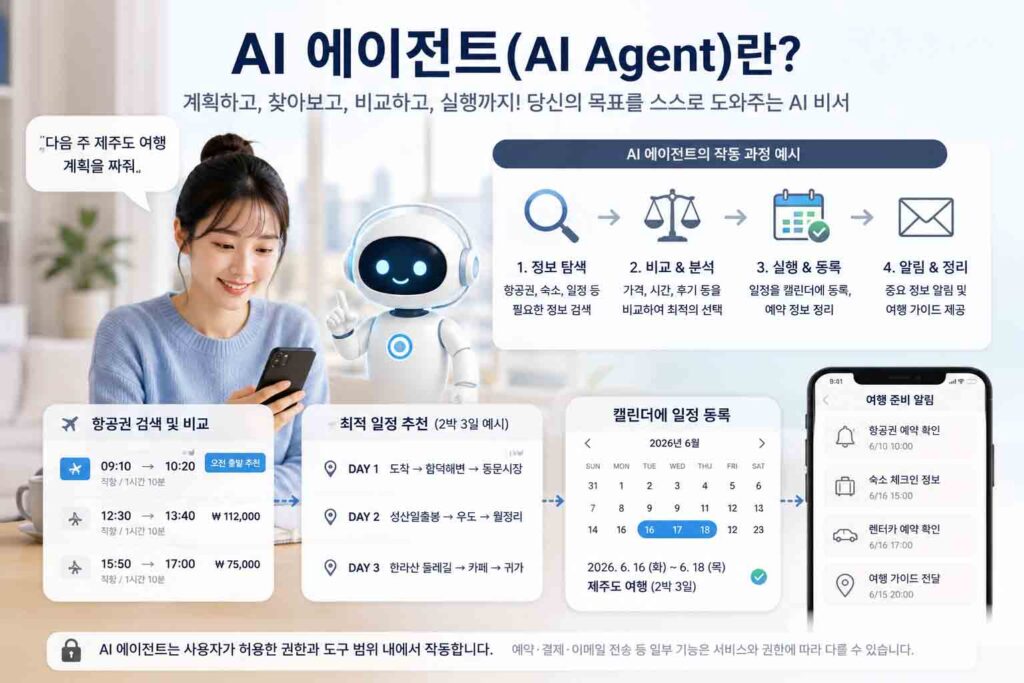
일반적인 인공지능 챗봇에게 “다음 주 제주도 여행 계획을 짜줘”라고 요청해 본 적이 있으신가요? 아마도 챗봇은 웹에 있는 정보를 바탕으로 2박 3일 일정표와 추천 장소를 깔끔하게 텍스트로 정리해 줄 것입니다.
하지만 AI 에이전트(AI Agent)는 여기서 한 단계 더 나아갑니다. 사용자가 미리 허용한 도구와 권한 범위 안에서, AI 에이전트는 목표를 달성하기 위해 필요한 항공권 정보를 직접 검색하고, 가격과 시간대 등 여러 선택지를 비교합니다. 그런 다음 최적의 일정을 사용자의 캘린더 앱에 등록하는 등 여러 단계의 작업을 이어서 수행하도록 설계될 수 있습니다.
다만, 모든 AI 에이전트가 예약이나 결제, 이메일 전송과 같은 외부 행동을 혼자서 완벽하게 자동으로 수행할 수 있는 것은 아닙니다. 실제 작동하는 기능과 범위는 이용하는 서비스의 종류와 사용자가 부여한 접근 권한에 따라 크게 달라집니다. 이번 글에서는 2026년 현재 우리의 일과 일상을 돕고 있는 AI 에이전트가 무엇인지, 초보자의 눈높이에서 알기 쉽게 살펴보겠습니다.
AI 에이전트(AI Agent)란?
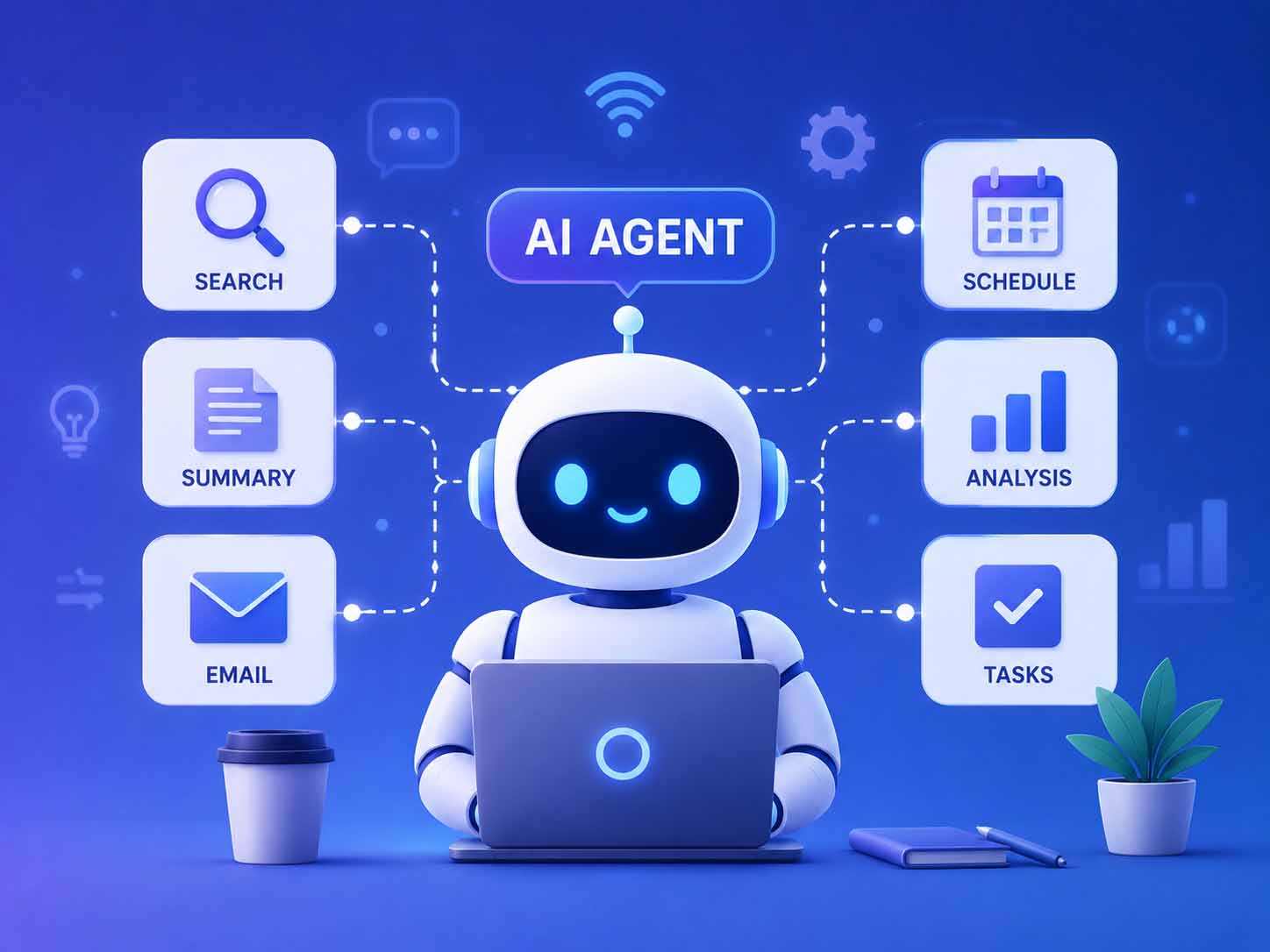
AI 에이전트란 사용자가 지시한 최종 ‘목표’를 이해하고, 그 목표를 달성하기 위해 스스로 계획을 세워 행동하는 인공지능 시스템입니다.
단순히 묻는 말에만 대답하는 것이 아니라, 다음의 과정을 거칩니다.
목표 이해: “무엇을 이루고 싶은가?”를 파악합니다.
작업 계획: 목표를 이루기 위해 어떤 순서로 일을 처리할지 쪼개어 계획합니다.
도구 선택 및 사용: 웹 검색, 계산기, 문서 편집기, 캘린더 등 자신에게 연결된 도구 중 필요한 것을 선택해 사용합니다.
결과 확인: 중간 결과를 확인하고, 오류가 있거나 부족하면 스스로 다음 행동을 수정하여 목표에 다가갑니다.
비유하자면 일반 AI가 훌륭한 ‘백과사전’이라면, AI 에이전트는 상황에 맞게 도구를 꺼내 쓰고 일을 척척 진행하는 ‘유능한 비서’라고 할 수 있습니다.
AI 에이전트와 일반 챗봇은 무엇이 다를까?
일반적인 대화형 AI(챗봇)와 AI 에이전트의 가장 큰 차이는 ‘행동(Action)’과 ‘연속성’에 있습니다.
일반 챗봇: 사용자가 질문을 입력하면, 그에 맞는 텍스트 답변이나 이미지 콘텐츠를 한 번에 생성하고 대화를 마칩니다.
AI 에이전트: “보고서를 완성해 줘”라는 목표를 받으면, 자료 검색 -> 데이터 요약 -> 문서 작성 도구 실행 -> 초안 작성 등 여러 단계의 작업을 계획하고, 사용 가능한 외부 도구를 활용해 연속적으로 작업을 수행합니다.
단, 최근 [AI 검색 관련 글]에서 볼 수 있듯 일반적인 AI 챗봇(ChatGPT, Gemini 등)에도 실시간 웹 검색, 파일 분석, 외부 앱 연동 같은 에이전트 기능이 속속 결합되고 있습니다. 따라서 2026년 현재 이 두 개념의 경계가 무 자르듯 항상 명확하게 나뉘는 것은 아닙니다.
한눈에 보는 일반 AI 챗봇 vs AI 에이전트 비교표
비교 항목
일반 AI 챗봇
AI 에이전트
주요 목적
질문에 대한 적절한 답변과 콘텐츠 생성
주어진 목표 달성을 위한 연속적인 행동과 문제 해결
질문과 답변
사용자의 질문마다 1회성 답변을 제공함
목표를 향해 스스로 묻고 답하며 다음 단계를 진행함
여러 단계 작업
사용자가 매 단계마다 구체적으로 지시해야 함
AI가 스스로 작업 순서를 쪼개어 연속으로 수행함
작업 계획
사전 계획 없이 입력된 프롬프트에 즉시 반응
목표 달성을 위해 필요한 전체 작업의 로드맵을 그림
웹 검색 및 정보 탐색
기본 검색 결과를 요약하여 텍스트로 전달
목표에 맞는 심층 정보를 탐색하고 다른 데이터와 교차 검증
외부 도구 활용
매우 제한적이거나 텍스트 기반 기능에 머묾
이메일, 캘린더, API 등 허용된 외부 소프트웨어를 직접 조작
반복 업무
매번 새로운 프롬프트를 입력해야 함
정해진 조건에 따라 주기적으로 상태를 점검하고 반복 실행함
사람의 승인 필요성
생성된 정보의 사실 여부를 읽고 확인하면 됨
파일 삭제, 이메일 전송 등 ‘실행’ 전 사람의 최종 승인이 필수적임
AI 에이전트는 어떻게 일을 할까?
AI 에이전트는 보통 다음과 같은 7단계를 거쳐 일을 처리합니다.
목표 이해: 사용자의 요청 분석
작업 계획: 해야 할 일의 순서도 작성
필요한 정보 탐색: 연결된 데이터나 웹에서 정보 수집
사용할 도구 선택: 목적에 맞는 소프트웨어 기능 호출
작업 실행: 도구를 활용하여 실제 작업 수행
결과 확인: 실행 결과가 애초의 목표에 부합하는지 자체 평가
필요하면 수정 또는 다음 단계 수행: 오류 수정 후 최종 결과물 도출
[실제 활용 사례] 사용자가 “이번 주 회의 자료를 정리해줘”라고 요청했다고 가정해 보겠습니다. 이때 에이전트는 사용자가 사전에 ‘읽기 권한’을 부여한 업무용 클라우드나 사내 메신저 내에서 최근 일주일간의 회의록 문서를 스스로 찾습니다(3단계). 핵심 내용을 요약하는 도구를 선택하여(4단계), 주요 안건과 결정 사항을 추출합니다(5단계). 이후 회의 자료 초안을 워드 문서 형태로 작성하여 사용자에게 최종 검토를 요청합니다(7단계). (주의: 사용자가 명시적으로 연결하고 권한을 부여하지 않은 개인 이메일, 비공개 문서 등에 AI가 마음대로 접근할 수는 없습니다.)
2026년 AI 에이전트가 실제로 활용되는 분야
현재 다양한 산업과 일상에서 AI 에이전트가 어떻게 쓰이고 있는지 8가지 사례를 살펴보겠습니다.
1. 자료 조사와 정보 요약
AI가 할 수 있는 일: 특정 주제에 관한 최신 논문이나 기사 수십 편을 검색하고, 공통된 핵심 주장과 수치를 요약합니다.
사람이 확인해야 하는 부분: 요약된 정보의 출처가 공신력 있는 기관인지, 수치가 정확한지 팩트 체크를 해야 합니다.
2. 이메일 및 문서 업무 보조
AI가 할 수 있는 일: 새로 온 이메일들을 중요도에 따라 분류하고, 기존 맥락을 파악해 답장 초안을 작성합니다.
사람이 확인해야 하는 부분: 답장의 어조(Tone & Manner)가 적절한지 확인하고, 최종 ‘전송’ 버튼을 직접 눌러야 합니다.
3. 일정과 업무 관리
AI가 할 수 있는 일: 팀원들의 캘린더 빈 시간을 대조하여 회의가 가능한 시간을 찾고 초대장 초안을 만듭니다.
사람이 확인해야 하는 부분: 초대할 대상자가 맞는지, 장소나 화상 회의 링크가 제대로 첨부되었는지 검토합니다.
4. 데이터 정리 및 분석
AI가 할 수 있는 일: 여러 개의 엑셀 파일에 흩어진 매출 데이터를 하나로 합치고, 주요 흐름을 보여주는 차트를 생성합니다.
사람이 확인해야 하는 부분: 원본 데이터에 누락되거나 잘못 기입된 이상값(Outlier)이 없는지 사람의 눈으로 파악해야 합니다.
5. 코딩 및 소프트웨어 개발
AI가 할 수 있는 일: 개발자의 지시에 따라 반복적인 기초 코드를 작성하거나, 발생한 에러의 원인과 수정 방안을 제안합니다.
사람이 확인해야 하는 부분: 제안된 코드가 전체 시스템 구조와 보안 기준에 안전하게 부합하는지 최종 결정합니다.
6. 고객지원 업무
AI가 할 수 있는 일: 웹사이트에 들어온 고객의 단순 환불 문의나 배송 조회 요청을 사내 매뉴얼에 따라 즉각적으로 안내합니다.
사람이 확인해야 하는 부분: 복잡한 불만 사항이나 매뉴얼에 없는 예외 상황은 사람이 직접 이어받아 응대해야 합니다.
7. 콘텐츠 제작
AI가 할 수 있는 일: 유튜브 영상이나 마케팅 블로그의 초기 뼈대(개요)를 잡고, 관련 키워드를 제안해 줍니다.
사람이 확인해야 하는 부분: 브랜드의 철학, 창의적인 스토리텔링, 저작권 침해 요소가 없는지는 사람이 세밀하게 다듬어야 합니다.
8. 반복적인 사무 업무 자동화
AI가 할 수 있는 일: 스캔된 영수증 이미지에서 금액과 날짜를 읽어내어 회계 장부에 자동으로 입력합니다.
사람이 확인해야 하는 부분: 인식된 숫자가 맞는지, 결재선에 맞게 지출 증빙이 처리되었는지 최종 승인합니다.
블로그 운영에도 AI 에이전트를 사용할 수 있을까?
블로그나 웹사이트를 운영하는 개인 창작자에게도 AI 에이전트는 훌륭한 편집 비서가 될 수 있습니다.
실제 활용 가능 사례: 새로운 기사 주제와 최신 트렌드 조사, 검색 키워드 아이디어 정리, 경쟁 콘텐츠의 목차 분석, 기사 뼈대(구조) 만들기, 내용 초안 작성, 매력적인 제목 10개 뽑아보기, SEO 최적화를 위한 메타 설명(Meta Description) 작성, 내 블로그의 기존 글 중에서 자연스럽게 연결할 내부링크 후보 찾기, 월간 콘텐츠 발행 일정 관리.
다만, AI가 작성한 기사를 아무런 검토 없이 대량으로 자동 게시(Auto-publishing)하는 것은 절대 권장하지 않습니다. 검색 엔진은 사람이 직접 쓴 독창적이고 가치 있는 콘텐츠를 선호합니다. 따라서 사실 확인, 신뢰할 수 있는 출처 명시, 나만의 실제 경험 추가, 이미지 저작권 확인 등은 반드시 사람이 최종적으로 책임지고 검토해야 합니다. 자세한 수익화 주의점은 [AI로 돈 버는 현실적인 방법] 관련 글을 참고해 보세요.
AI 에이전트와 AI 자동화는 같은 것일까?
비슷해 보이지만 작동 방식에 큰 차이가 있습니다. 더 자세한 내용은 [AI Workflow Automation] 관련 글에서 다루고 있지만, 간단히 비교하면 다음과 같습니다.
기존 자동화(Automation): 사람이 미리 정해 놓은 엄격한 규칙과 순서(예: A 이메일이 오면 B 폴더로 옮겨라)에 따라 수동적으로 묵묵히 반복 작업만 수행합니다.
AI 에이전트: 주어진 ‘목표’와 현재 ‘상황’을 바탕으로 유연하게 대처합니다. 예기치 못한 상황이 발생하면 다음에 필요한 작업을 스스로 판단하고, 사용 가능한 도구 중 가장 적절한 것을 골라 문제를 해결합니다.
물론 실제 현장이나 상용 서비스에서는 100% 자율적인 에이전트보다는, 기존의 안정적인 자동화 시스템에 AI의 유연한 판단력을 결합하여 함께 사용하는 경우가 많습니다.
AI 에이전트의 장점
반복 업무 감소: 사람이 수작업으로 클릭하고 복사해서 붙여넣어야 했던 지루한 다단계 작업을 빠르고 정확하게 처리합니다.
많은 자료의 빠른 정리: 방대한 양의 PDF 문서나 웹 데이터를 순식간에 분석해 필요한 핵심만 깔끔하게 분류해 줍니다.
개인별 맞춤 업무 흐름 지원: 사용자의 평소 작업 스타일과 선호하는 도구에 맞춰 업무 환경을 개인화할 수 있습니다.
핵심 역량 집중: 단순 정보 취합은 AI에게 맡기고, 사람은 중요한 의사 결정이나 창의적인 기획 업무에 온전히 집중할 수 있도록 돕습니다.
AI 에이전트의 한계와 주의점
편리함 이면에는 반드시 짚고 넘어가야 할 한계와 리스크도 존재합니다.
정보 오류 및 환각 현상: AI가 사실이 아닌 정보를 그럴싸하게 꾸며내거나(Hallucination), 잘못된 판단을 내릴 가능성이 여전히 존재합니다.
보안과 프라이버시: 에이전트에게 너무 많은 시스템 접근 권한을 주면 개인정보가 유출되거나 회사 기밀 문서가 잘못 다뤄질 수 있습니다.
예상치 못한 실행과 비용: 작업 과정이 너무 자율적이면 원하지 않는 작업을 무한 반복하여 클라우드 API 이용 비용이 과다 청구되기도 합니다.
특히 결제 승인, 중요 파일 삭제, 외부로 이메일/메시지 발송, 핵심 문서 수정처럼 한 번 실행하면 되돌리기 어려운 행동은, 절대 AI가 단독으로 처리하게 둬서는 안 됩니다. 반드시 행동 직전에 사람이 직접 내용을 확인하고 승인(Human-in-the-loop)하는 단계를 필수적으로 설정해야 안전합니다.
AI 에이전트를 처음 사용할 때 좋은 방법
초보자라면 어떤 툴이든 처음부터 모든 권한을 넘기지 말고, 점진적으로 활용도를 높여가는 것이 현명합니다. 유용한 서비스들은 [Best AI Tools] 가이드를 참고해 보시고, 다음 단계에 따라 도입해 보세요.
1단계: 자료 조사, 번역, 내용 요약 등 결과물이 텍스트로 끝나는 안전한 작업부터 맡겨보기
2단계: 블로그 글이나 이메일 초안, 기획서 뼈대 등 아이디어를 스케치하는 용도로 활용하기
3단계: 데이터 분류, 오타 찾기 등 리스크가 적은 단순 반복 업무 보조 수단으로 확장하기
4단계: 구글 캘린더나 노션 등 내가 결과를 쉽게 모니터링할 수 있는 외부 도구와 연동 시작하기
5단계: 실제 행동을 취하는 고급 작업을 맡기되, 최종 버튼은 꼭 사람이 누르는 승인 시스템 유지하기
AI 에이전트가 사람의 일자리를 모두 대체할까?
AI 기술이 비약적으로 발전할 때마다 일자리 소멸에 대한 두려움이 커지곤 합니다. 분명 데이터 취합, 단순 문의 응대 등 일부 반복적인 규칙 기반 업무는 기계로 빠르게 대체될 것입니다.
하지만 AI 에이전트가 인간의 모든 직업을 없앤다고 단정할 수는 없습니다. AI는 사람을 완전히 밀어내는 존재라기보다는, 인간의 능력과 생산성을 극대화해 주는 ‘강력한 도구’에 가깝습니다. 감정적인 공감, 고도의 윤리적 판단, 큰 그림을 그리는 창의적 기획, 사람 간의 복잡한 의견 조율은 여전히 인간만의 고유한 영역으로 남을 것입니다.
2026년 AI 에이전트가 주목받는 이유
2026년 현재 산업계에서 AI 에이전트는 단순한 호기심을 넘어 ‘실질적인 생산성 도구’로 자리 잡았습니다. 과거에는 사람들이 챗봇의 신기한 글쓰기 실력에 열광했다면, 이제는 기업들이 부서별 업무 프로세스에 에이전트를 도입하여 비용을 절감하고 업무 속도를 높이는 데 집중하고 있습니다.
단일 AI 모델의 성능 경쟁에서 벗어나, 각기 다른 역할을 맡은 여러 AI 에이전트가 서로 협력하여 복잡한 과제를 해결하는 ‘멀티 에이전트(Multi-Agent) 시스템’ 생태계가 본격적으로 열리면서 그 실용성이 크게 입증받고 있기 때문입니다.
앞으로 AI 에이전트는 어떻게 발전할까?
현재의 발전 속도를 비추어 볼 때, 미래의 AI 에이전트는 다음과 같은 방향으로 진화할 가능성이 큽니다.
더 방대하고 매끄러운 도구 연결: 지금보다 훨씬 더 많은 기업용 소프트웨어와 모바일 앱에 자연스럽게 연결되어 작동할 것입니다.
고도화된 다단계 업무: 중간에 사람이 개입하지 않아도, 목표부터 최종 결과물까지 수십 개의 단계를 안정적으로 처리하는 능력이 향상될 것입니다.
초개인화 지원: 사용자의 성향, 과거 작업 기록, 선호하는 의사소통 방식을 기억하여 맞춤형 비서로서의 역할을 수행합니다.
사람과 AI의 협업 강화: 인간과 AI가 한 팀이 되어 피드백을 주고받으며 결과물을 고도화하는 시스템이 기본이 될 것입니다.
결론
AI 에이전트의 핵심은 묻는 말에 대답만 하는 수동적인 인공지능을 넘어, ‘사용자의 목표를 이해하고 다양한 도구를 활용해 여러 단계의 작업을 주도적으로 실행하는 시스템’이라는 점입니다.
우리의 업무 부담을 크게 덜어주는 혁신적인 기술임은 분명하지만, 자동화의 수준이 높아질수록 이를 통제하는 사람의 역할은 역설적으로 더 중요해집니다. 안전한 권한 관리, 결과물의 사실 확인, 개인정보 보호의 책임을 다하며 AI 에이전트를 똑똑하게 부리는 지휘자가 되어보시기 바랍니다.
자주 묻는 질문 (FAQ)
Q1. AI 에이전트와 ChatGPT는 무엇이 다른가요? A1. 일반적인 ChatGPT는 질문에 대해 텍스트 답변을 한 번 생성하는 목적이 큽니다. 반면 AI 에이전트는 캘린더나 이메일 같은 외부 도구를 직접 조작하고, 목표 달성을 위해 여러 단계의 작업을 스스로 이어간다는 점이 다릅니다.
Q2. AI 에이전트는 사람 없이 혼자 모든 일을 할 수 있나요? A2. 일부 단순 작업은 독립적으로 수행할 수 있지만, 결제나 중요한 데이터 수정 등 치명적 결과를 낳을 수 있는 핵심 의사 결정은 반드시 사람이 최종 검토하고 승인해야 합니다.
Q3. AI 에이전트는 무료로 사용할 수 있나요? A3. 기본 기능을 체험할 수 있는 무료 버전이나 오픈소스 툴도 존재하지만, 다양한 엔터프라이즈 도구를 원활히 연동하고 복잡한 작업을 수행하려면 대부분 유료 구독이나 API 과금 형태의 서비스가 필요합니다.
Q4. 블로그 운영에도 AI 에이전트를 사용할 수 있나요? A4. 네, 키워드 발굴, 목차 구성, 초안 작성, 내부링크 찾기 등 기획과 편집 보조 도구로 매우 유용합니다. 단, 콘텐츠 발행 전 팩트 체크와 퀄리티 관리는 블로거 본인이 직접 해야 합니다.
Q5. AI 에이전트를 사용할 때 가장 주의해야 할 점은 무엇인가요? A5. 에이전트가 잘못된 정보를 기반으로 치명적인 행동(이메일 오발송, 파일 무단 삭제 등)을 하지 못하도록 시스템 접근 권한을 제한하고, 반드시 실행 전 사람의 승인 단계를 거치도록 설정하는 것입니다.
📌 관련 링크
OpenAI: How Agents Are Transforming Work 및 Workspace Agents 도입 정보
Google Cloud: What Are AI Agents? (AI 에이전트의 정의와 활용)
Anthropic: Trustworthy Agents in Practice (신뢰할 수 있는 AI 실무 적용)
Google DeepMind: Securing the Future of AI Agents (미래 AI 보안 및 안전성)
📚 자료 출처
OpenAI: AI 에이전트의 업무 환경 혁신 및 워크스페이스 에이전트 관련 공식 브리핑
Google Cloud & DeepMind: AI 에이전트의 기술적 개념, 클라우드 기반 활용 사례 및 미래 보안 가이드라인
Anthropic: 실무 환경에서 신뢰할 수 있고 안전한 AI 에이전트를 구축하기 위한 정책 자료
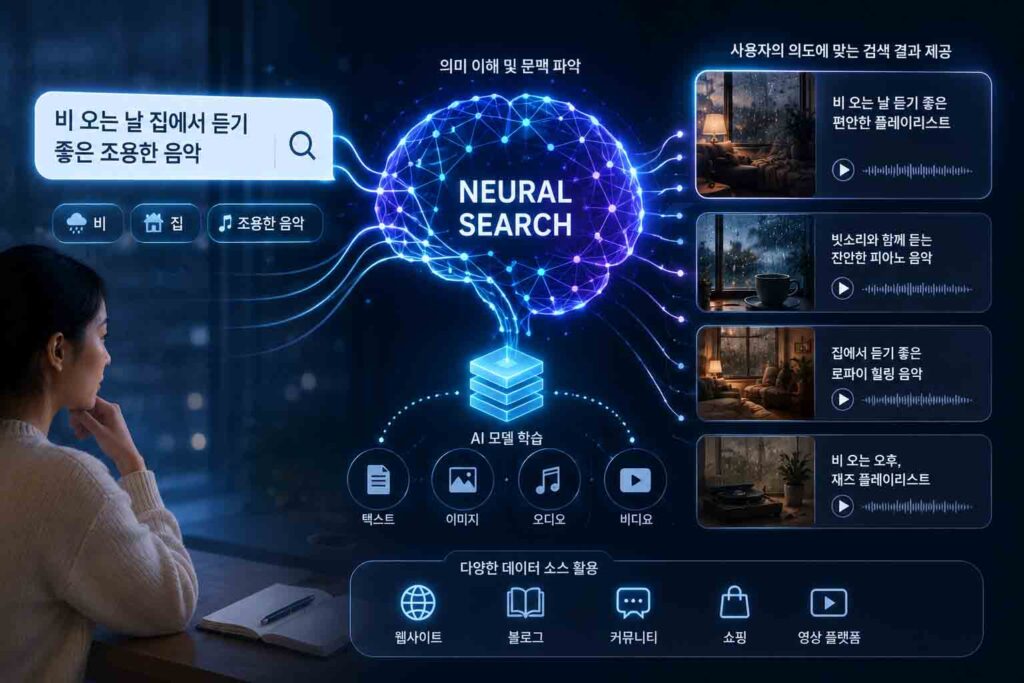
비 오는 날, 우울한 기분을 달래고 싶어 검색창에 “비 오는 날 집에서 듣기 좋은 조용한 음악”이라고 길게 입력해 본 적이 있으신가요?
과거의 단순한 검색 엔진이었다면 ‘비’, ‘집’, ‘조용한 음악’이라는 글자가 텍스트 그대로 포함된 웹페이지를 찾는 데만 집중했을 것입니다. 운이 좋으면 음악 블로그가 나오겠지만, 엉뚱하게도 ‘비 오는 날 집 수리하는 법’이나 ‘조용한 동네 매물’ 같은 결과가 섞여 나올 수도 있었습니다.
하지만 요즘의 검색 기술은 다릅니다. 사용자가 ‘비 오는 날 편안하게 들을 분위기 있는 플레이리스트를 찾고 있다’는 진짜 의도와 문맥을 파악합니다. 이렇게 단어의 형태가 아니라 ‘의미’를 이해하는 똑똑한 검색 기술, 바로 뉴럴 검색(Neural Search)입니다.
이번 글에서는 전문적인 개발 용어 없이, 뉴럴 검색이 어떻게 우리의 마음을 읽어내는지 그 원리와 기존 검색과의 차이점을 아주 쉽게 알아보겠습니다.
뉴럴 검색(Neural Search)이란?
뉴럴 검색(Neural Search)은 인간의 뇌 신경망 구조를 모방한 인공지능(AI)과 머신러닝 기술을 활용하여 정보를 찾는 검색 방식입니다.
기존의 검색이 책의 맨 뒤에 있는 ‘색인(인덱스)’에서 똑같은 글자를 찾아 페이지를 펴는 방식이었다면, 뉴럴 검색은 텍스트, 이미지, 오디오 등 데이터의 숨겨진 의미(문맥)를 AI가 스스로 학습하여 가장 관련성 높은 결과를 찾아내는 기술입니다. 한마디로 사용자가 입력한 단어가 아니라, 그 단어를 입력한 ‘진짜 이유’를 고민하는 검색 엔진이라고 할 수 있습니다.
기존 키워드 검색은 어떻게 작동했을까?
뉴럴 검색을 이해하기 위해 먼저 전통적인 키워드 검색 방식을 살펴보겠습니다.
예를 들어 검색창에 “노트북 배터리가 오래가는 제품”이라고 검색했다고 가정해 봅시다. 과거의 시스템은 웹문서 중에서 ‘노트북’, ‘배터리’, ‘오래가는’, ‘제품’이라는 단어가 정확히 일치하는 문서들을 골라냈습니다.
만약 어떤 전자기기 리뷰어가 자신의 블로그에 “이 랩탑은 한 번 충전하면 전력 효율이 뛰어나서 장시간 사용이 가능합니다”라고 적어두었다면 어떨까요? 뜻은 완벽하게 일치하지만, 우리가 입력한 ‘노트북’, ‘배터리’, ‘오래가는’이라는 단어가 하나도 없기 때문에 기존 검색 엔진은 이 훌륭한 문서를 하위로 밀어내거나 아예 찾지 못할 확률이 높았습니다.
뉴럴 검색은 어떻게 ‘검색 의도’를 이해할까?
그렇다면 뉴럴 검색은 어떻게 단어가 달라도 찰떡같이 의미를 알아채는 걸까요? 여기에는 몇 가지 마법 같은 AI 기술이 숨어 있습니다.
자연어 이해: 사람이 일상적으로 쓰는 자연스러운 문장의 구조와 의미를 인공지능이 이해하는 기술입니다.
문맥과 검색 의도 파악: 앞뒤 단어의 관계를 살펴보고 사용자가 이 질문을 통해 최종적으로 무엇을 얻고자 하는지(구매, 정보 습득, 문제 해결 등)를 파악합니다.
의미적 유사성 (벡터와 임베딩): 이것이 뉴럴 검색의 핵심입니다. 아주 거대한 가상의 ‘지도’를 상상해 보세요. AI는 수많은 문장과 단어들을 이 지도 위에 배치합니다(이를 기술 용어로 ‘임베딩’과 ‘벡터’라고 부릅니다). 의미가 비슷한 단어들(예: 강아지, 개, 멍멍이)은 지도상에서 아주 가까운 동네에 모여 살게 하고, 의미가 전혀 다른 단어(예: 우주선)는 아주 먼 곳에 배치합니다. 사용자가 검색을 하면, AI는 글자가 똑같은 곳을 찾는 게 아니라 지도에서 가장 가까운 동네에 있는 정보들을 몽땅 가져옵니다.
키워드가 달라도 같은 의미를 찾을 수 있을까?
이러한 ‘지도(벡터)’ 방식 덕분에 기가 막힌 일들이 가능해집니다.
A 사용자: “휴대폰 배터리가 너무 빨리 닳아요”
B 사용자: “스마트폰 충전 후 사용 시간이 짧아졌어요”
위 두 문장은 겹치는 단어가 사실상 거의 없습니다. 하지만 뉴럴 검색 AI의 거대한 지도 안에서는 두 문장이 완전히 똑같은 좌표(동네)에 위치합니다. 따라서 AI는 두 사람이 같은 문제를 겪고 있다는 것을 의미적으로 판단하고, 동일한 ‘배터리 절약 팁’ 문서를 제시할 수 있습니다.
뉴럴 검색 vs 기존 검색 비교
두 가지 검색 방식의 차이를 한눈에 알기 쉽게 표로 정리했습니다.
비교 항목
기존 키워드 검색
뉴럴 검색 (Neural Search)
검색어 처리 방식
입력된 단어(텍스트)의 정확한 일치 여부 확인
단어가 품고 있는 의미와 문맥 파악
문맥 이해
거의 불가능 (단어의 독립적 조합으로 인식)
매우 뛰어남 (앞뒤 맥락을 종합적으로 이해)
사용자 의도 파악
제한적 (검색어 자체에만 의존)
우수함 (숨은 의도까지 유추)
자연스러운 문장 검색
단어를 쪼개서 찾아야 하므로 결과가 부정확함
사람에게 말하듯 길게 써도 찰떡같이 이해함
비슷한 의미 탐색
동의어를 관리자가 일일이 수동으로 등록해야 함
형태가 달라도 AI가 스스로 유사성을 찾아냄
정확한 키워드 중요성
매우 중요함 (오타가 나면 못 찾을 수 있음)
중요도가 낮음 (대충 말해도 알아서 찾아줌)
복잡한 질문 처리
어려움
강점 (여러 조건이 섞인 질문도 처리 가능)
💡 참고: 기존 검색과 AI 검색 기술이 어떻게 다르게 작동하는지 그 전반적인 비교가 궁금하시다면 [2026년 AI 검색 vs 구글 검색, 무엇이 다를까? 완벽 비교 가이드]를 참고해 보세요.
뉴럴 검색이 유용한 실제 사례
의미 기반 검색인 뉴럴 검색은 이미 우리 생활 곳곳에 깊숙이 스며들어 있습니다.
온라인 쇼핑에서 원하는 제품 찾기: “여름에 입기 좋은 시원하고 안 비치는 하얀색 바지”라고 길게 쳐도 찰떡같이 린넨 소재의 흰 바지를 찾아줍니다.
긴 문서나 자료 검색: 수백 페이지의 기업 백서에서 “작년 대비 매출 하락의 주요 원인”이라고 검색하면, 정확한 키워드가 없어도 해당 맥락이 서술된 페이지로 바로 안내합니다.
사진과 이미지 검색: 이미지를 글로 설명하면(예: “파란 하늘 아래 웃고 있는 강아지”), 사진에 텍스트 태그가 없어도 이미지 안의 내용을 AI가 분석해 찾아줍니다.
기업 내부 문서 검색: 문서 제목이 기억나지 않아도, 문서 안에 담긴 핵심 내용을 검색어로 치면 파일을 찾아냅니다.
웹 검색과 AI 검색 서비스: 구글이나 네이버 등 대형 포털들이 검색어의 오타를 수정해 주거나, 엉뚱한 단어를 쳐도 내가 원했던 결과를 보여주는 것이 이 기술 덕분입니다.
💡 실제 일상생활에서 어떤 상황에 어떤 검색을 선택해야 할지 고민된다면 [2026년 기존 검색 vs AI 검색, 상황별로 무엇을 써야 할까?] 글이 큰 도움이 될 것입니다.
뉴럴 검색도 완벽하지 않다
물론 의미 기반 검색에도 한계점은 분명히 존재합니다.
검색 의도를 잘못 해석할 가능성: AI가 지나치게 상상력을 발휘하여 사용자의 진짜 의도와 전혀 다른 맥락으로 넘겨짚을 때가 있습니다.
의미가 비슷하지만 실제로는 다른 정보의 연결: 지도에서 가까이 있다는 이유만으로, 긍정적인 리뷰와 부정적인 리뷰를 헷갈려 하거나 뉘앙스 차이를 놓칠 수 있습니다.
정확한 사실 확인의 어려움: 때로는 “사과”라는 단어가 정확히 포함된 문서만 찾아야 하는데, 자꾸 “과일”이나 “배”에 대한 문서를 같이 띄워줘서 방해가 될 수 있습니다. 검색 시스템의 세팅에 따라 결과의 품질이 크게 요동칩니다.
기존 검색은 사라질까?
그렇다면 키워드 검색은 이제 완전히 사라지는 걸까요? 결코 그렇지 않습니다.
최신 IT 트렌드인 2026 AI 검색 환경에서도 대부분의 훌륭한 검색 엔진은 ‘하이브리드 검색(Hybrid Search)’을 사용합니다. 즉, 기존 방식과 뉴럴 방식을 합친 것입니다. 특정 제품의 일련번호(예: SM-G991N)나 사람의 정확한 이름, 에러 코드 등을 찾을 때는 의미를 파악할 필요 없이 100% 글자가 일치하는 기존 키워드 검색이 훨씬 빠르고 정확하기 때문입니다.
생성형 AI와 뉴럴 검색은 같은 것일까?
최근 챗GPT(ChatGPT)의 유행으로 두 개념을 헷갈리는 분들이 많습니다. 쉽게 나누어 보겠습니다.
뉴럴 검색: 이미 존재하는 방대한 문서나 데이터 속에서, 사용자의 의도에 맞는 관련 정보를 ‘찾아오는(Retrieval) 기술’입니다.
생성형 AI: 찾거나 학습한 정보를 바탕으로 새로운 문장이나 이미지를 ‘만들어내는(Generation) 기술’입니다.
최근에는 뉴럴 검색으로 정확한 문서를 찾아온 뒤, 그 내용을 생성형 AI가 깔끔하게 요약해 주는 방식(RAG)으로 두 기술이 찰떡궁합을 이루며 결합하고 있습니다.
앞으로 검색은 어떻게 달라질까?
미래의 검색은 더 이상 사용자가 “어떤 키워드를 조합해야 원하는 결과가 나올까?”를 고민하지 않게 될 것입니다. 옆에 있는 친구나 전문가에게 질문하듯 길고 자연스럽게 말하는 것이 검색의 표준이 되고 있습니다. 사용자의 고민은 줄어들고, 뒷단에서 수많은 맥락을 연산해야 하는 검색 엔진은 더욱 바빠질 것입니다.
결론
뉴럴 검색(Neural Search)의 핵심은 ‘검색어에 들어 있는 단어만 찾는 것’에서 벗어나, ‘사용자가 진정으로 무엇을 원하는지 이해하려는 검색’으로 진화했다는 데 있습니다. 단어의 껍데기가 아닌 속뜻을 꿰뚫어 보는 시맨틱 검색 덕분에, 우리는 오늘도 수많은 정보의 홍수 속에서 내가 꼭 필요했던 단 하나의 지식을 빠르고 편안하게 만나볼 수 있는 것입니다.
자주 묻는 질문 (FAQ)
Q1. 뉴럴 검색과 AI 검색은 같은 것인가요? A1. 넓은 의미에서 뉴럴 검색은 AI 검색의 아주 중요한 핵심 기술 중 하나입니다. AI 검색이라는 큰 우산 아래, 문맥과 의미를 파악해 정보를 찾는 구체적인 방식을 뉴럴 검색이라고 부릅니다.
Q2. 뉴럴 검색과 시맨틱 검색은 무엇이 다른가요? A2. 사실상 거의 같은 목적으로 쓰입니다. 시맨틱(Semantic) 검색이 ‘의미를 파악한다’는 개념과 목적에 초점을 맞춘 단어라면, 뉴럴 검색은 인공신경망(Neural)이라는 기술적 ‘방법’에 초점을 맞춘 용어입니다.
Q3. 기존 키워드 검색은 앞으로 없어지나요? A3. 없어지지 않습니다. 고유 명사, 제품 모델명, 부품 번호처럼 단어 그 자체가 100% 일치해야 하는 경우에는 키워드 검색이 필수적입니다. 현재는 두 방식을 섞어 쓰는 하이브리드 형태가 대세입니다.
Q4. 뉴럴 검색은 검색 결과를 항상 더 정확하게 만들어 주나요? A4. 문맥을 찾는 데는 유리하지만 항상 100% 정확한 것은 아닙니다. 때로는 사용자가 텍스트 그대로의 일치를 원하는데, AI가 지레짐작으로 엉뚱한 동의어를 찾아와 혼란을 줄 수도 있습니다.
Q5. ChatGPT 같은 생성형 AI와 뉴럴 검색은 어떤 관계가 있나요? A5. 뉴럴 검색은 방대한 자료실에서 ‘필요한 책을 정확히 찾아오는 훌륭한 사서’이고, 생성형 AI는 찾아온 책의 내용을 읽고 ‘알기 쉽게 요약 보고서를 써주는 비서’라고 생각하시면 이해하기 쉽습니다.
📌 관련 링크
Google Cloud: What Is Vector Search? (벡터 검색과 의미 기반 검색 설명)
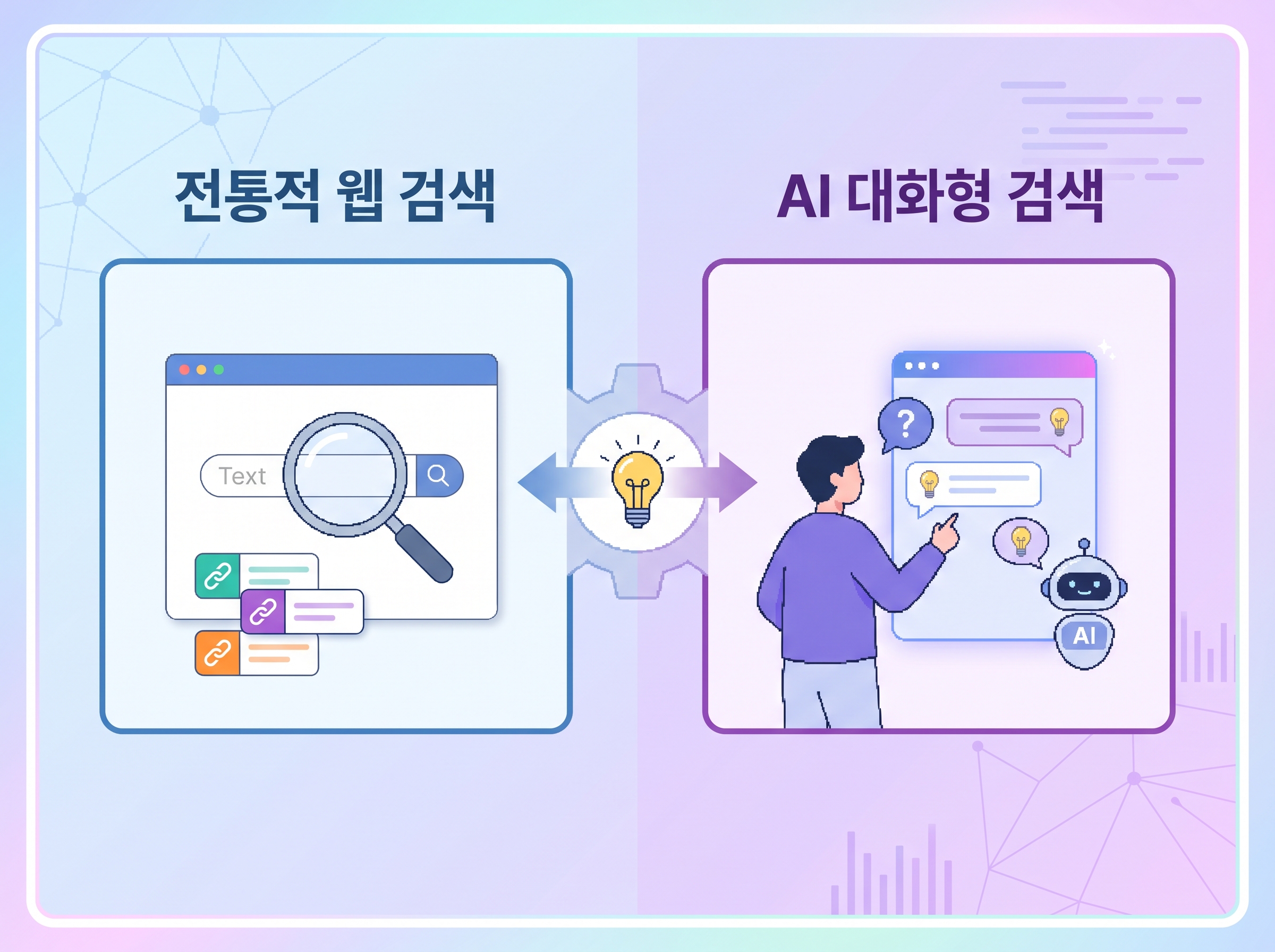
기존 검색 AI 검색, 우리는 하루에도 수십 번씩 무언가를 검색합니다. 과거에는 파란색 검색창에 단어 몇 개를 입력하는 것이 전부였지만, 이제는 대화형 인공지능에게 질문을 던지는 것이 아주 자연스러운 일상이 되었습니다. 그렇다면 우리는 모든 검색을 인공지능으로 대체해야 할까요?
기존 검색 AI 검색의 정답은 ‘상황에 맞게 골라 써야 한다’입니다. 기존의 웹 검색 엔진과 최신 AI 검색은 각기 다른 강점을 지니고 있기 때문입니다. 기존 검색 AI 검색 두 방식의 근본적인 차이에 대해 더 깊이 알고 싶으시다면, 이전에 발행된 [2026년 AI 검색 vs 구글 검색, 무엇이 다를까? 완벽 비교 가이드] 글을 먼저 참고해 보시는 것도 좋습니다. 이번 글에서는 일상생활 속 기존 검색 AI 검색 10가지 구체적인 상황을 통해, 언제 어떤 검색 방식을 선택하는 것이 가장 효율적인지 실용적인 활용 가이드를 정리해 드립니다.
기존 검색과 AI 검색, 이제는 경쟁 관계가 아니다
기존 검색 AI 검색 많은 분들이 기존 구글이나 네이버 같은 ‘전통적 웹 검색’과 ChatGPT, Gemini 같은 ‘AI 검색’을 경쟁 상대로 생각합니다. 하지만 2026년 현재, 이 둘은 서로를 완벽하게 보완하는 도구입니다.
기존 검색 AI 검색. 기존 검색은 원본 출처를 확인하고, 공신력 있는 공식 정보를 찾거나 실시간 현장 반응을 살피는 데 탁월합니다. 반면 AI 검색은 흩어진 정보를 요약하고, 복잡한 질문의 맥락을 이해하며, 표나 목록으로 깔끔하게 비교해 주는 데 강점이 있습니다. 게다가 최근의 AI 서비스들은 실시간 웹 검색 기능까지 탑재하여 최신 정보를 반영하고 출처 링크를 제공할 만큼 발전했습니다. 기존 검색 AI 검색은 따라서 목적에 따라 이 두 가지를 적절히 섞어 쓰는 것이 핵심입니다.
상황별로 어떤 검색 방법이 더 좋을까?
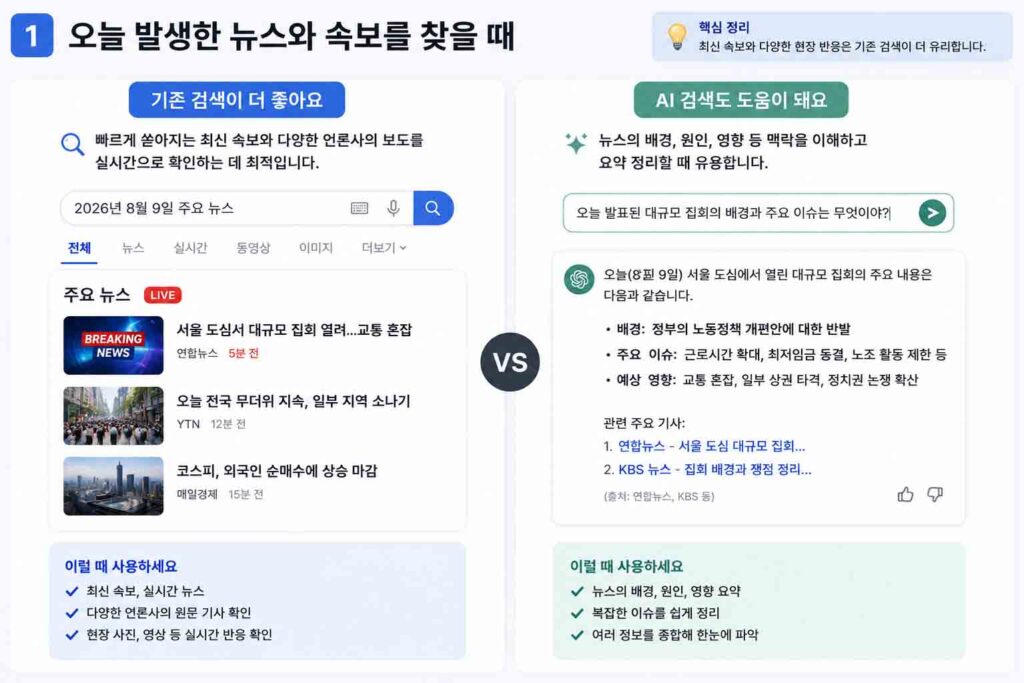
1. 기존 검색 AI 검색, 오늘 발생한 뉴스와 속보를 찾을 때
기존 검색 AI 검색이 더 좋은 경우: 방금 일어난 사건의 현장 사진, 언론사별 다양한 시각, 실시간 타임라인을 날것 그대로 확인하고 싶을 때 유리합니다.
AI 검색이 더 좋은 경우: 며칠째 이어지는 복잡한 정치·사회적 이슈의 ‘핵심 쟁점 3가지’를 빠르게 파악하고 싶을 때 좋습니다.
함께 사용하는 방법: 기존 검색의 ‘뉴스 탭’을 통해 최신 속보 제목들을 훑어본 뒤, 이해가 안 가는 배경지식이나 용어를 AI에게 질문하여 맥락을 파악합니다.
2. 제품을 구매하기 전에 가격과 실제 사용자 리뷰를 찾을 때
기존 검색 AI 검색이 더 좋은 경우: 현재 최저가 변동을 확인하거나, 보정이 들어가지 않은 구매자들의 실제 사진 리뷰, 배송 상태 등을 확인할 때 필수적입니다.
AI 검색이 더 좋은 경우: 특정 제품의 전반적인 장단점을 텍스트로 빠르게 요약받고 싶을 때 유용합니다.
함께 사용하는 방법: 오픈마켓이나 블로그(기존 검색)에서 실제 내돈내산 리뷰를 찾아본 후, 너무 글이 길다면 그 링크들을 복사해 AI에게 “이 리뷰들의 공통적인 단점만 요약해 줘”라고 시키는 것이 효율적입니다.
3. 여러 제품의 특징과 사양을 빠르게 비교할 때
기존 검색 AI 검색이 더 좋은 경우: 제조사의 공식 홈페이지에서 제공하는 정확한 스펙 시트 원본을 확인해야 할 때 좋습니다.
AI 검색이 더 좋은 경우: “아이폰 17과 갤럭시 S26의 주요 스펙을 표로 만들어 비교해 줘”처럼 한눈에 들어오는 비교 자료를 만들 때 압도적으로 편리합니다.
함께 사용하는 방법: AI를 통해 1차 비교 표를 만들어 전체적인 차이점을 파악한 후, 내게 가장 중요한 사양(예: 카메라 화소)만 기존 웹 검색으로 한 번 더 교차 검증합니다.
4. 여행 일정 전체를 계획할 때
기존 검색 AI 검색이 더 좋은 경우: 항공권 최저가 예매, 숙소 예약, 관광지의 정확한 휴무일 확인 등에 필요합니다.
AI 검색이 더 좋은 경우: “부모님을 모시고 가는 후쿠오카 2박 3일 힐링 코스 동선 짜줘”처럼 뼈대가 되는 초안을 잡을 때 매우 훌륭한 가이드가 됩니다.
함께 사용하는 방법: AI에게 전체적인 일자별 동선과 코스를 짜달라고 한 뒤, 각 장소들의 실제 이동 시간이나 식당 뷰 등은 지도 앱과 블로그 검색을 통해 구체화합니다.
5. 특정 맛집의 현재 영업시간·위치·후기를 확인할 때
기존 검색 AI 검색 더 좋은 경우: 오늘 갑자기 발생한 임시 휴무, 정확한 골목 위치 안내, 방금 다녀온 사람의 영수증 리뷰 등을 볼 때는 구글 맵스나 네이버 지도가 가장 정확합니다.
AI 검색이 더 좋은 경우: 특정 식당 정보보다는 “근처에 아이랑 가기 좋은 조용한 식당 유형 추천해 줘”처럼 아이디어를 얻을 때 좋습니다.
함께 사용하는 방법: AI에게 식당 리스트를 추천받고, 최종 선택과 방문 전 영업시간 확인은 무조건 지도 기반의 기존 검색을 이용해야 낭패를 보지 않습니다.
6. 어려운 공부 내용을 쉽게 설명받고 싶을 때
기존 검색이 더 좋은 경우: 대학교재의 원문이나 특정 학자의 원본 논문을 찾아야 할 때 유용합니다.
AI 검색이 더 좋은 경우: “양자역학의 원리를 중학생이 좋아하는 게임에 비유해서 설명해 줘”처럼 눈높이에 맞춘 맞춤형 과외가 필요할 때 압도적입니다.
함께 사용하는 방법: AI를 통해 먼저 어려운 개념의 숲을 이해하고, 세부적인 공식이나 학술적 근거는 웹 검색으로 전문 자료를 찾아 보충합니다.
7. 숙제나 보고서 자료의 원본 출처를 찾아야 할 때
기존 검색이 더 좋은 경우: 정부 기관(.go.kr), 연구소 웹사이트 등에 직접 접속하여 PDF 원문이나 통계청 데이터를 찾을 때 가장 확실합니다.
AI 검색이 더 좋은 경우: 어떤 키워드로 검색해야 내가 원하는 논문이 나올지 검색어 자체를 추천받을 때 좋습니다.
함께 사용하는 방법: AI에게 “이러한 통계를 찾으려면 어떤 기관 사이트에서 무슨 키워드로 검색해야 해?”라고 물어본 뒤, 알려준 키워드를 구글에 검색해 원문을 확보합니다.
8. 컴퓨터 오류나 스마트폰 문제를 해결할 때
기존 검색이 더 좋은 경우: 매우 드문 에러 코드나, 나와 완벽히 똑같은 증상을 겪은 사람의 커뮤니티(포럼) 해결기를 찾을 때 유용합니다.
AI 검색이 더 좋은 경우: 긴 오류 메시지를 그대로 복사해 붙여넣고 “이게 무슨 뜻이고 어떻게 해결해?”라고 물어보면, 원인과 1~5단계의 해결책을 깔끔하게 정리해 줍니다.
함께 사용하는 방법: 1차적으로 AI가 알려주는 일반적인 해결법(재부팅, 캐시 삭제 등)을 따라 해 보고, 그래도 안 되면 해당 에러 코드를 구글링하여 매니아들의 팁을 찾습니다.
9. 긴 자료를 빠르게 요약해야 할 때
기존 검색이 더 좋은 경우: 긴 자료를 요약하는 기능 자체는 기존 검색엔진에 적합하지 않습니다.
AI 검색이 더 좋은 경우: 수십 장짜리 보고서 텍스트나 긴 뉴스 기사 링크를 넣고 “3줄로 요약해 줘”라고 할 때 가장 빛을 발합니다.
함께 사용하는 방법: 기존 검색으로 신뢰할 만한 긴 칼럼이나 보고서를 여러 개 찾아낸 뒤, 그 내용을 모두 AI에게 넘겨 통합 브리핑을 받습니다.
10. 아이디어나 글의 초안을 만들 때
기존 검색이 더 좋은 경우: 다른 사람들은 어떤 형식으로 기획안을 썼는지 템플릿(서식) 원본 파일을 찾을 때 좋습니다.
AI 검색이 더 좋은 경우: 텅 빈 화면에서 막막할 때, “연말 행사 초대장 문구 3가지 버전으로 써줘”처럼 브레인스토밍과 초안 작성을 지시할 때 최고입니다.
함께 사용하는 방법: AI로 글의 초안과 개요를 빠르게 완성한 후, 글에 들어갈 구체적인 팩트나 최신 트렌드 사례는 웹 검색을 통해 채워 넣어 글의 퀄리티를 높입니다.
한눈에 보는 검색 방식 비교표
검색 목적
추천 방식
이유
최신 뉴스
기존 검색
실시간 타임라인 및 다양한 언론사 원문 확인 용이
현재 가격
기존 검색
쇼핑몰의 실시간 최저가 및 할인 행사 반영이 정확함
제품 실제 후기
기존 검색
사진, 영상이 포함된 내돈내산 생생한 리뷰 확인 가능
공식 정보
기존 검색
정부, 기업 등 공식 웹사이트 도메인을 통한 신뢰도 확보
복잡한 개념 설명
AI 검색
사용자의 눈높이에 맞춘 비유와 친절한 맞춤형 요약
여러 제품 비교
AI 검색
방대한 스펙을 표 형태로 1초 만에 정리해 주는 편리함
여행 일정 만들기
함께 사용
AI로 전체 일정 초안을 잡고, 기존 검색으로 휴무일 교차 검증
자료 출처 확인
기존 검색
논문, 통계 원본 문서(PDF)를 직접 다운로드하기에 적합
긴 글 요약
AI 검색
수십 장의 문서를 핵심 3줄로 즉시 압축하는 독보적 기능
아이디어 만들기
AI 검색
백지상태에서 기획안, 이메일 초안, 브레인스토밍 지원
가장 효율적인 방법은 ‘AI → 원본 확인’
기존 검색 AI 검색. 위의 사례들을 종합해 보면, 정보를 찾아가는 첫 단계를 인공지능으로 시작하는 것이 시간을 크게 아껴줍니다.
예를 들어, 새로운 노트북을 사야 한다고 가정해 보겠습니다. 무작정 ‘노트북 추천’을 구글에 검색하면 광고성 블로그 글에 지치기 쉽습니다. 대신 AI에게 먼저 “2026년 대학생 노트북을 고를 때 가장 중요한 기준 5개를 알려줘”라고 질문합니다. AI가 무게, CPU, 램, 배터리, 디스플레이라는 기준을 정리해 주면, 우리는 비로소 ‘어떤 것을 검색해야 할지’ 명확해집니다.
그 이후 공식 제조사 홈페이지나 쇼핑몰(기존 검색)에 들어가 해당 사양을 갖춘 모델의 현재 가격과 사용자 리뷰를 꼼꼼히 확인하면 완벽한 쇼핑이 됩니다.
반대로 ‘검색 → AI 정리’가 좋은 경우
기존 검색 AI 검색. 때로는 반대의 순서가 더 강력할 때도 있습니다. 정보를 수집하는 것은 내가 직접 하고, 정리를 인공지능에게 맡기는 방식입니다.
기존 검색 AI 검색. 보고서를 써야 할 때 구글 학술 검색이나 통계청에서 신뢰할 수 있는 자료 원본(PDF나 링크)을 서너 개 직접 찾습니다. 그런 다음 이 자료들을 통째로 AI에 업로드하거나 붙여넣고 “이 세 가지 자료를 바탕으로 이번 과제의 서론 부분을 요약해 줘”라고 지시합니다.
이 방법은 정보의 신뢰성은 100% 보장하면서, 요약에 들어가는 시간은 획기적으로 줄여주는 매우 스마트한 활용법입니다.
AI 답변을 그대로 믿으면 안 되는 경우
AI 검색이 아무리 훌륭하더라도 맹신은 금물입니다. 2026년의 인공지능도 여전히 그럴듯하게 거짓말을 하는 ‘할루시네이션(환각)’ 현상에서 완전히 자유롭지 못하기 때문입니다.
기존 검색 AI 검색. 특히 건강 및 의료(증상 진단, 약 복용법), 금융 및 투자(주가 전망, 세금 계산), 법률 및 정부 정책 등 내 삶이나 자산에 중대한 영향을 미치는 이른바 YMYL(Your Money or Your Life) 정보는 절대 AI의 답변만으로 의사결정을 내려서는 안 됩니다.
기존 검색 AI 검색 이러한 분야는 반드시 관련 부처의 공식 보도자료나 전문가가 작성한 원문 출처를 기존 검색 엔진으로 최종 확인해야 합니다.
2026년 검색을 잘하는 사람의 특징
기존 검색 AI 검색. 결국 2026년 디지털 시대에 정보 탐색을 잘하는 사람은 특정 도구 하나만을 고집하는 사람이 아닙니다. 내가 지금 찾으려는 정보가 ‘창의적인 아이디어’인지, ‘객관적인 팩트 원본’인지, 아니면 ‘빠른 요약’인지를 먼저 파악하고 그 목적에 가장 잘 맞는 도구를 꺼내 조합할 줄 아는 사람입니다.
AI 검색이라는 유능한 ‘비서’와 기존 검색이라는 거대한 ‘도서관’을 여러분의 목적에 맞게 지휘해 보세요. 훨씬 더 빠르고 정확하게 원하는 답을 손에 쥐실 수 있을 것입니다.
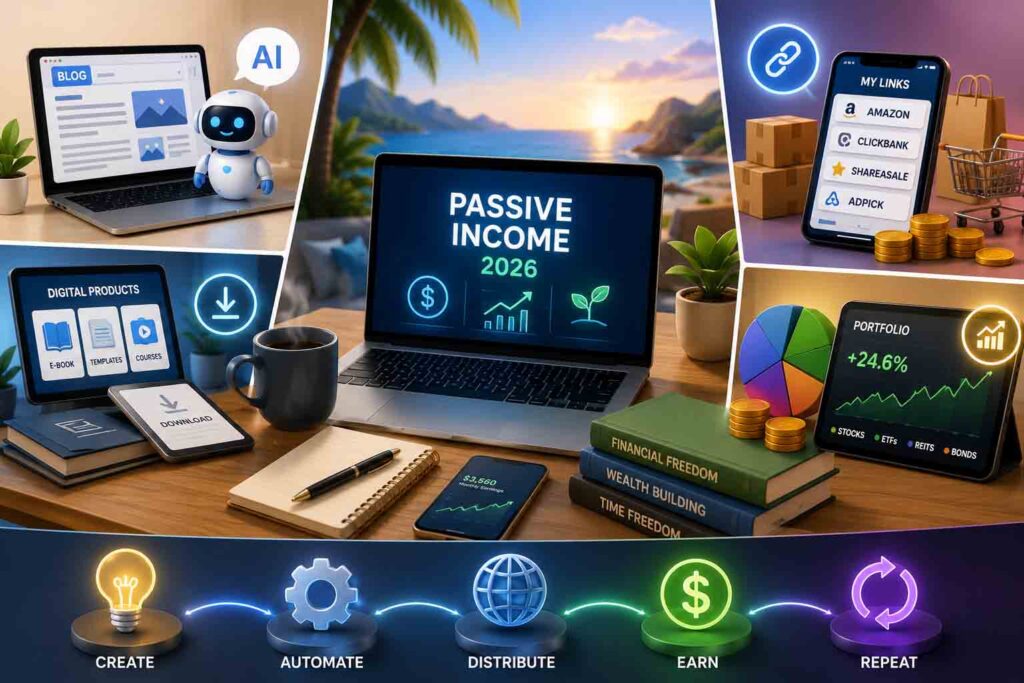
The global economy is undergoing a massive transformation. The traditional 9-to-5 workday, once the gold standard of financial security, is rapidly being supplemented—and in some cases, entirely replaced—by digital entrepreneurship. As we navigate through 2026, the concept of earning money while you sleep is no longer an internet pipe dream; it is an accessible, necessary strategy for wealth building.
Passive income is money earned with minimal ongoing effort after an initial investment of time, money, or resources. Whether you want to escape the corporate grind, protect yourself against economic downturns, or simply build a robust financial safety net, creating multiple streams of wealth is the most effective path forward.
This comprehensive guide breaks down the absolute best passive income ideas in 2026, detailing how emerging technologies and digital platforms can help you secure your financial freedom.
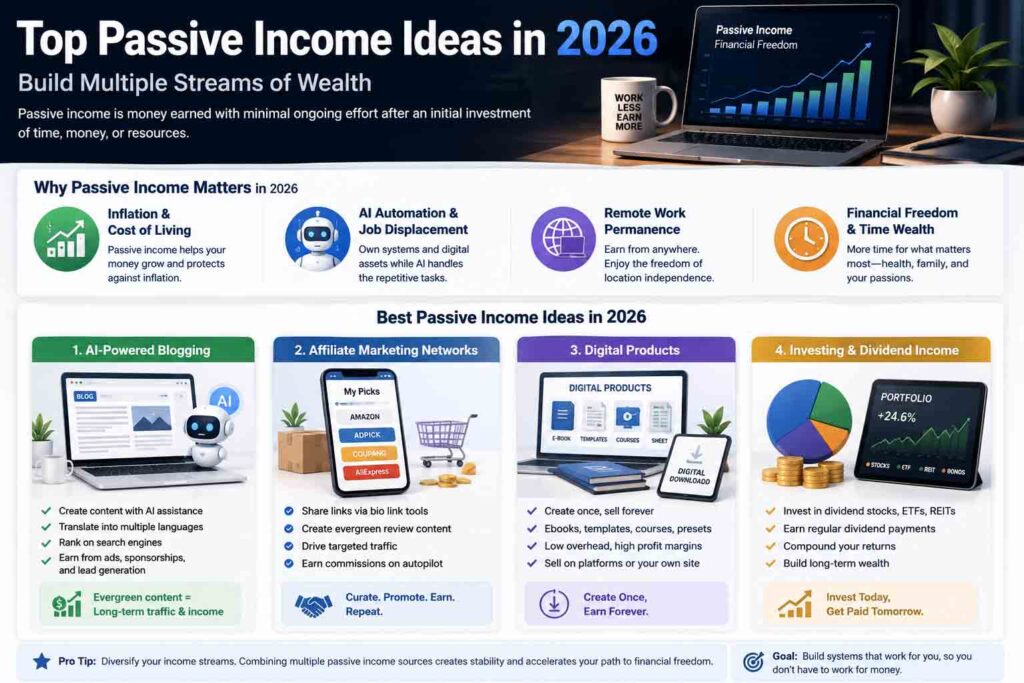
Why Passive Income Matters
Understanding the “why” behind passive revenue is just as important as the “how.” In 2026, several macroeconomic and technological factors make passive income essential.
Inflation and the Cost of Living
Over the last few years, the purchasing power of traditional fiat currencies has steadily eroded. Relying on a single salary that increases by a modest 2% to 3% annually often means you are actually losing money in real terms. Passive income streams act as a personal hedge against inflation, allowing your revenue to scale dynamically with the market.
AI Automation and Job Displacement
Artificial intelligence is restructuring the workforce. While some view this as a threat, savvy entrepreneurs view it as leverage. Jobs that involve repetitive tasks are being automated, but the individuals who own the systems, digital products, and content channels are thriving. Building passive income means you are on the owning side of the automation equation.
The Permanence of Remote Work
The normalization of remote work has popularized geographical arbitrage—earning in a strong currency while living in an area with a lower cost of living. Passive income generated online is inherently borderless, allowing you to design your lifestyle without geographical constraints.
Financial Freedom and Time Wealth
True wealth is not just about having money; it is about having time. When your income is untethered from the hours you physically clock into a job, you gain the freedom to focus on your health, your family, and your personal passions.
Best Passive Income Ideas
Building a passive income portfolio requires diversification. Here are the most viable, scalable, and lucrative passive income streams to build in 2026.
1. AI-Powered Blogging
Blogging remains one of the most reliable ways to generate passive revenue through display ads, sponsorships, and lead generation. In 2026, AI has supercharged this process. You can operate a highly profitable text-based platform—such as a Naver blog or a self-hosted WordPress site—by using AI to assist with content outlines, drafting, and multi-language localization.
By translating your articles into English, Japanese, and Chinese, you instantly multiply your potential audience. Once an article ranks on search engines, it can generate consistent daily traffic for years, providing a steady stream of AdSense or premium ad network revenue without requiring daily updates.
2. Affiliate Marketing Networks
Affiliate marketing involves promoting other companies’ products and earning a commission for every sale made through your unique link. You can drive immense traffic by utilizing a multi-link profile (like Litly or Linktree) positioned strategically in your social media bios.
A highly effective strategy is running a product curation campaign. For example, you might create content reviewing home organization goods (like modular shelving) and natural deodorizers. By pushing this targeted traffic to rewards platforms like Adpick or Amazon Associates, you earn passive commissions. The key is creating evergreen review content that users continuously search for.
3. Digital Products
Creating a digital product requires an upfront investment of your time, but the distribution costs are practically zero. Once created, a digital product can be sold an infinite number of times. Popular digital products include:
E-books and Guides: Detailed instructional manuals in your area of expertise.
Templates: Budgeting spreadsheets, Notion dashboards, or Canva presentation templates.
Software Presets: Photo editing filters, video transition packs, or audio equalizers.
Because there is no physical inventory or shipping involved, the profit margins on digital products often exceed 90%.
4. Print-on-Demand (POD)
If you have an eye for design, print-on-demand allows you to sell custom merchandise (t-shirts, mugs, phone cases) without ever holding inventory. You simply upload your designs to platforms like Printify or Redbubble.
When a customer makes a purchase, the platform prints, packages, and ships the product directly to them. You keep the difference between the retail price and the base manufacturing cost. In 2026, utilizing AI art generators can help you produce high-quality graphics and typography in minutes, rapidly expanding your digital storefront.
5. YouTube and Short-Form Video Automation
Digital content creation across YouTube, TikTok, and Instagram Reels is a massive passive income generator. “Faceless” channels or highly automated content systems are particularly lucrative.
Success here relies on strict pacing and engaging themes. For instance, you can take a highly engaging niche—such as slapstick animal comedy, K-pop culture, or deep-dives into traditional historical facts—and script it out using AI. A proven tactic for short-form video is dividing your timeline into crisp 5-second segments to maintain lightning-fast pacing and maximize audience retention. Once a video goes viral or ranks in YouTube search, the ad revenue and sponsor payouts become highly passive.
6. Online Courses
If you have specialized knowledge, packaging it into an online course is a fantastic way to build wealth. Platforms like Udemy, Skillshare, and Teachable allow you to host video lectures, quizzes, and downloadable resources.
Whether you are teaching software localization, multi-language script translation, or real estate negotiation, there is a global audience eager to learn. After the initial recording and curriculum design, course sales can generate revenue automatically, day and night.
7. Stock Photography and Videography
Media agencies, bloggers, and marketers constantly need high-quality visual content. If you are skilled with a camera—or proficient at utilizing AI upscaling and facial restoration software for vintage photography—you can upload your media to sites like Shutterstock, Adobe Stock, or Getty Images. Every time someone licenses your photo or B-roll video, you receive a royalty payment.
8. Dividend Investing
One of the most traditional and truly passive forms of income is investing in dividend-yielding stocks. When you buy shares in established, profitable companies, they often distribute a portion of their earnings back to shareholders quarterly.
To maximize this in 2026, active monitoring of the stock market is vital for the initial purchase. You might track real-time corporate disclosures and contract announcements for specific industrial sectors—such as wire and cable sector equities—to identify undervalued companies before the broader market catches on. Once the capital is invested, the dividend checks arrive completely passively.
9. REIT Investing (Real Estate Investment Trusts)
Real estate has long been the cornerstone of wealth generation, but buying physical property requires massive capital and active management. REITs solve this problem. A REIT is a company that owns, operates, or finances income-generating real estate.
By purchasing shares of a REIT on the stock market, you earn a share of the income produced through commercial real estate, apartment complexes, or medical facilities, without ever having to deal with a leaky roof or a difficult tenant.
10. Micro-SaaS Businesses
Software as a Service (SaaS) provides recurring monthly revenue. In 2026, you do not need to be a Silicon Valley software engineer to build one.
Even without a formal computer science background, you can utilize advanced LLMs like Grok—which is widely recognized for outperforming its competitors in pure programming and logic tasks—to write custom Python scripts. For example, you could write a script that scrapes and logs commercial product metrics directly into spreadsheet files, packaging this automated data loop into a subscription tool for digital marketers. Once the software is functional, customer subscriptions provide monthly passive income.
AI and Passive Income: The Ultimate Leverage
Artificial intelligence is the ultimate multiplier for online business in 2026. Here is how you can deploy AI to automate and streamline your income streams:
Content Writing and Localization
AI can generate blog posts, product descriptions, and marketing copy at unprecedented speeds. Furthermore, you can instantly translate your channel introductions, marketing disclaimers, and content into multiple languages, seamlessly reaching international markets.
Image Generation and Editing
Tools like Midjourney and DALL-E allow for rapid creation of digital art for Print-on-Demand businesses. By using precise, strict rendering directives (e.g., forbidding specific animations, adjusting aspect ratios to exact 16:9 slow-motion styles, or layering digital branding designs), you can maintain total creative control over your commercial benchmarking and assets.
Video Creation and Post-Production
AI tools now excel at tedious post-production tasks. You can automate audio layer separation, isolate voice tracks, and auto-generate dynamic subtitles, turning a three-hour editing session into a ten-minute automated process.
SEO and Marketing Automation
AI can analyze massive datasets to find low-competition keywords, optimize your meta descriptions, and schedule your social media posts. You can deploy automated data loops that connect your social accounts, extract target analytics, and adjust your ad spend accordingly without manual intervention.
Mistakes Beginners Make
While passive income is highly achievable, the internet is littered with failed projects. Avoid these critical beginner mistakes to ensure your success in 2026.
1. Unrealistic Expectations
“Passive” does not mean “no work.” It means the work is heavily front-loaded. Expect to spend months building your blog, YouTube channel, or digital product before you see your first dollar. Passive income requires momentum, and momentum takes time to build.
2. Poor Niche Selection
Many beginners choose a niche based on what they think pays the most, rather than what they actually understand. If you have no interest in cryptocurrency, do not start a finance blog. Choose a niche where your existing knowledge provides a competitive advantage.
3. Giving Up Too Early
The “hockey stick” growth curve is real in digital business. You might work for six months and earn $10, only to earn $1,000 in month seven. Most beginners quit in month five. Consistency is the primary separator between those who succeed and those who fail.
4. Ignoring Search Engine Optimization (SEO)
Whether you are on Google, YouTube, or Amazon, algorithms dictate who sees your content. If you do not invest time in learning basic SEO—such as proper keyword research, tag optimization, and search intent—your digital products and content will remain invisible.
5. Not Diversifying Income
Relying entirely on one income stream is dangerous. If you build your entire business on a single social media platform, an algorithmic update or a quality restriction notice can instantly wipe out your revenue. The goal is to build multiple, independent pillars of income.
Frequently Asked Questions
1. How much money do I need to start building passive income? Many digital passive income streams—such as affiliate marketing, YouTube automation, and digital products—can be started with zero financial capital. They only require an investment of your time. Investment-based streams, like dividend stocks or REITs, obviously require capital, but you can start fractional investing with as little as $50.
2. Is passive income truly passive? Almost no income is 100% passive forever. Even a robust dividend portfolio requires occasional rebalancing. Digital businesses require occasional software updates or customer service. A better term is “highly leveraged income”—you put in 10% of the maintenance effort for 100% of the financial reward.
3. Which passive income stream is best for beginners in 2026? Affiliate marketing and digital product creation are widely considered the best starting points. They require no inventory, minimal technical skills, and carry virtually zero financial risk.
4. How does AI affect passive income opportunities? AI drastically lowers the barrier to entry. Tasks that used to require hiring graphic designers, copywriters, or video editors can now be accomplished by a solo entrepreneur using AI tools, massively increasing profit margins and production speed.
5. How long does it take to make $1,000 a month in passive income? This depends entirely on the method and your work ethic. A highly focused entrepreneur treating a digital business like a full-time job can often reach this milestone in 6 to 12 months. Passive investing requires significantly more time to reach that threshold through compound interest alone.
Conclusion
The landscape of wealth generation has permanently shifted. In 2026, relying solely on an active, hourly wage leaves you financially vulnerable. By leveraging the power of the internet, advanced AI software like Grok, and automated distribution networks, building multiple streams of passive revenue is more achievable than ever before.
Whether you choose to curate affiliate marketing networks, write localized multi-language blogs, automate short-form video channels, or build a robust dividend portfolio, the key to success remains the same: start today, remain consistent, and continually adapt to new technologies. The initial effort you invest now will lay the foundation for a lifetime of financial freedom and remote independence.
SEO Meta Data & Requirements
SEO Meta Title: Top Passive Income Ideas in 2026: Build Multiple Wealth Streams
Meta Description: Discover the top passive income ideas for 2026. Learn how to build multiple streams of wealth through AI business, affiliate marketing, digital products, and more.
URL Slug:top-passive-income-ideas-2026
Featured Image Prompt: 16:9, ultra-realistic, cinematic, modern entrepreneur working with AI dashboards, laptop, digital products, affiliate income graphs, investments, multiple income streams, luxurious but realistic workspace, warm lighting, no text.
Image Alt Text: A modern digital entrepreneur viewing multiple passive income streams and financial growth charts on a glowing laptop screen.
Image Title: Passive Income Ideas 2026
Image Caption: Leveraging AI tools and digital platforms can help you build multiple streams of passive revenue.
Image Description: A highly detailed cinematic shot of a sleek, modern home office. On the wooden desk, a premium laptop displays colorful upward-trending financial graphs and automated business dashboards. The warm ambient lighting suggests a calm, successful, and location-independent work environment.
10 SEO Tags: Passive Income 2026, Make Money Online, Financial Freedom, AI Business, Affiliate Marketing, Digital Products, Multiple Income Streams, YouTube Automation, Dividend Investing, Remote Income.
Suggested WordPress Category: Business / Passive Income
Internal Linking Suggestions: Link to -> [How to Start Affiliate Marketing], [Guide to AI Prompts for Business], [Dividend Investing for Beginners], [YouTube Automation Strategies].
External Authoritative References: Forbes (Wealth Building Strategies), Investopedia (Definition of REITs and Passive Income), Google Search Central (SEO Best Practices for Blogging).
📌 Related Links
OpenAI: Customer Stories (Enterprise & Personal AI Use Cases)
Google AI: Boosting Productivity and Business with Gemini
The modern professional landscape has fundamentally changed. Just a few years ago, the concept of having a dedicated, highly intelligent assistant available 24/7 was a luxury reserved for top-tier executives. Today, thanks to rapid advancements in artificial intelligence, anyone with an internet connection can access an arsenal of digital assistants capable of tackling complex, time-consuming tasks in seconds.
Whether you are a freelancer managing multiple clients, an entrepreneur scaling a business, or a student balancing research projects, time is your most valuable asset. The integration of AI productivity tools into daily workflows is no longer just a competitive advantage—it is rapidly becoming an absolute necessity.
In this comprehensive guide, we will explore the best AI productivity tools available, compare their strengths and weaknesses, and demonstrate exactly how they are being used to save professionals hours of tedious work every single week.
Why AI Productivity Matters
Before diving into the specific tools, it is crucial to understand why artificial intelligence is having such a profound impact on how we work. The benefits extend far beyond simply writing emails faster.
Time Management: AI allows you to compress tasks that traditionally took hours into mere minutes. This reclaims massive blocks of time, allowing you to focus on high-impact, strategic work.
Automation of Repetitive Work: From data entry to formatting spreadsheets, AI excels at handling the mundane, repetitive tasks that drain human energy and cause burnout.
Better Decision-Making: AI tools can process and analyze vast amounts of data—such as financial reports or market trends—instantly, highlighting key insights that help you make informed, data-driven decisions.
Increased Efficiency: With AI handling the heavy lifting of research and drafting, your operational output can double or triple without requiring longer work hours.
Improved Creativity: Staring at a blank page is a universal struggle. AI acts as a phenomenal brainstorming partner, providing initial outlines, concepts, and ideas that you can refine with your unique human perspective.
The Best AI Productivity Tools
The AI landscape is crowded, but a few standout platforms have proven themselves to be essential staples in the modern productivity tech stack. Here is a detailed breakdown of the top tools you should consider incorporating into your daily routine.
ChatGPT (by OpenAI)
ChatGPT remains the most recognized name in the AI space, and for good reason. It is a highly versatile, general-purpose generative AI that can handle a staggering variety of tasks.
Main Features: Natural language processing, custom GPT creation, advanced data analysis, voice mode, and image generation (via DALL-E).
Best Use Cases: General brainstorming, writing first drafts, data formatting, and learning complex new concepts through conversational Q&A.
Strengths: Highly intuitive interface, massive user community for support, and the ability to create highly specialized “Custom GPTs” tailored to your exact workflows.
Limitations: Its knowledge cutoff can sometimes limit real-time awareness, and it can occasionally produce generic-sounding text if not prompted carefully.
Who Should Use It: Everyone from students and copywriters to executives and developers looking for a reliable, all-in-one assistant.
Google Gemini
Google’s flagship AI model is deeply woven into the Google ecosystem, making it a powerhouse for users who already live inside Google Workspace.
Main Features: Seamless integration with Google Docs, Gmail, Drive, and Sheets. It features robust multimodal capabilities (understanding text, images, and video simultaneously).
Best Use Cases: Summarizing long email threads, extracting data from Google Drive documents, and drafting responses directly within Gmail.
Strengths: Unparalleled access to real-time information via Google Search and native integration with the tools millions already use daily.
Limitations: While it is highly capable in search and document analysis, users handling complex programming tasks often find it struggles and produces errors compared to alternative models.
Who Should Use It: Heavy users of Google Workspace, researchers, and professionals who need real-time data pulling.
Claude (by Anthropic)
Claude has quickly become a favorite among power users, writers, and analysts due to its incredibly natural conversational tone and massive context window.
Main Features: An enormous context window (capable of reading entire books or massive codebases in one prompt), a highly nuanced writing style, and the “Artifacts” feature for generating and previewing code and documents.
Best Use Cases: Long-form writing, analyzing massive PDF reports, and maintaining complex, multi-layered conversations without the AI forgetting previous context.
Strengths: Claude is widely considered the most “human-sounding” AI for writing. It is exceptionally safe, logical, and excellent at following highly specific formatting instructions.
Limitations: It lacks native image generation and its web-browsing capabilities are not always as fast or integrated as Google’s or Perplexity’s.
Who Should Use It: Authors, legal professionals, data analysts, and content creators who require high-quality, nuanced writing.
Perplexity AI
Perplexity is fundamentally changing how we conduct research online. It functions less like a chatbot and more like a highly intelligent, conversational search engine.
Main Features: Real-time web browsing, in-line citation of sources, and a clean, ad-free interface focused purely on information retrieval.
Best Use Cases: Deep-dive research, fact-checking, academic inquiries, and market analysis.
Strengths: It completely bypasses SEO spam and immediately provides a synthesized answer with clickable footnotes to verify every claim.
Limitations: It is not designed for creative writing or extensive brainstorming; its primary function is strictly factual retrieval.
Who Should Use It: Researchers, journalists, marketers, and students who need accurate, verifiable information fast.
Microsoft Copilot
Microsoft has integrated AI directly into its enterprise suite, making Copilot the ultimate tool for corporate productivity.
Main Features: Deep integration into Word, Excel, PowerPoint, Teams, and Outlook, backed by the Microsoft Graph.
Best Use Cases: Generating PowerPoint presentations from Word documents, summarizing missed Teams meetings, and drafting corporate emails.
Strengths: It understands the context of your entire organization. It can pull data from a spreadsheet you worked on yesterday to answer a question in Teams today.
Limitations: The enterprise version can be expensive, and navigating the vast array of features requires a learning curve for some traditional Office users.
Who Should Use It: Corporate employees, enterprise teams, and heavy users of the Microsoft 365 ecosystem.
Notion AI
Notion is already a beloved workspace for notes and project management. Notion AI turbocharges this environment by embedding an assistant directly into your documents.
Main Features: In-line text generation, automated database filling, document summarization, and action-item extraction.
Best Use Cases: Cleaning up messy meeting notes, expanding bullet points into full project proposals, and managing personal or company wikis.
Strengths: The AI is contextualized to the specific page you are working on, making it incredibly frictionless to use without switching tabs.
Limitations: It operates strictly within the Notion ecosystem and relies heavily on the quality of the notes you have already taken.
Who Should Use It: Project managers, startup teams, and individuals who use Notion as their “second brain.”
Grammarly AI
Grammarly has evolved from a simple spell-checker into a comprehensive AI communication assistant.
Main Features: Real-time grammar and tone checking, sentence rewriting, and email drafting based on brief prompts.
Best Use Cases: Polishing professional communications, ensuring brand voice consistency, and quickly replying to daily emails.
Strengths: It works seamlessly across almost every website and app via browser extensions, ensuring you sound professional everywhere you type.
Limitations: Its generative capabilities are narrow and strictly focused on communication refinement rather than broad content creation or research.
Who Should Use It: Professionals, non-native English speakers, and customer support teams who communicate heavily via text.
Canva Magic Studio
AI is not just for text. Canva’s Magic Studio brings the power of generative AI to visual design, making professional graphics accessible to non-designers.
Main Features: Text-to-image generation, Magic Resize, automatic background removal, and AI-powered presentation drafting.
Best Use Cases: Creating social media graphics, designing marketing materials, and building slide decks quickly.
Strengths: It is incredibly user-friendly and removes the technical barriers associated with traditional graphic design software like Photoshop.
Limitations: The AI-generated images can sometimes lack the ultra-high fidelity of dedicated tools like Midjourney, though they are usually more than sufficient for everyday business use.
Who Should Use It: Social media managers, solo entrepreneurs, educators, and marketing teams.
Comparing AI Productivity Tools
To help you choose the right tool, here is how they stack up across the most common professional use cases.
Task Category
Top Recommended Tool
Why It Excels
Writing & Copywriting
Claude
Superior nuance, highly natural tone, and strict adherence to formatting rules.
Research & Fact-Checking
Perplexity AI
Provides real-time web searches with explicit, clickable source citations.
Coding & Scripts
Grok / Claude
For coding assistance, specialized models or highly capable tools like Grok often deliver superior performance and fewer errors than general-purpose assistants like Gemini.
Image Creation
Canva Magic Studio
Intuitive layout, easy integration of AI images into marketing templates.
Document Summarization
Notion AI
Best for analyzing and summarizing text directly within your existing workspace.
Brainstorming
ChatGPT
The conversational interface and custom GPTs make bouncing ideas back and forth effortless.
Corporate Business Use
Microsoft Copilot
Native integration with Teams, Excel, and Outlook using organizational data.
How AI Saves Hours Every Week
The true value of these tools becomes apparent when you apply them to real-world, daily operations. Here is how professionals are reclaiming their time:
Email Writing and Meeting Summaries
Instead of spending 20 minutes drafting a delicate email to a client, you can provide Copilot or Grammarly AI with a three-word prompt: “Politely decline project timeline.” The AI generates a professional, empathetic response in seconds. Furthermore, AI tools integrated into Zoom or Teams can automatically transcribe meetings and instantly generate a list of action items, saving you the hassle of taking manual notes.
Content Creation
Digital creators are leveraging AI to radically speed up their production pipelines. For instance, creators are utilizing AI to draft structured comedy scripts and effortlessly configure short video timelines, breaking scenes down into precise 5-second segments for fast-paced platforms. This turns a multi-hour planning session into a 15-minute review process.
Research
Gone are the days of opening twenty browser tabs to synthesize a market report. Using Perplexity, a consultant can ask for a summary of the latest trends in renewable energy, and the AI will read the tabs for them, providing a heavily cited, one-page brief instantly.
Coding Assistance
Developers and data analysts are saving massive amounts of time on boilerplate code and debugging. For advanced tasks—such as deploying custom Python scripts to scrape online data and log commercial product metrics directly into spreadsheet files—advanced models have proven exceptionally capable, turning days of trial-and-error coding into a quick, automated loop.
Marketing
Digital marketers use AI to build and optimize affiliate marketing operations across a multi-platform network. Whether scaling campaigns on Litly, managing a Naver blog, optimizing Adpick links, or analyzing TikTok traffic, AI acts as a central command, generating localized bios, SEO descriptions, and A/B testing ad copy in multiple languages simultaneously.
Project Management and Customer Support
AI can scan customer support tickets, categorize them by urgency, and draft preliminary responses based on previous company data. In project management, tools like Notion AI can instantly turn a brief project outline into a comprehensive Kanban board with assigned tasks and deadlines.
Tips for Using AI More Effectively
To get the most out of these productivity tools, you must learn how to interact with them properly.
Writing Better Prompts: The output is only as good as the input. Be specific. Instead of asking, “Write a blog post about marketing,” ask, “Act as a senior digital marketer. Write an 800-word blog post about B2B email marketing trends for 2026, using a professional but engaging tone, and include three actionable bullet points.”
Fact-Checking: AI models can and do hallucinate (make things up confidently). Always verify statistics, dates, and factual claims, especially when using tools that don’t provide live citations.
Combining Multiple AI Tools: The best workflows use a stack of tools. You might use Perplexity for research, Claude to write the draft, Grammarly to polish the tone, and Canva to create the featured image.
Protecting Privacy: Never paste sensitive personal data, proprietary company code, or confidential financial information into public AI models, as this data may be used to train future iterations.
Maintaining Human Creativity: Treat AI as an intern or a co-pilot, not a replacement for your brain. The final product should always be reviewed, edited, and injected with your unique human perspective and voice.
Future Trends
The AI productivity landscape is evolving at breakneck speed. Here is what to expect in the near future:
AI Agents: We are moving from AI that answers to AI that acts. Future “Agentic AI” will be able to execute multi-step workflows autonomously, such as logging into your CRM, updating client records, and sending follow-up emails without human intervention.
Workflow Automation: Tools like Zapier are deeply integrating AI, allowing seamless, invisible automation connecting thousands of different web apps based on natural language triggers.
Personalized AI Assistants: AI will become increasingly personalized, learning your specific writing style, daily schedule, and preferences over time, functioning as a true digital chief of staff.
Multimodal AI: The lines between text, audio, and visual inputs will blur. You will be able to show your AI a live video feed of a broken server rack, and it will verbally walk you through the troubleshooting steps in real-time.
Frequently Asked Questions
1. Will AI productivity tools replace my job? AI is highly unlikely to replace dynamic, complex jobs entirely. However, a professional who knows how to use AI effectively will very likely replace a professional who refuses to adapt to these new tools.
2. Are free versions of AI tools good enough? For casual users and students, the free versions of ChatGPT, Claude, and Gemini are incredibly powerful. However, professionals who need access to the latest models, larger context windows, and advanced data analysis features will find the monthly subscription fees easily pay for themselves in time saved.
3. Which AI tool is best for writing? While subjective, Claude by Anthropic is widely considered the best AI for writing due to its natural phrasing, high emotional intelligence, and ability to closely follow complex stylistic guidelines without sounding overly robotic.
4. Is it safe to put company data into AI? It depends on the platform and your subscription tier. Enterprise versions of tools like Microsoft Copilot and ChatGPT Enterprise offer data protection guarantees, ensuring your inputs are not used for training. Always consult your company’s IT policy before sharing data with standard, consumer-facing AI.
5. How do I start using AI if I’m overwhelmed? Start small. Pick one tool (like ChatGPT) and use it for one specific task every day, such as drafting emails or summarizing long articles. As you get comfortable with prompting, gradually expand your use cases.
Conclusion
The era of brute-forcing our way through digital busywork is over. Top AI productivity tools are no longer experimental novelties; they are foundational elements of the modern workspace. By integrating tools like ChatGPT, Claude, Perplexity, and Copilot into your daily routine, you are not just saving hours every week—you are fundamentally elevating the quality and strategic value of your work.
The goal of AI is not to make humans obsolete, but to free us from the robotic, repetitive tasks we were never meant to do in the first place. By adopting these tools today, you can stop working harder and finally start working smarter. Embrace the technology, experiment with your workflows, and unlock a new level of professional efficiency.
SEO Meta Data & Formatting
SEO Meta Title: Top AI Productivity Tools That Save Hours Every Week (2026)
Meta Description: Discover the top AI productivity tools to streamline your workflow. Compare ChatGPT, Claude, Gemini, and more to save hours of work every week.
Featured Image Prompt: 16:9, ultra-realistic, cinematic, modern workspace with laptop displaying multiple AI assistant interfaces, holographic AI icons, futuristic productivity dashboard, clean professional office, no text.
Image Alt Text: A sleek, modern office desk featuring a laptop surrounded by glowing, futuristic AI productivity icons and data dashboards.
Image Title: Top AI Productivity Tools for Modern Professionals
Image Caption: Integrating AI assistants into your daily workflow can automate repetitive tasks and save hours of valuable time every week.
Image Description: A cinematic, highly detailed rendering of a futuristic but realistic workspace. A premium laptop sits on a clean wooden desk, with soft glowing holographic representations of various AI interfaces (chat bubbles, charts, code snippets) hovering slightly above the screen, symbolizing advanced productivity and workflow automation.
10 SEO Tags: AI productivity tools, best AI tools, workflow automation, AI software, ChatGPT vs Claude, Microsoft Copilot, Notion AI, Perplexity AI, AI for business, digital productivity.
Internal Linking Suggestions: Link to articles on -> [How to Write Better AI Prompts], [The Future of AI Agents in Business], [Top AI Tools for Digital Marketers], [How AI is Changing Content Creation].
External Authoritative References: OpenAI (ChatGPT capabilities), Anthropic (Claude context windows), Microsoft (Copilot Enterprise security), Perplexity AI (RAG search technology).
Meta Description: Discover expert-backed heart health tips based on CDC and AHA guidelines. Learn everyday habits for heart disease prevention, managing blood pressure, and lowering cholesterol.
The human heart is an engineering marvel. Beating approximately 100,000 times a day, this vital muscle pumps roughly 2,000 gallons of blood through a vast, 60,000-mile network of blood vessels. It delivers life-sustaining oxygen and essential nutrients to every cell in your body. Yet, despite its resilience, the heart is deeply vulnerable to the cumulative effects of our daily choices.
According to the U.S. Centers for Disease Control and Prevention (CDC) and the American Heart Association (AHA), cardiovascular disease remains the leading cause of death globally. In the United States alone, one person dies every 33 seconds from cardiovascular disease. These global health statistics are sobering, but they come with a powerful and empowering caveat: up to 80% of premature heart disease and strokes are entirely preventable.
The key to preventive health lies in understanding your risks and making conscious, sustainable lifestyle changes. You do not need to overhaul your entire life overnight. Instead, building a healthy heart is about consistency. In this comprehensive guide, we will explore the core tenets of CDC heart health, break down the major risk factors, and provide actionable, everyday habits to help you lower your risk and embrace a vibrant, healthy lifestyle.
Why Heart Health Matters
When we talk about heart health, we are not just talking about extending your lifespan; we are talking about preserving your “healthspan”—the number of years you live free from debilitating disease and physical limitations.
Your cardiovascular system is the central highway of your body. When your heart functions optimally, you have the energy to play with your children, the stamina to travel, and the physical capacity to maintain your independence as you age. Conversely, when cardiovascular health declines, it creates a domino effect. Poor blood circulation impairs cognitive function, damages the kidneys, reduces mobility, and significantly lowers your overall quality of life.
Heart disease is often a silent progression. Conditions like high blood pressure and elevated cholesterol rarely show visible symptoms until they cause a catastrophic event, such as a heart attack or stroke. By prioritizing heart disease prevention today, you are investing in a future where you remain active, independent, and resilient.
Major Risk Factors
To protect your heart, you must first understand what threatens it. The CDC and AHA categorize cardiovascular risks into two groups: non-modifiable risks (like age, gender, and family genetics) and modifiable risks (lifestyle and environmental factors you can change). Focusing on the modifiable risk factors is the cornerstone of preventive health.
High Blood Pressure (Hypertension)
Often referred to as the “silent killer,” high blood pressure forces your heart to work overtime to pump blood through your body. Over time, this excessive force damages the delicate inner lining of your arteries, making them stiff and narrow. This condition, known as atherosclerosis, drastically increases the risk of a heart attack or stroke.
High Cholesterol
Cholesterol is a waxy substance your body needs to build cells, but too much of the wrong kind is dangerous. Low-density lipoprotein (LDL), or “bad” cholesterol, can build up as hard plaques in your artery walls. High-density lipoprotein (HDL), or “good” cholesterol, helps carry LDL away from the arteries. When LDL levels are high and HDL levels are low, the risk of arterial blockages skyrockets.
Smoking
Tobacco use is catastrophic for cardiovascular health. The chemicals in cigarette smoke damage blood vessels, lower your good cholesterol, and make your blood more likely to clot. Smoking also reduces the amount of oxygen your blood can carry, forcing your heart to beat faster and work harder.
Diabetes
People with diabetes are twice as likely to have heart disease or a stroke than those without it. Chronically high blood sugar levels damage blood vessels and the nerves that control your heart. Diabetes is also closely linked with other risk factors, including obesity and high blood pressure.
Obesity
Carrying excess body weight, particularly visceral fat around the abdomen, puts immense mechanical strain on the heart. Obesity is a driving force behind insulin resistance, systemic inflammation, high blood pressure, and abnormal cholesterol levels.
Physical Inactivity
The heart is a muscle, and like any muscle, it requires regular exercise to stay strong and efficient. A sedentary lifestyle weakens the heart, reduces blood flow, and contributes to weight gain and metabolic dysfunction.
Unhealthy Diet
Diets high in sodium, saturated fats, trans fats, and added sugars are the primary culprits behind poor cardiovascular health. High sodium intake directly spikes blood pressure, while unhealthy fats drive up LDL cholesterol levels.
Chronic Stress
While short-term stress is a normal biological response, chronic stress keeps your body flooded with cortisol and adrenaline. This constant state of “fight or flight” elevates your heart rate, spikes your blood pressure, and often leads to unhealthy coping mechanisms like overeating, smoking, or excessive alcohol consumption.
Everyday Habits That Protect Your Heart
Transforming your cardiovascular health does not require extreme diets or exhausting marathon training. According to CDC heart health guidelines, adopting simple, consistent daily habits is the most effective way to lower your risk of heart disease.
Eat a Heart-Healthy Diet
Healthy nutrition is your first line of defense. The AHA recommends dietary patterns like the Mediterranean Diet or the DASH (Dietary Approaches to Stop Hypertension) Diet.
Focus on Whole Foods: Fill half your plate with colorful fruits and vegetables. They are rich in fiber, potassium, and antioxidants that protect blood vessels.
Choose Lean Proteins: Opt for poultry, beans, legumes, and fish. Fatty fish like salmon and mackerel are high in Omega-3 fatty acids, which lower triglycerides and reduce inflammation.
Embrace Whole Grains: Swap refined white carbohydrates for oats, brown rice, quinoa, and 100% whole wheat to manage blood sugar and lower cholesterol.
Watch the Sodium: The CDC recommends consuming less than 2,300 milligrams of sodium per day (ideally closer to 1,500 mg for most adults). Read nutrition labels carefully, as up to 70% of sodium in the American diet comes from packaged and restaurant foods.
Exercise Regularly
Regular physical activity trains your heart to pump more blood with less effort. The AHA recommends at least 150 minutes of moderate-intensity aerobic exercise (such as brisk walking, swimming, or cycling) or 75 minutes of vigorous-intensity aerobic exercise (like running) every week. Additionally, incorporate muscle-strengthening activities at least two days a week. Resistance training improves your body’s ability to use insulin and regulates blood sugar, taking the pressure off your cardiovascular system.
Maintain a Healthy Weight
Losing just 5% to 10% of your body weight can result in significant improvements in blood pressure, blood cholesterol, and blood sugar. Instead of focusing on restrictive fad diets, focus on sustainable calorie control, portion management, and consistent physical activity.
Get Enough Sleep
Sleep is no longer considered a luxury; it is a biological necessity for a healthy heart. The AHA recently added sleep to its “Life’s Essential 8” checklist for cardiovascular health. Adults should aim for 7 to 9 hours of uninterrupted sleep per night. During deep sleep, your heart rate slows, and your blood pressure drops, giving your cardiovascular system a much-needed period of recovery and repair.
Manage Stress
You cannot eliminate stress from modern life, but you can change how your body responds to it. Incorporate stress-management techniques into your daily routine. Mindfulness meditation, deep breathing exercises, yoga, and spending time in nature are proven ways to lower cortisol levels, reduce resting heart rate, and stabilize blood pressure.
Avoid Tobacco
If you smoke, quitting is the single best thing you can do for your heart. The benefits are almost immediate. Within 20 minutes of quitting, your heart rate and blood pressure drop. Within a year, your risk of coronary heart disease is cut in half compared to a smoker’s. Avoid secondhand smoke as well, as it carries similar cardiovascular risks.
Limit Alcohol
Excessive alcohol consumption can raise blood pressure, increase triglycerides, and add empty calories that lead to weight gain. If you choose to drink, do so in moderation. The CDC defines moderation as up to one drink per day for women and up to two drinks per day for men.
Stay Hydrated
Proper hydration makes the heart’s job easier. When you are dehydrated, your blood volume decreases, causing your blood to become thicker. This forces your heart to pump harder to push blood through your vessels. Make water your primary beverage, aiming for a pale yellow urine color as an indicator of good hydration.
Warning Signs You Should Never Ignore
Even with the best preventive health measures, emergencies can happen. Knowing the warning signs of a heart attack can be the difference between life and death. The CDC urges everyone to recognize these symptoms and call emergency services (like 911 in the U.S.) immediately if they occur.
Chest Pain or Discomfort: Most heart attacks involve discomfort in the center or left side of the chest that lasts for more than a few minutes or goes away and comes back. It can feel like uncomfortable pressure, squeezing, fullness, or pain.
Shortness of Breath: This can occur with or without chest discomfort and often happens when you are resting or doing minimal physical activity.
Dizziness or Lightheadedness: Feeling faint, dizzy, or breaking out in a cold sweat are common warning signs.
Pain in the Arm, Jaw, or Back: Pain or discomfort can radiate to one or both arms, the back, neck, jaw, or stomach.
Unusual Fatigue: Profound, unexplained exhaustion, particularly in women, can be an early indicator of a heart attack, sometimes occurring days before the actual event.
Note: Women may experience heart attacks differently than men. While chest pain is still the most common symptom, women are more likely to experience shortness of breath, nausea, vomiting, and back or jaw pain.
Regular Health Screenings
You cannot manage what you do not measure. Because the primary drivers of cardiovascular disease are “silent,” regular health screenings are the only way to truly know your risk. The AHA refers to this as “knowing your numbers.”
Blood Pressure
Blood pressure is measured using two numbers: systolic (the pressure when your heart beats) and diastolic (the pressure when your heart rests). A normal blood pressure reading is less than 120/80 mm Hg. Adults should have their blood pressure checked at least once a year, or more frequently if it is elevated.
Cholesterol
A fasting lipoprotein panel measures your total cholesterol, LDL (bad) cholesterol, HDL (good) cholesterol, and triglycerides. High LDL cholesterol forms dangerous plaques in your arteries. Healthy adults should have their cholesterol checked every 4 to 6 years starting at age 20, and more frequently after age 40 or if they have other risk factors.
Blood Sugar
High blood glucose levels indicate prediabetes or diabetes. A fasting blood sugar test or an A1C test (which measures your average blood sugar over the past 2 to 3 months) can identify insulin resistance early. The CDC recommends regular screening for diabetes starting at age 35, or earlier if you are overweight.
Body Weight
Checking your Body Mass Index (BMI) and measuring your waist circumference during annual checkups helps your doctor assess your risk for metabolic syndrome. A waist circumference of more than 40 inches for men and 35 inches for women indicates a higher risk of heart disease.
Frequently Asked Questions
1. What is a normal blood pressure reading? According to the CDC and AHA, a normal blood pressure reading is less than 120 systolic and less than 80 diastolic (120/80 mm Hg). Elevated blood pressure is a systolic reading between 120-129 and a diastolic reading less than 80. Hypertension (high blood pressure) begins at 130/80 mm Hg.
2. Can I improve my heart health if I already have heart disease? Absolutely. Adopting a healthy lifestyle, participating in cardiac rehabilitation, taking prescribed medications, and working closely with your cardiologist can halt or even reverse the progression of cardiovascular disease and prevent future heart attacks.
3. Are eggs bad for my cholesterol? For decades, dietary cholesterol was thought to heavily influence blood cholesterol. However, modern science shows that saturated fats and trans fats have a much greater impact on raising your blood cholesterol. For most healthy people, eating eggs in moderation is perfectly safe and can be part of a heart-healthy diet.
4. How much exercise do I actually need to protect my heart? The American Heart Association recommends at least 150 minutes of moderate-intensity aerobic activity per week. You can break this down into 30 minutes a day, five days a week. Even light activities, such as brisk walking, gardening, or dancing, provide significant cardiovascular benefits.
5. What is the best diet for a healthy heart? There is no single “magic” diet, but dietary patterns like the Mediterranean Diet and the DASH Diet are consistently ranked as the best for cardiovascular health. Both emphasize whole grains, fruits, vegetables, lean proteins, and healthy fats (like olive oil and nuts) while strictly limiting sodium, added sugars, and highly processed foods.
Conclusion
Heart disease may be the leading cause of death worldwide, but it does not have to be your destiny. The science of heart disease prevention is clear: your daily habits wield extraordinary power over your cardiovascular health.
By actively monitoring your blood pressure and cholesterol, embracing a nutrient-dense diet, prioritizing daily movement, managing your stress, and getting adequate sleep, you build an internal environment where your heart can thrive. Remember, healthy aging and preventive health are lifelong journeys. You do not have to be perfect; you just need to be consistent. Start by making one small change today—whether it is taking a 15-minute walk after dinner, swapping a sugary soda for water, or scheduling that overdue doctor’s appointment. Your heart will thank you for years to come.
Disclaimer: This article is intended for educational and informational purposes only and does not constitute medical advice, diagnosis, or treatment. Always consult with a qualified healthcare provider, cardiologist, or registered dietitian before making significant changes to your diet, exercise routine, or medical treatment plan.
CDC / American Heart Association: Official guidelines on cardiovascular disease prevention, managing blood pressure, and Life’s Essential 8 daily habits.
NIH / MedlinePlus: Comprehensive medical information on cardiovascular health, risk factors, and healthy living practices.
WHO: Global facts, statistics, and prevention strategies for cardiovascular diseases (CVDs).
Meta Description: Discover the WHO healthy aging guidelines to enhance your longevity and wellness. Learn simple, evidence-based daily habits for a longer, more active life.
The global population is experiencing a remarkable demographic shift. Thanks to advancements in modern medicine, public health initiatives, and improved living conditions, humans are living longer than ever before. However, this triumph of longevity brings a new, critical challenge: ensuring that our extended years are lived with vitality, purpose, and good health. It is no longer just about adding years to our lives; it is about adding life to our years.
The World Health Organization (WHO) has declared the period from 2021 to 2030 the “Decade of Healthy Ageing,” emphasizing a global shift in how we approach getting older. Getting older should not be viewed as an inevitable decline into illness and dependency. Instead, with the right lifestyle choices and a focus on preventive health, we can actively shape how we age.
In this comprehensive guide, we will explore the WHO’s framework for healthy aging, unpack the daily habits that promote longevity, and provide actionable, evidence-based strategies to help you maintain your physical and mental independence for decades to come.
What Is Healthy Aging?
When many people think of aging healthily, they imagine living completely free of disease. However, the World Health Organization offers a more realistic, empowering, and holistic definition.
According to the WHO, healthy aging is “the process of developing and maintaining the functional ability that enables wellbeing in older age.”
This definition is revolutionary because it shifts the focus away from merely counting medical diagnoses. You can have a chronic health condition—such as well-managed hypertension or arthritis—and still experience healthy aging, provided you maintain your “functional ability.”
Functional ability means having the physical and mental capacity to do the things you value. It includes your ability to:
Meet your basic needs (getting dressed, cooking, managing finances).
Learn, grow, and make decisions.
Be mobile and navigate your environment.
Build and maintain relationships.
Contribute to society and your community.
Healthy aging is about preserving your intrinsic capacity (your physical and mental reserves) and creating environments that support you as you age.
Why Healthy Aging Is Important
The pursuit of active aging is not just a personal goal; it is a global public health priority. Adopting a healthy lifestyle today yields profound benefits for your future self, your family, and society as a whole.
Increasing Life Expectancy
By 2030, one in six people in the world will be aged 60 years or over. As global life expectancy rises, the gap between “lifespan” (how long you live) and “healthspan” (how long you live in good health) becomes glaringly apparent. Embracing preventive health habits ensures that your healthspan closely matches your lifespan, saving you from spending your final decades in a state of frailty.
Quality of Life
Longevity without quality of life can be a heavy burden. Healthy aging allows you to continue engaging in hobbies, traveling, playing with grandchildren, and enjoying the simple pleasures of life without being constantly sidelined by pain, exhaustion, or illness.
Maintaining Independence
One of the greatest fears associated with growing older is losing independence and becoming a burden on loved ones. Preserving your physical strength, mobility, and cognitive function allows you to live safely in your own home for as long as possible, maintaining your autonomy and dignity.
Preventing Chronic Diseases
While genetics play a role, the vast majority of non-communicable diseases (NCDs)—such as heart disease, stroke, type 2 diabetes, and certain cancers—are heavily influenced by lifestyle. Adopting healthy habits significantly reduces your risk of developing these debilitating and costly conditions.
Healthy Habits Recommended by WHO
The foundation of healthy aging is built on daily, consistent choices. The WHO emphasizes that it is never too early, or too late, to adopt behaviors that support wellness and longevity.
Regular Physical Activity
The human body is designed to move. Physical inactivity is a leading risk factor for global mortality and a primary driver of functional decline. The WHO recommends that adults achieve at least 150 to 300 minutes of moderate-intensity aerobic physical activity (such as brisk walking, swimming, or cycling) per week.
Additionally, adults should perform muscle-strengthening activities (like lifting weights, using resistance bands, or bodyweight exercises) on two or more days a week. Preserving muscle mass is critical for maintaining metabolism, supporting joints, and preventing frailty.
Balanced Nutrition
A healthy diet protects against malnutrition and non-communicable diseases. The WHO advises a diet rich in fruits, vegetables, legumes, nuts, and whole grains.
To support healthy aging, nutrition should focus on:
Limiting free sugars: To less than 10% (ideally 5%) of total energy intake.
Reducing sodium: Consuming less than 5 grams of salt per day to prevent hypertension and protect cardiovascular health.
Choosing healthy fats: Replacing saturated and trans fats with unsaturated fats found in olive oil, avocados, and fatty fish.
Quality Sleep
Sleep is the body’s ultimate restorative process. During deep sleep, your brain clears out metabolic waste and your body repairs damaged cellular tissues. Chronic sleep deprivation accelerates biological aging, increases systemic inflammation, and elevates the risk of cognitive decline. Prioritize 7 to 8 hours of uninterrupted, high-quality sleep by maintaining a consistent bedtime, limiting caffeine in the afternoon, and keeping your bedroom cool and dark.
Stress Management
Chronic, unmanaged stress takes a severe physical toll on the body. Prolonged elevation of the stress hormone cortisol suppresses the immune system, increases blood pressure, and accelerates the shortening of telomeres (the protective caps on the ends of your chromosomes associated with aging). Incorporate daily stress-reduction techniques such as mindfulness meditation, deep breathing exercises, or spending time in nature.
Staying Socially Connected
The WHO recently highlighted social isolation and loneliness as a pressing global health threat, carrying health risks equivalent to smoking 15 cigarettes a day. Maintaining strong social connections lowers the risk of depression, boosts immune function, and provides a critical support network. Actively invest in friendships, participate in community groups, or volunteer to stay engaged.
Avoiding Tobacco
Tobacco use is a primary driver of preventable death globally. Smoking damages blood vessels, reduces lung capacity, and vastly increases the risk of cancer, cardiovascular disease, and respiratory illnesses. Quitting smoking at any age immediately begins to reverse vascular damage and adds healthy years to your life.
Limiting Alcohol
The WHO is clear that there is no “safe” level of alcohol consumption. Alcohol is a toxic, psychoactive, and dependence-producing substance. Heavy drinking accelerates brain atrophy, damages the liver, and increases the risk of various cancers. Limiting or entirely eliminating alcohol intake is a powerful step toward preventive health.
Keeping Your Brain Healthy
Cognitive decline is not an inevitable part of aging. The brain is incredibly plastic and can form new neural connections well into old age—provided you give it the right stimulus and environment.
Lifelong Learning
Just as your muscles need resistance to grow, your brain needs challenge to stay sharp. Lifelong learning builds “cognitive reserve,” which helps the brain compensate for age-related changes. Learn a new language, take up a complex musical instrument, read challenging literature, or engage in strategic games like chess. Novelty is the key to brain health.
Physical Exercise
What is good for the heart is good for the brain. Aerobic exercise increases blood flow, delivering oxygen and essential nutrients to brain tissue. Exercise also stimulates the release of Brain-Derived Neurotrophic Factor (BDNF), a protein that supports the survival of existing neurons and encourages the growth of new synapses.
Social Interaction
Engaging in conversation requires complex cognitive processing. You must listen, interpret facial expressions, retrieve vocabulary, and formulate responses in real-time. Frequent social interaction is one of the most effective ways to keep the brain agile and ward off dementia.
Managing Blood Pressure and Diabetes
The brain relies on a vast, delicate network of blood vessels. Chronic hypertension (high blood pressure) and uncontrolled diabetes damage these microvessels, leading to silent strokes and vascular dementia. Keeping your blood pressure, blood sugar, and cholesterol in check through diet, exercise, and medication is vital for protecting your cognitive function.
Preventing Falls and Maintaining Mobility
For older adults, a simple fall can be a catastrophic, life-altering event. Falls are a leading cause of fatal and non-fatal injuries, often resulting in hip fractures that permanently strip away independence. Maintaining mobility is a cornerstone of the WHO’s active aging strategy.
Strength Training
Sarcopenia—the age-related loss of muscle mass and strength—makes everyday tasks difficult and destabilizes the body. Engaging in regular strength training builds the muscular armor needed to support your skeletal structure, making you more resilient against trips and stumbles.
Balance Exercises
Balance relies on a complex interaction between your inner ear, your eyes, and the proprioceptive sensors in your joints. This system degrades without practice. Incorporate balance-specific exercises into your routine, such as Tai Chi, yoga, or simple daily habits like standing on one leg while brushing your teeth.
Home Safety
Many falls happen in the comfort of one’s own home due to environmental hazards. To age safely in place:
Remove loose throw rugs and electrical cords from walkways.
Ensure all rooms, stairwells, and hallways are brightly lit.
Install grab bars in the bathroom near the toilet and shower.
Wear supportive, non-slip footwear indoors.
Vision and Hearing Checks
Impaired vision limits your ability to see obstacles, while untreated hearing loss reduces your spatial awareness and balance. Schedule annual eye exams to check for cataracts, glaucoma, and macular degeneration, and undergo regular audiogram testing. Wearing prescribed glasses and hearing aids is a direct investment in fall prevention.
Healthy Aging Starts Earlier Than You Think
A common misconception is that healthy aging is something you only need to worry about once you turn 60. In reality, the WHO advocates for a “life-course approach” to aging. The health of your future self is actively being built by the choices you make today.
In your 20s and 30s, you are building peak bone mass and establishing the metabolic set-points that will govern your midlife. In your 40s and 50s, unhealthy habits begin to compound, leading to the early stages of arterial plaque buildup, insulin resistance, and joint degradation.
By adopting a healthy lifestyle early, you maximize your intrinsic capacity, giving yourself a much higher starting point from which to age. However, the human body is incredibly forgiving. Even if you adopt these WHO healthy aging habits in your 60s or 70s, you can still significantly improve your functional ability, reduce medication dependency, and enhance your quality of life.
Frequently Asked Questions
1. What is the WHO definition of healthy aging? The WHO defines healthy aging as the process of developing and maintaining the functional ability that enables wellbeing in older age. It focuses on what a person can do and their quality of life, rather than just the absence of disease.
2. How much exercise is needed for active aging? The WHO recommends that adults engage in at least 150 to 300 minutes of moderate-intensity aerobic activity per week, plus muscle-strengthening activities on at least two days a week. For older adults, adding multicomponent physical activity that emphasizes functional balance is highly recommended.
3. Does diet really affect how quickly we age? Yes. A diet high in ultra-processed foods, sugar, and unhealthy fats accelerates cellular aging by driving systemic inflammation and oxidative stress. A balanced diet rich in whole foods, antioxidants, and healthy fats protects your cells, supports brain health, and prevents chronic disease.
4. How does social connection impact longevity? Social isolation causes chronic stress, which elevates cortisol levels, increases blood pressure, and suppresses the immune system. Strong social connections buffer stress, provide emotional support, and are consistently linked to longer, healthier lifespans.
5. Is it too late to start healthy habits if I am already over 65? It is never too late. Research shows that older adults who adopt healthy habits—such as quitting smoking, starting an exercise program, or improving their diet—can rapidly improve their cardiovascular health, boost their mood, and increase their functional mobility.
Conclusion
Healthy aging is not a genetic lottery or a stroke of luck; it is a proactive, lifelong journey. The World Health Organization’s guidelines remind us that growing older does not have to mean a loss of independence or a decline in wellbeing. By prioritizing regular physical activity, balanced nutrition, quality sleep, and social connection, we can actively protect our intrinsic capacity.
Whether you are in your 30s building your foundational health or in your 70s looking to preserve your mobility, the daily choices you make hold tremendous power. Start small, build sustainable healthy habits, and take control of your preventive health today. By doing so, you are not just adding years to your life—you are ensuring those years are vibrant, active, and deeply fulfilling.
Disclaimer: This article is for educational and informational purposes only and does not constitute medical advice. The content is based on general public health guidelines provided by the World Health Organization. Always consult with a qualified healthcare provider before making significant changes to your diet, exercise routine, or lifestyle, especially if you have existing health conditions.
WHO: Global health guidelines, initiatives for the “Decade of Healthy Ageing,” and frameworks for maintaining functional ability in older age.
CDC / National Institute on Aging (NIH): Comprehensive resources on preventive health, age-related lifestyle interventions, and managing chronic diseases.
MedlinePlus: Trusted medical information on senior health, fall prevention, and physical and cognitive maintenance.
Meta Description: Discover why Vitamin D, Iodine, and Omega-3 are essential nutrients many still lack. Learn how to improve your diet with CDC nutrition guidelines and healthy eating tips.
Despite having access to an abundance of food, modern populations face a profound public health paradox: we are often overfed yet undernourished. The U.S. Centers for Disease Control and Prevention (CDC) regularly monitors the American diet through national surveys and biochemical assessments. Time and time again, CDC nutrition data reveals a startling truth. While severe scurvy or rickets might be rare in the modern era, chronic, low-level deficiencies in specific essential nutrients remain incredibly common.
Among the most frequently identified gaps in healthy nutrition are Vitamin D, Iodine, and Omega-3 fatty acids. These biological building blocks are critical for everything from bone density and metabolic regulation to cognitive function and cardiovascular health. Unfortunately, the standard Western diet, heavy in ultra-processed foods and low in nutrient-dense whole foods, often fails to provide adequate amounts of these vital compounds.
In this comprehensive guide, we will explore the science behind these three essential nutrients, examine why public health experts are concerned about current intake levels, and provide actionable, evidence-based advice for building a balanced diet that supports a long, vibrant life.
Why Essential Nutrients Matter
To understand the importance of a balanced diet, we must first understand what makes a nutrient “essential.” In the fields of biology and public health, essential nutrients are defined as compounds that the human body cannot manufacture on its own—or cannot manufacture in sufficient quantities—to sustain life and optimal health. Therefore, they must be obtained entirely through our diet or, in certain cases, environmental exposure.
Essential nutrients are broadly categorized into macronutrients (proteins, carbohydrates, and fats) and micronutrients (vitamins and minerals). While macronutrients provide the caloric energy necessary to fuel our daily activities, micronutrients act as the crucial spark plugs for our cellular machinery.
Vitamins and minerals facilitate millions of chemical reactions in the body every single second. They are required to convert food into usable energy, repair damaged DNA, produce neurotransmitters that regulate our mood, and build the physical architecture of our bones and tissues. When you consistently fail to consume enough essential nutrients, these biological processes begin to slow down or malfunction.
At first, a deficiency might present as vague fatigue, brain fog, or a weakened immune system. Over time, however, the prolonged absence of essential nutrients can lead to severe chronic illnesses, accelerating the aging process and diminishing your overall quality of life. This is why public health organizations continuously emphasize healthy eating over simply counting calories.
Vitamin D
Vitamin D stands out among essential nutrients because it behaves more like a hormone than a traditional vitamin. Every cell in the human body has a receptor for Vitamin D, highlighting its fundamental importance to our overall well-being.
Benefits
The most well-known role of Vitamin D is the regulation of calcium and phosphorus in the blood. When you consume calcium, your gut cannot absorb it efficiently without the presence of Vitamin D. By facilitating this absorption, Vitamin D ensures that your skeletal system remains strong and dense, actively preventing bone disorders like osteopenia and osteoporosis.
Beyond bone health, Vitamin D is a critical modulator of the immune system. It helps immune cells identify and destroy pathogens like viruses and bacteria, which is why healthy Vitamin D levels are associated with a lower risk of respiratory infections. Furthermore, emerging research links adequate Vitamin D to improved mood regulation and a reduced risk of depression.
Common Deficiency Symptoms
Because Vitamin D plays such a widespread role in the body, a lack of it can cause a wide array of symptoms. Unfortunately, these symptoms are often subtle and easily attributed to the stress of daily life. Common signs of deficiency include:
Chronic fatigue and low daytime energy
Bone and lower back pain
Muscle weakness, aches, or frequent cramps
Getting sick often or taking longer to recover from common colds
Slow wound healing after surgery or minor injuries
Mood changes, particularly persistent sadness or seasonal affective disorder (SAD)
Best Food Sources
Finding Vitamin D in nature can be challenging, as very few foods contain it in high amounts. A healthy eating strategy must intentionally incorporate these specific sources:
Fatty Fish: Salmon, trout, mackerel, and sardines are some of the most potent natural sources.
Cod Liver Oil: A traditional supplement that provides a massive dose of both Vitamin D and Vitamin A.
Egg Yolks: The yolk is where the fat-soluble vitamins, including Vitamin D, reside.
Mushrooms: Certain mushrooms exposed to ultraviolet light can synthesize Vitamin D2.
Fortified Foods: To combat public health deficiencies, many countries fortify cow’s milk, plant-based milk alternatives, orange juice, and breakfast cereals with Vitamin D.
Safe Sunlight Exposure
The human body is brilliantly designed to synthesize its own Vitamin D when bare skin is exposed to the ultraviolet B (UVB) rays of the sun. However, balancing safe sun exposure with the risk of skin cancer is a delicate task.
For most people with lighter skin tones, exposing the face, arms, and legs to midday sunlight for 10 to 15 minutes a few times a week is sufficient to produce adequate Vitamin D. People with darker skin tones naturally have more melanin, which acts as a protective sunblock; therefore, they may require significantly more time in the sun to synthesize the same amount of the vitamin. It is important to note that UVB rays cannot penetrate glass, so sitting by a sunny window will not stimulate Vitamin D production.
Recommended Intake
According to official health guidelines, the Recommended Dietary Allowance (RDA) for Vitamin D is 600 International Units (IU) per day for adults up to age 70, and 800 IU per day for adults over 70. However, many medical professionals suggest that higher daily intakes may be necessary for individuals with limited sun exposure or malabsorption issues.
Iodine
Iodine is a trace mineral that is absolutely non-negotiable for human survival. Despite its critical importance, iodine deficiency remains a widespread public health issue globally, and CDC nutrition monitoring shows that certain demographics in the United States are teetering on the edge of insufficiency.
Importance for Thyroid Health
Your thyroid is a small, butterfly-shaped gland located at the base of your neck. It serves as the master controller of your body’s metabolism. To do its job, the thyroid must produce two specific hormones: thyroxine (T4) and triiodothyronine (T3).
Iodine is the core building block of these hormones. Without sufficient dietary iodine, your thyroid simply cannot manufacture T3 and T4. When these hormone levels drop, your entire metabolic engine slows down, affecting your heart rate, body temperature, digestion, and how efficiently you burn calories.
Deficiency Risks
When the body senses a lack of iodine, the pituitary gland secretes excess Thyroid Stimulating Hormone (TSH) to force the thyroid to work harder. This overstimulation causes the thyroid gland to physically enlarge, resulting in a visible swelling in the neck known as a goiter.
Prolonged deficiency leads to hypothyroidism. Symptoms include unexplained weight gain, extreme fatigue, dry skin, thinning hair, severe intolerance to cold temperatures, and brain fog.
The most severe risks of iodine deficiency occur during pregnancy. A developing fetus relies entirely on the mother’s thyroid hormones for brain and nervous system development. Even mild iodine deficiency during pregnancy can lead to lower IQ and cognitive impairments in the child, while severe deficiency can result in irreversible intellectual disability and stunted physical growth.
Food Sources
The amount of iodine in whole foods is highly dependent on the iodine content of the soil and water where the food was grown or raised. The best dietary sources include:
Seaweed: Kelp, nori, kombu, and wakame are incredibly rich in iodine, absorbing it directly from ocean water.
Seafood: Cod, tuna, shrimp, and oysters are excellent natural sources.
Dairy Products: Milk, yogurt, and cheese are significant sources in the American diet, largely due to iodine-containing supplements in cattle feed and iodine-based sanitizers used in the dairy industry.
Iodized Salt: The introduction of iodized table salt in the 1920s was one of the most successful public health interventions in history. Using a high-quality iodized salt at home is an easy way to ensure adequate intake.
Recommended Intake
The RDA for iodine for most adults is 150 micrograms (mcg) per day. Because of the critical demands of fetal development, pregnant women require 220 mcg per day, and breastfeeding women need 290 mcg per day.
Omega-3 Fatty Acids
While vitamins and minerals often steal the spotlight, certain fats are equally vital to a balanced diet. Omega-3 fatty acids are a class of polyunsaturated fats that form the structural foundation of our cell membranes, particularly in the brain and eyes.
Brain Health
The human brain is composed of nearly 60% fat, and a significant portion of that is a specific Omega-3 fatty acid known as docosahexaenoic acid (DHA). DHA is crucial for maintaining the fluidity and integrity of neural cell membranes, allowing brain cells to communicate rapidly and efficiently. A healthy nutrition plan rich in Omega-3s is associated with improved memory, sharper cognitive function, and a reduced risk of age-related cognitive decline and neurodegenerative diseases.
Heart Health
Omega-3s are renowned in the medical community for their profound cardiovascular benefits. They help to significantly lower triglyceride levels in the blood, slightly lower blood pressure, and prevent blood platelets from clumping together, which reduces the risk of deadly blood clots. Regular consumption of Omega-3s is strongly correlated with a reduced risk of heart attacks, strokes, and abnormal heart rhythms.
Anti-inflammatory Benefits
Chronic inflammation is now recognized as a root cause of many modern diseases, including type 2 diabetes, arthritis, and certain cancers. Omega-3 fatty acids are powerful anti-inflammatory agents. They interact with the immune system to reduce the production of molecules and substances linked to inflammation, such as inflammatory eicosanoids and cytokines.
Best Dietary Sources
To optimize your intake, you must understand the three main types of Omega-3s: Eicosapentaenoic acid (EPA), Docosahexaenoic acid (DHA), and Alpha-linolenic acid (ALA).
EPA and DHA Sources: Fatty marine fish (salmon, mackerel, sardines, anchovies, and herring), oysters, and algae.
ALA Sources: Flaxseeds, chia seeds, walnuts, hemp seeds, and soybeans.
Fish vs Plant Sources
It is crucial to distinguish between marine and plant sources of Omega-3s. The human body requires EPA and DHA for optimal brain and heart health. Plant foods provide ALA. While ALA is healthy, the human body is incredibly inefficient at converting ALA into the active EPA and DHA forms (the conversion rate is typically less than 5%). Therefore, relying solely on walnuts and chia seeds will not provide the same biochemical benefits as consuming fatty fish. For those who do not eat seafood, an algae-based EPA/DHA supplement is highly recommended.
Who Is Most at Risk of Deficiency?
While anyone consuming a poor diet can develop nutritional gaps, certain demographics are at a significantly higher risk for deficiencies in Vitamin D, Iodine, and Omega-3s.
Older Adults
As we age, our bodies become less efficient at extracting essential nutrients from food. Additionally, the skin’s ability to synthesize Vitamin D from sunlight decreases dramatically in older age. Combined with a natural decline in appetite, older adults frequently require targeted dietary interventions to maintain bone and brain health.
Pregnant Women
Pregnancy places immense metabolic demands on the female body. The developing fetus requires massive amounts of iodine for thyroid and brain development, Omega-3s (specifically DHA) for nervous system architecture, and Vitamin D for skeletal growth. Prenatal vitamins are vital to close these gaps.
Children
During periods of rapid physical and cognitive growth, children require a dense supply of essential nutrients. A lack of Vitamin D during childhood can cause severe bone deformities, while inadequate iodine and Omega-3s can permanently hinder neurological development and academic performance.
Vegetarians and Vegans
A well-planned plant-based diet offers many health benefits, but it inherently lacks natural dietary sources of EPA and DHA (which come from fish) and is often low in iodine (found in dairy and seafood) and Vitamin D. Vegetarians and vegans must be highly diligent about consuming fortified foods, iodized salt, and appropriate algae-based supplements to achieve healthy nutrition.
People with Limited Sun Exposure
Individuals who live in northern latitudes with long, dark winters, office workers who spend peak daylight hours indoors, and people who wear clothing that covers their entire bodies for religious or cultural reasons are at a very high risk for severe Vitamin D deficiency.
Healthy Eating Tips
Transforming public health data into daily habits doesn’t have to be complicated. By making intentional choices at the grocery store, you can easily secure the essential nutrients your body craves. Here are practical tips for achieving a balanced diet:
Embrace the “Food First” Philosophy: Try to get your nutrients from whole foods before turning to pills. Whole foods contain a complex matrix of fiber, antioxidants, and co-factors that help your body absorb vitamins more effectively.
Eat Seafood Twice a Week: Make fatty fish like salmon or sardines a regular part of your dinner rotation. If fresh fish is too expensive, canned wild-caught salmon and sardines are highly nutritious and budget-friendly alternatives.
Check Your Salt: Sea salt, Himalayan pink salt, and kosher salt have become popular in modern cooking, but they usually lack iodine. Keep a standard container of iodized table salt in your pantry specifically for daily seasoning to protect your thyroid.
Snack on Seeds and Nuts: Keep a jar of walnuts, chia seeds, or ground flaxseeds on your counter. Sprinkle them over oatmeal, yogurt, or salads to boost your intake of plant-based ALA Omega-3s and dietary fiber.
Look for Fortified Labels: When buying milk, plant-based milk alternatives, or breakfast cereals, take a moment to read the nutrition label. Choose brands that explicitly state they are fortified with Vitamin D.
Get Outside Safely: Aim for brief, daily walks in the sunshine. Exposing your arms and face to the sun for just 10 to 15 minutes before applying sunscreen can significantly boost your natural Vitamin D production.
Frequently Asked Questions
1. Can I get all my essential nutrients from a multivitamin? While a high-quality multivitamin can act as a nutritional safety net, it cannot replace a balanced diet. Multivitamins often lack sufficient quantities of bulky nutrients like calcium or Omega-3 fatty acids, and they do not provide the dietary fiber and antioxidant compounds found in whole fruits and vegetables.
2. How do I know if I lack essential nutrients? Many mild deficiencies cause general symptoms like fatigue, brain fog, or frequent colds. The only way to know for sure is to ask your healthcare provider for a blood test. A simple blood panel can accurately measure your levels of Vitamin D, thyroid function (related to iodine), and other crucial biomarkers.
3. Does cooking with iodized salt destroy the iodine? Iodine can degrade over time when exposed to moisture and heat, but adding iodized salt to your meals during or after cooking will still provide a significant amount of the mineral. To preserve the iodine content in your salt shaker, store it in a cool, dry, dark place rather than right next to a steaming stove.
4. What is the difference between fish oil and krill oil? Both are excellent sources of EPA and DHA Omega-3s. Fish oil is extracted from fatty fish like salmon or anchovies, while krill oil comes from tiny, shrimp-like crustaceans. Some studies suggest that the Omega-3s in krill oil are bound to phospholipids, making them slightly easier for the human body to absorb, but both are effective for healthy nutrition.
5. Can you consume too much Vitamin D? Yes. Because Vitamin D is a fat-soluble vitamin, your body stores excess amounts in fat tissue rather than flushing it out in urine. Consuming massive doses of Vitamin D supplements for prolonged periods can lead to vitamin toxicity, which causes calcium to build up in the blood, potentially damaging the heart and kidneys. Always follow recommended dosages.
Conclusion
The latest CDC nutrition data provides a vital roadmap for understanding where the modern diet succeeds and where it falls dangerously short. Vitamin D, Iodine, and Omega-3 fatty acids are not just buzzwords; they are essential nutrients that dictate the health of our bones, the speed of our metabolism, and the clarity of our minds.
Public health begins with personal choices. By understanding the biochemical roles these nutrients play, recognizing the symptoms of deficiency, and making small, intentional adjustments to your daily meals, you can bridge these nutritional gaps. Remember that healthy eating is not about restrictive dieting; it is about abundance, variety, and providing your cellular machinery with the high-quality fuel it needs to thrive.
Disclaimer: This article is intended for informational and educational purposes only. It does not constitute medical advice, diagnosis, or treatment. Always consult with a qualified healthcare provider or a registered dietitian before making significant changes to your diet or beginning any new dietary supplement regimens.
CDC / USDA: National dietary guidelines, public health data on nutrient deficiencies, and strategies for maintaining a balanced diet.
NIH Office of Dietary Supplements: Scientific research and official fact sheets detailing the biochemical roles of Vitamin D, Iodine, and Omega-3 fatty acids.
WHO / MedlinePlus: Global health standards for healthy eating, disease prevention, and the physiological impact of essential nutrients.