Medical Disclaimer: Cyclospora outbreak 2026. The information provided in this article is for educational and informational purposes only and does not constitute medical advice. If you suspect you have a foodborne illness, please consult a qualified healthcare professional.
1. Introduction
Cyclospora outbreak 2026. Fresh, raw produce is a fundamental element of nutritional health and modern dietary guidance, but its path from global agricultural centers to local grocery store shelves carries biological risks. The year 2026 has witnessed one of the most significant public health challenges in recent food safety history: a massive, fast-moving multistate outbreak of cyclosporiasis.
This intestinal infection, caused by the microscopic parasite Cyclospora cayetanensis, has sickened thousands of individuals across the United States. Unlike viral or bacterial foodborne contaminants, Cyclospora infections can produce weeks or even months of exhausting, relapsing gastrointestinal symptoms if left unmanaged. This comprehensive guide provides an objective, evidence-based exploration of the 2026 Cyclospora outbreak, detailing clinical symptoms, high-risk vectors, and a definitive produce purchasing and preparation roadmap.

2. What You’ll Learn
- The Biology of Cyclospora: A detailed overview of its specialized life cycle and why it thrives in tropical ecosystems.
- The Anatomy of the 2026 Outbreak: The current timeline, confirmed cases, specific imported product lines involved, and the regulatory response of the FDA and CDC.
- Clinical Profiling & Identification: How to distinguish the prolonged symptoms from typical stomach bugs.
- High-Risk Vectors: A breakdown of specific fruits, herbs, and leafy vegetables historically and currently implicated.
- Evidence-Based Prevention Systems: Practical strategies for produce washing, thermal inactivation, and safe food handling.
3. What Is Cyclospora?
Parasite Overview
Cyclospora outbreak 2026. Cyclospora cayetanensis is a microscopic, single-celled protozoan parasite that targets the mucosal cells of the human small intestine. First recognized as a significant human pathogen in the late 1970s, it belongs to the phylum Apicomplexa. Humans are the only known natural hosts, meaning animal feces do not play a role in transmitting this specific infection.
Life Cycle and Transmission
The parasite is shed in the feces of an infected person in an immature, non-infectious form called an unsporulated oocyst. To become infectious, it must sit in the environment (soil or water) for days to weeks to undergo sporulation. Because of this delay, direct person-to-person transmission is highly unlikely. Human infection occurs via the fecal-oral route through the accidental ingestion of food or water contaminated with mature oocysts.
Why Outbreaks Happen
Outbreaks are uniquely tied to systemic factors within modern agricultural and global trade frameworks. When contaminated water is sprayed across vast fields of low-growing produce, the sticky, highly resilient oocysts attach firmly to the surface cuticles and microscopic pores of herbs and leafy greens.
4. Current 2026 Cyclospora Outbreak
Timeline and Affected States
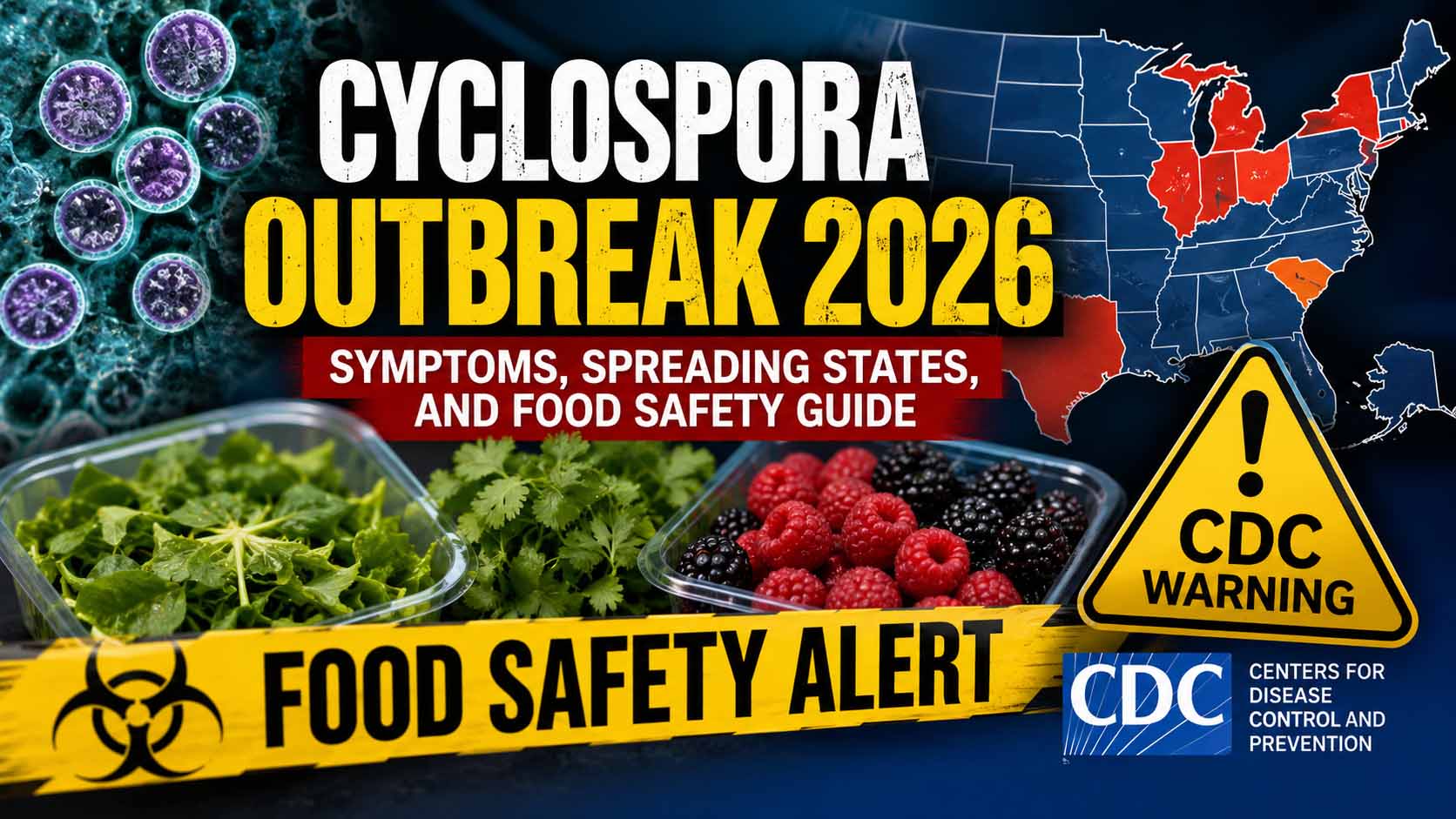
Cyclospora outbreak 2026. The 2026 domestic cyclosporiasis outbreak season began on May 1, 2026. On July 14, 2026, the CDC issued a Health Alert Network (HAN) notice regarding an unprecedented surge. As of mid-July 2026, federal surveillance systems have logged 1,645 laboratory-confirmed domestic infections across 34 U.S. states. A massive primary cluster heavily impacted five states: Michigan, Ohio, Indiana, Kentucky, and West Virginia.
Current Investigations and Recall
Traceback investigations by the FDA and CDC identified shredded iceberg lettuce imported from central Mexico—served at multiple Taco Bell restaurant locations across the Midwest—as a primary vehicle. On July 17, 2026, supplier Taylor Farms de Mexico initiated a comprehensive voluntary recall of all iceberg lettuce sourced from central Mexico, encompassing retail lines like the Marketside brand.

5. Symptoms and Diagnosis
Common Symptoms
Cyclospora outbreak 2026. The defining hallmark of a Cyclospora infection is frequent, voluminous, and watery diarrhea. Additional symptoms include:
- Severe abdominal cramping and physical bloating.
- Profound loss of appetite and rapid weight loss.
- Pronounced increased gas and flatulence.
- Nausea, low-grade fever, and generalized muscle aches.
- Pervasive, overwhelming fatigue.
High-Risk Groups
- Immunocompromised Individuals (e.g., HIV/AIDS, cancer patients).
- Older Adults (aged 65 and older).
- Infants and Young Children.
Diagnosis
Cyclospora is not detected by routine stool cultures. Patients must explicitly request specialized testing, such as a Gastrointestinal Polymerase Chain Reaction (PCR) multiplex panel or a specialized stool ova and parasite exam utilizing modified acid-fast staining.
6. Treatment Protocols
Cyclospora outbreak 2026. The gold-standard, first-line treatment for a confirmed Cyclospora infection is a standard course of oral trimethoprim/sulfamethoxazole (TMP-SMX), commonly known as Bactrim or Septra. The standard prescribed dosage for adults is typically one double-strength tablet twice daily for 7 to 10 days. Aggressive rehydration using structured Oral Rehydration Solutions (ORS) is also critical to manage fluid loss.
7. Buying Guide and Prevention for Safe Produce
Foods Commonly Linked to Cyclospora
- Leafy Greens: Iceberg, romaine, green leaf, and red leaf lettuce.
- Fresh Herbs: Cilantro and sweet basil.
- Berries: Raspberries, blackberries, and strawberries.
- Pre-packaged Salad Mixes: Spring mixes and mesclun blends.
Prevention Metrics
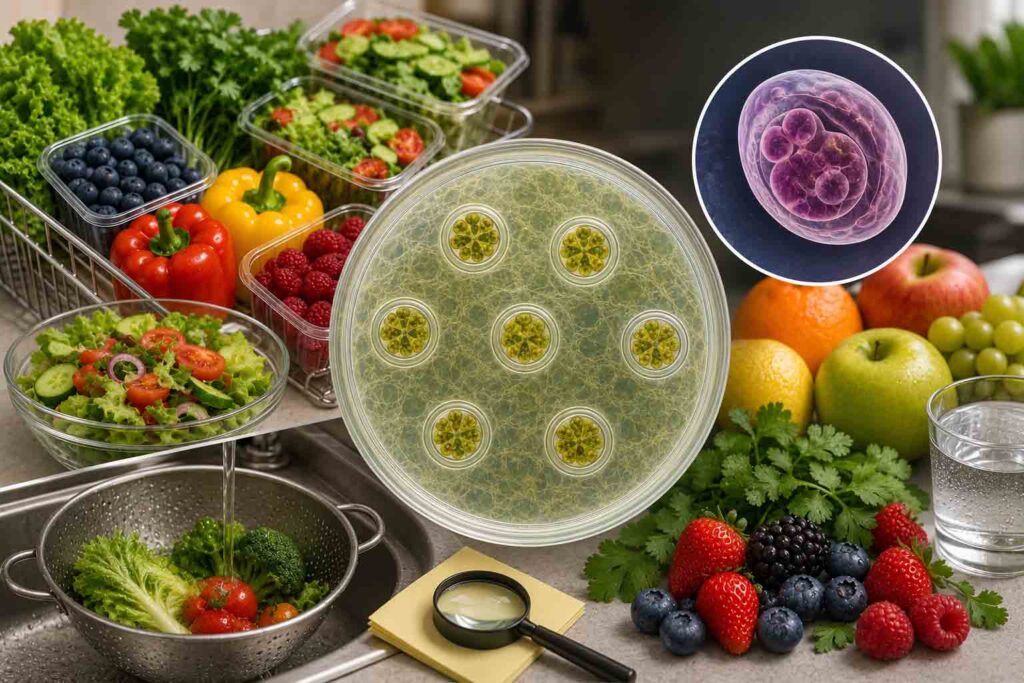
- Produce Washing: Rinse thoroughly under clean, running tap water. Use a dedicated produce brush for firm items. Note: washing alone cannot guarantee 100% removal.
- Thermal Processing: Cooking produce to an internal temperature of at least 158°F (70°C) completely destroys the parasite.
- Cross-Contamination Avoidance: Keep fresh fruits and vegetables completely separated from raw meats in the refrigerator.
8. Food Safety & Clinical Summary
| Parameter | Cyclospora Clinical & Food Safety Profile |
| Primary Symptoms | Voluminous watery diarrhea, severe abdominal cramps, bloating, fatigue, weight loss. |
| Incubation Period | Typically 7 days (range spans from 2 to 14+ days). |
| First-Line Treatment | Trimethoprim/sulfamethoxazole (TMP-SMX / Bactrim); 1 double-strength tab twice daily (7-10 days). |
| Supportive Measures | Aggressive rehydration using ORS; IV fluids for severe dehydration. |
| Core Prevention | Rinsing produce under running water, tracking FDA recalls, cooking food to 158°F (70°C). |
9. Frequently Asked Questions (FAQs)
1. Can Cyclospora be spread directly from person to person?
No. The parasite requires days or weeks in the environment to mature and become capable of causing illness.
2. Does freezing fresh produce kill Cyclospora oocysts?
No. Standard residential freezing is not reliable for destroying the highly resilient oocysts.
3. Is there a vaccine available?
No, there is currently no vaccine available to prevent Cyclospora infections in humans.
10. Final Thoughts
Cyclospora outbreak 2026. The sweeping 2026 nationwide Cyclospora outbreak serves as a stark reminder of the complexities inherent in our global food supply chains. By combining a reliable awareness of active food recalls with basic hygiene fundamentals—like washing hands, avoiding cross-contamination, and using clean, running water—consumers can continue to enjoy the vital health benefits of fresh fruits and vegetables while effectively minimizing their risk of foodborne illness.
관련기사
Logitech – Workspace Solutions
https://www.logitech.com/
IKEA – Home Office Ideas
https://www.ikea.com/
Microsoft – Work Smarter with Microsoft 365
https://www.microsoft.com/microsoft-365
Notion – Productivity Workspace
https://www.notion.so/
Steelcase – Workplace Insights
https://www.steelcase.com/
참고자료
- Logitech
- IKEA
- Microsoft
- Notion
- Steelcase