1. Introduction
Fresh fruits and vegetables are cornerstones of a healthy, nutrient-rich diet. From crisp leafy greens to vibrant summer berries, including raw produce in your daily meals provides essential vitamins, minerals, antioxidants, and dietary fiber. However, the journey from farm to table is complex, exposing these items to numerous potential contaminants along the way. While consumers often focus on the nutritional value of their fresh foods, food safety experts place equal emphasis on the critical necessity of proper sanitation.
Every year, millions of people worldwide contract foodborne illnesses, many of which are linked directly to contaminated raw produce. Because fruits and vegetables are frequently consumed raw without the sterilization benefit of high-heat cooking, any pathogens present on their surfaces can easily enter the human digestive tract. Surface soils, agricultural water runoff, handling during shipping, and public exposure in grocery stores all contribute to the invisible accumulation of bacteria, viruses, parasites, and synthetic chemical residues.
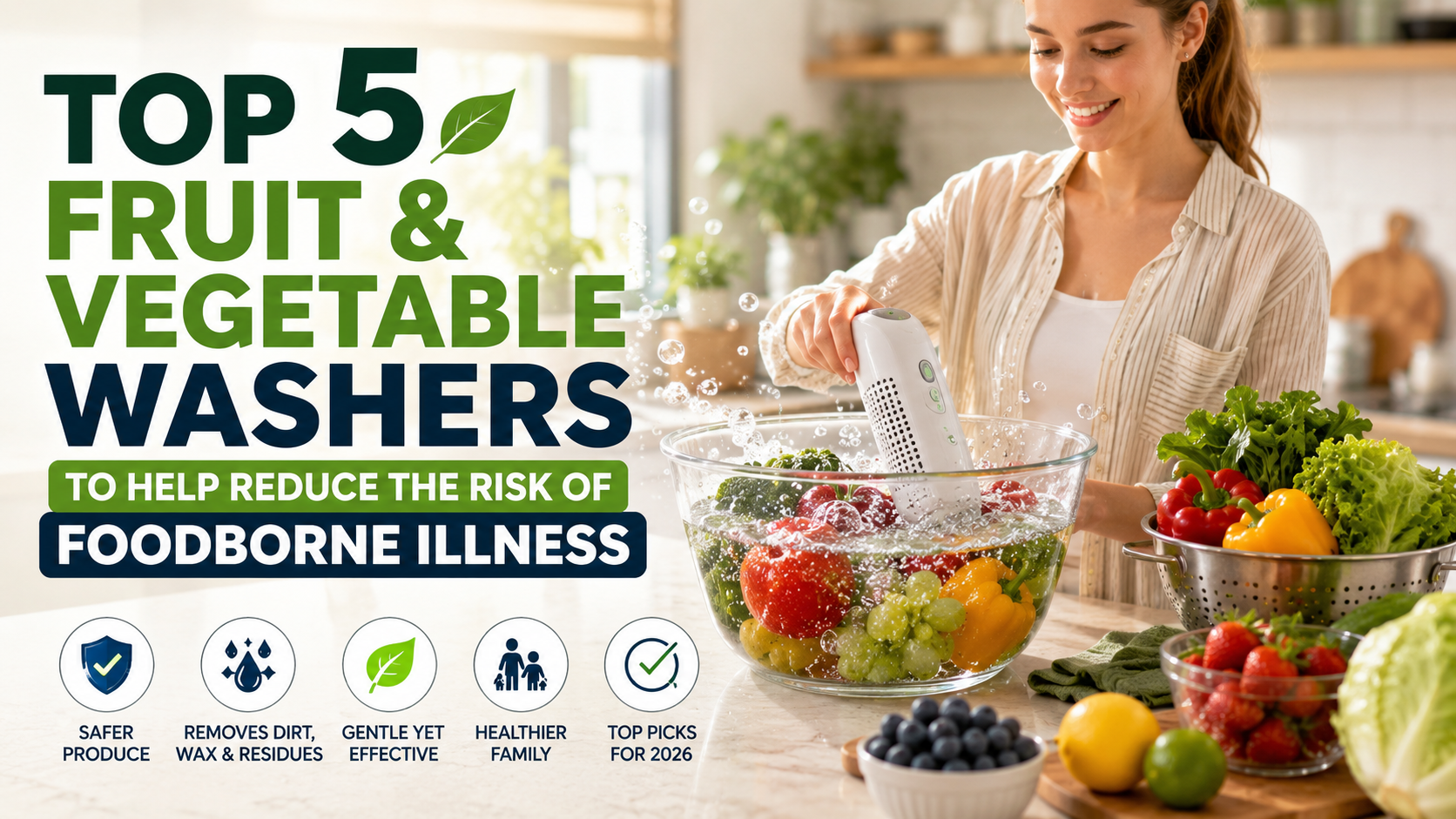
To address this challenge and provide an extra layer of protection beyond a basic kitchen tap rinse, specialized fruit and vegetable washers have grown immensely in popularity. These tools range from traditional manual brushes designed to scrub away stubborn topsoil to advanced electronic appliances leveraging electrolysis, ozone, or ultrasonic sound waves to clean on a microscopic level. This comprehensive guide explores why thorough produce decontamination matters, breaks down the core technologies behind modern vegetable washers, provides exhaustive reviews of the top five products on the market, and outlines actionable strategies to optimize your home food safety protocols.
2. What You’ll Learn
- The Core Hidden Risks: Why simple rinsing under standard tap water often fails to displace persistent pathogenic biofilms, hydrophobic chemical pesticides, and embedded environmental dirt.
- Science-Backed Explanations of Cleaning Tech: Exactly how mechanical friction, centrifugal force, water electrolysis, and acoustic cavitation clear impurities without altering food taste.
- Exhaustive Real-World Reviews: Granular breakdowns of the leading five products across budget, moderate, premium, and high-end categories, including structural specifications and exact user applications.
- A Scannable Decision-Making Matrix: A full product comparison table detailing types, tech, strengths, limitations, and pricing tiers at a single glance.
- A Deep-Dive Household Buying Guide: Clear structural parameters mapping the best device categories against physical cabinet space, household sizing, produce preferences, and material durability.
- Actionable Maintenance & Safety Protocols: How to prevent mineral scaling on technical units, clean multi-part gear lids, and deploy washers to complement established regulatory safety habits.
3. Why Proper Produce Washing Matters
Foodborne Illnesses
Foodborne illness is a significant, yet highly preventable, public health issue. Pathogenic microorganisms can easily adhere to the porous surfaces, stems, crevices, and natural wax coatings of raw fruits and vegetables. When these contaminated foods are consumed without thorough washing, they can trigger acute gastrointestinal distress or severe, life-threatening systemic infections.
Several notorious pathogens are frequently tied to major produce-related outbreaks. Escherichia coli (E. coli), particularly Shiga toxin-producing strains, can cause severe stomach cramps, bloody diarrhea, and hemolytic uremic syndrome (a type of kidney failure). Salmonella species, often transferred via contaminated irrigation water or agricultural runoff, lead to salmonellosis, characterized by high fevers, abdominal pain, and dehydration. Listeria monocytogenes is another highly resilient bacterium that can thrive even in refrigerated environments; it poses a critical risk to pregnant individuals, newborns, older adults, and anyone with a compromised immune system. Additionally, norovirus and parasites like Cyclospora cayetanensis are frequently spread through infected food handlers or contaminated water, leading to prolonged, exhausting illness cycles.
Pesticide Residues
Modern conventional agriculture relies heavily on chemical pesticides, herbicides, and fungicides to protect crops from insects, weeds, and molds. While regulatory bodies establish maximum residue limits aimed at ensuring consumer safety, low-level surface residues frequently persist on store-bought items. Certain fruits and vegetables with delicate skin, such as strawberries, spinach, kale, and apples, routinely demonstrate higher levels of detectable pesticide residues even after standard commercial packing house rinsing.
For individuals looking to minimize daily chemical exposure, relying purely on running water may not always yield satisfactory results. Many agricultural chemicals are formulated to be hydrophobic—meaning they are designed to resist washing away during rainstorms. Consequently, these sticky, oil-based formulations require targeted mechanical friction or advanced molecular breakdown to be effectively loosened and removed from the exterior cuticle of the fruit or vegetable.
Dirt and Bacteria
Beyond invisible pathogens and synthetic chemicals, raw produce naturally carries physical debris from the field. Soil particles, dust, sand, bird droppings, and insect remnants commonly settle into the deep folds of leafy vegetables or the bumpy exteriors of melons and gourds. This visible dirt is not just unappetizing; it serves as a primary structural breeding ground and shelter for opportunistic bacteria. If you slice through a dirty cantaloupe or potato, the physical movement of the knife blade can drag surface dirt, grit, and localized bacterial colonies directly into the clean, porous interior flesh of the food, contaminating the portions you intend to eat.
FDA and CDC Recommendations
The United States Food and Drug Administration (FDA) and the Centers for Disease Control and Prevention (CDC) maintain strict, science-backed protocols for handling fresh produce. Both agencies emphasize that the single most critical step in preventing produce-borne contamination is thorough, methodical washing. The core regulatory consensus includes several foundational rules:
- Always wash your hands with warm water and soap for at least 20 seconds before and after preparing fresh produce.
- Rinse produce before peeling or cutting it, so dirt and bacteria are not transferred from the knife onto the food.
- Gently rub produce while holding it under plain, running tap water. There is no official regulatory requirement to use commercial chemical soaps, detergents, or specialized produce bleaches, as these porous foods can absorb commercial cleaning chemicals, creating distinct ingestion hazards.
- Use a clean vegetable brush to scrub firm produce, such as melons, cucumbers, and potatoes, to physically dislodge stubborn surface bio-films.
- Dry produce thoroughly with a clean cloth towel or paper towel to further reduce any remaining surface bacteria that may be suspended in residual moisture drops.
It is important to understand that consumer fruit and vegetable washers are designed to enhance, optimize, and assist with these established public safety guidelines—not to bypass or replace them entirely.
4. Types of Fruit & Vegetable Washers
Manual Brushes
Manual vegetable brushes represent the traditional approach to food prep hygiene. These simple tools rely entirely on physical mechanical friction supplied by human effort. They typically feature ergonomic handles paired with dense clusters of nylon, natural plant, or silicone bristles tailored to varied stiffness levels. Manual brushes excel at scouring away thick layers of dried mud, field clay, natural debris, and artificial preservation waxes from dense, heavy root vegetables and thick-skinned fruits. They are highly reliable, require no power source, and are exceptionally cost-effective, though they are completely unsuited for processing soft, delicate items like berries or tender greens.
Salad Spinners
Salad spinners utilize basic physics—specifically, centrifugal force—to wash and dry large batches of leafy vegetables, herbs, and sturdy cut crops. A typical salad spinner consists of an outer solid bowl, a removable perforated inner colander basket, and a specialized lid equipped with a driving mechanism (such as a pull-cord, pump, or rotary crank). When water is introduced, the items can be swirled to loosen sand and surface grit, which falls through the basket holes to the bottom of the outer bowl. Spinning the inner basket at high speeds throws the water outward, drying the items rapidly. This quick drying step is critical for food preservation, as excess moisture accelerates structural decay and bacterial replication during storage.
Electrolysis Technology
Electrolysis-based produce washers represent an advanced leap into consumer kitchen chemistry. These devices feature specialized electrolytic plates made from durable materials like titanium. When submerged in a container of water with your produce, the device passes a safe, low-voltage electrical current through the liquid. This process splits water molecules ($H_2O$) into highly reactive, short-lived cleaning agents, including hydroxyl radicals ($OH$), hydrogen ions ($H^+$), and trace amounts of hypochlorous acid if natural mineral salts are present in the tap water. These oxidative elements actively break apart the molecular structures of complex agricultural pesticides and disrupt the delicate cellular membranes of surface bacteria, neutralizing them without requiring synthetic chemical additives.
Ultrasonic Technology
Ultrasonic cleaners use high-frequency sound waves—typically ranging from 40,000 to 50,000 Hz—to achieve deep, non-destructive decontamination. When an ultrasonic transducer is placed in a water bath, these sound waves generate alternating high-pressure and low-pressure cycles within the fluid. This rapid shift creates millions of microscopic vacuum bubbles, a phenomenon known as acoustic cavitation. As these micro-bubbles collapse against the surfaces of the submerged fruits, vegetables, or herbs, they generate tiny, highly localized shockwaves. These precise energy releases instantly lift away microscopic dirt particles, insect eggs, fungal spores, and pesticide molecules from tiny pores and crevices that manual brushes or simple rinsing could never reach.
Ozone Technology
Ozone-based washers introduce controlled quantities of ozone gas ($O_3$) directly into the washing water via an integrated generator and diffuser stone. Ozone is a naturally powerful oxidizing agent. When dissolved in water, it attacks organic contaminants on contact. The third oxygen atom in the ozone molecule is unstable and detaches easily, binding to the cell walls of bacteria and viruses to destroy them through cellular oxidation. This process also breaks down many chemical pesticides into inert, harmless byproducts. Once the reaction completes, the remaining ozone safely reverts back into standard oxygen ($O_2$), leaving behind zero toxic residues or strange chemical tastes on your freshly cleaned ingredients.
5. Top 5 Fruit & Vegetable Washers
To help you select the ideal tool for your kitchen setup, we have compiled exhaustive reviews of five highly regarded options across these distinct categories.
1. OXO Good Grips Fruit & Vegetable Brush
Overview
The OXO Good Grips Fruit & Vegetable Brush is an iconic, minimalist kitchen staple designed to bring comfortable, targeted manual scrubbing to your daily ingredient preparation. It eliminates the frustration of slippery handles and cheap plastic bristles by focusing squarely on structural durability and ergonomic efficiency.
Key Features
- Dense, durable nylon bristles organized to match the natural curves of various produce shapes.
- Signature flexible, non-slip rubberized palm grip that remains secure even when completely saturated with soapy water.
- Compact, low-profile design that stores easily in small drawers or utility crocks.
- Completely dishwasher-safe construction for simple sterilization.
Technology
This tool relies entirely on manual mechanical friction. The user provides the kinetic energy required to physically displace debris, wax coatings, and surface bio-films from the skin of the fruit or vegetable.
Specifications
- Dimensions: 2.75 x 1.25 x 3.25 inches
- Weight: 2.4 ounces
- Material: BPA-free plastic and flexible synthetic rubber
- Bristle Material: Medium-stiffness synthetic nylon
- Power Requirement: None
Pros
- Highly budget-friendly with zero ongoing operating or energy costs.
- Virtually indestructible with no electrical circuits or moving parts to wear out.
- Provides excellent tactile control, allowing you to apply extra pressure over stubborn mud spots.
- Extremely quick to use, clean, and store away without setup delays.
Cons
- Requires continuous physical effort and hand coordination.
- The bristles are too aggressive for delicate raspberries, strawberries, or soft leafy greens.
- Cannot alter or degrade chemical pesticides on a molecular level.
Best For
Home cooks on a budget who primarily process hardy root vegetables like russet potatoes, sweet potatoes, carrots, parsnips, and thick-skinned winter squashes.
Price Range
Budget-friendly (typically under $10).
Real-world Usage
In daily kitchen testing, the OXO brush performs flawlessly on mud-covered potatoes straight from the market. The non-slip handle prevents hand fatigue during bulk prep, and the bristles retain their straight, stiff shape even after months of regular cycles through a high-heat dishwasher.
Final Verdict
An essential, zero-fuss manual accessory that every kitchen should own for processing dense, earth-grown crops, even if you also own an electronic model.
2. Fullstar Vegetable Spinner
Overview
The Fullstar Vegetable Spinner is a high-capacity, heavy-duty mechanical washer engineered to clean and dry large volumes of leafy greens, vegetables, and fruit slices. It addresses the common annoyance of soggy salad greens by incorporating an ultra-efficient rotational mechanism.
Key Features
- High-velocity pull-cord mechanism that generates massive centrifugal spin speeds with minimal pull effort.
- Large 5-quart capacity outer bowl that functions as a standalone serving piece or temporary storage vessel.
- Heavy-duty locking lid system with dual built-in drain ports for pouring out water without exposing contents.
- Non-slip rubber ring base to keep the unit firmly anchored on smooth countertops during operation.
Technology
Utilizes centrifugal mechanical separation. Swirling water lifts lightweight dirt and sand away from the produce, and the high-speed spinning force separates the water from the leaves, pulling it through the colander holes to isolate the clean, dry food items.
Specifications
- Capacity: 5 Quarts (approx. 4.7 Liters)
- Dimensions: 9.8 x 9.8 x 7.1 inches
- Weight: 1.85 pounds
- Material: High-grade, impact-resistant BPA-free ABS plastic
- Drive Mechanism: Braided nylon pull-cord with ergonomic handle
Pros
- Dries greens exceptionally fast, which is critical for preventing rot and slime during subsequent refrigeration.
- Massive capacity allows you to process multiple heads of lettuce or a large batch of broccoli florets simultaneously.
- The multi-functional design minimizes dishes by providing a built-in colander and serving bowl.
Cons
- The large physical footprint requires substantial storage space in kitchen cabinets.
- The pull-cord assembly requires careful air-drying to ensure the internal cord mechanism stays clean and dry.
- Does not offer microscopic decontamination or pesticide neutralization properties.
Best For
Large families, dedicated meal-preppers, and individuals who consume high volumes of leafy greens, spinach, kale, and homemade salads weekly.
Price Range
Moderate (typically $20 to $30).
Real-world Usage
The Fullstar spinner excels at cleaning notoriously sandy vegetables like leeks or curly kale. Submerging the greens in the filled bowl lets the sand settle to the bottom, and a few quick pulls of the cord spin the leaves beautifully dry. The greens stay noticeably crisper in the fridge for several extra days compared to hand-drying.
Final Verdict
An exceptionally well-built mechanical spinner that streamlines bulk salad prep while extending the shelf life of costly fresh produce.
3. Cuisinart Salad Spinner
Overview
The Cuisinart Salad Spinner blends classic aesthetic refinement with smooth, geared mechanical performance. Designed for home cooks who prefer precise, continuous rotational control over their food prep, this spinner treats delicate ingredients gently while ensuring thorough moisture removal.
Key Features
- Ergonomic rotary crank handle that spins smoothly with minimal resistance.
- Integrated quick-stop brake button to instantly halt rotation, protecting delicate foods from over-spinning.
- Clear, heavy-duty thermoplastic outer bowl that lets you easily monitor water clarity and debris separation.
- Lid opening allowing you to add and drain water without unlatching the main lid cover.
Technology
Employs geared centrifugal mechanical separation. The rotary crank handle transmits energy through a set of internal gears to spin the basket evenly, lifting off surface water and loose soil particles safely.
Specifications
- Capacity: 5 Quarts
- Dimensions: 10.0 x 10.0 x 6.5 inches
- Weight: 1.9 pounds
- Material: Premium, shatter-resistant BPA-free clear plastic
- Drive Mechanism: Geared rotary turn-crank with top-mounted brake
Pros
- The rotary crank design provides highly predictable speed control, preventing delicate herbs from bruising.
- The integrated brake button adds great convenience and stops the basket instantly.
- The top opening makes it incredibly easy to perform multiple rinse cycles without opening the lid.
Cons
- Takes up a fair amount of cabinet or pantry shelf real estate.
- The lid assembly contains multiple gear tracks, meaning it must be hand-washed to avoid warping in high-heat dishwashers.
Best For
Home chefs who prioritize smooth, ergonomic mechanical control and frequently wash delicate fresh herbs, microgreens, and soft berries.
Price Range
Moderate (typically $25 to $35).
Real-world Usage
The Cuisinart spinner shines when preparing tender Italian flat-leaf parsley or fresh cilantro. The smooth geared crank doesn’t require jerky movements, and the quick-brake button lets you stop the cycle instantly if you notice delicate leaves starting to clump together.
Final Verdict
A highly elegant, reliable mechanical spinner that offers excellent rotational control and gentle handling for all your premium greens and herbs.
4. AquaPure Fruit & Vegetable Cleaner
Overview
The AquaPure Fruit & Vegetable Cleaner represents a true modern evolution in home food safety, bringing advanced electronic water electrolysis out of industrial commercial plants and right onto your kitchen counter. It is a compact, wireless capsule designed to break down invisible chemical residues completely hands-free.
Key Features
- Patented water electrolysis technology that sanitizes thoroughly without relying on synthetic chemical additives.
- Completely wireless, standalone capsule architecture with a rugged IPX7 waterproof rating.
- Rechargeable internal battery system via a convenient magnetic charging dock.
- Simple, one-button interface that runs a pre-programmed, automated 5-minute cleaning cycle.
Technology
This device relies on advanced electrolytic water splitting. When placed in a sink or bowl filled with water, the internal titanium plates charge the surrounding liquid, generating hydroxyl radicals ($OH^-$) and other oxidative ions. These reactive species attack the carbon chains of complex organic pesticides and disrupt bacterial cell membranes, rendering them inert. The ions eventually recombine into harmless water molecules.
Specifications
- Dimensions: 3.9 x 3.9 x 1.9 inches
- Weight: 11.2 ounces
- Battery Type: Lithium-ion rechargeable
- Waterproof Rating: IPX7
- Material: Food-grade ABS plastic and premium titanium plates
Pros
- Provides true chemical breakdown and microbial neutralization that manual brushes cannot match.
- Completely hands-free; you simply submerge the capsule in a bowl of water alongside your produce and walk away.
- Compact, travel-friendly design that takes up minimal storage space compared to large salad spinners.
- Leaves behind absolutely no chemical flavors, aftertastes, or unnatural aromas.
Cons
- Does not physically scrub away thick, dried mud or heavy physical topsoil deposits.
- Requires periodic battery recharging, meaning it cannot function if the battery is dead.
- Comes with a higher initial purchase price than traditional manual options.
Best For
Health-conscious consumers, parents preparing fresh infant purees, and individuals seeking a high reduction of invisible chemical pesticides on organic and conventional produce.
Price Range
Premium (typically $80 to $120).
Real-world Usage
Using the AquaPure capsule in a standard mixing bowl filled with store-bought strawberries is simple and straightforward. Once activated, a gentle stream of micro-bubbles emerges from the capsule. After the 5-minute cycle finishes, a slight pool of film can often be seen on the water surface—evidence of lifted waxes and residues. The berries look clean and taste fresh, with zero chemical alterations.
Final Verdict
An exceptional, highly portable electronic investment for anyone looking to optimize their defense against invisible agricultural chemicals and surface microbes.
5. Sonic Soak Ultrasonic Cleaner
Overview
The Sonic Soak Ultrasonic Cleaner represents the cutting edge of modern cleaning science. By generating high-frequency sound waves, this portable wand creates microscopic cavitation bubbles that implode against your food, instantly lifting away dirt and contaminants on a microscopic scale.
Key Features
- Ultra-powerful transducer that delivers up to 50,000 ultrasonic sound vibrations per second.
- High-grade, corrosion-resistant stainless steel wand designed for full submersion.
- External wall-powered digital control module equipped with precise timer adjustments.
- Multi-purpose functionality capable of cleaning produce, intricate jewelry, baby bottles, and delicate fabrics.
Technology
Utilizes acoustic cavitation. The high-frequency sound vibrations generate micro-vacuum bubbles within the water bath. As these bubbles compress and implode against the produce, they create high-velocity fluid micro-jets that instantly pull microscopic dirt, fungi, spores, and chemical residues away from deep pores and hidden crevices.
Specifications
- Vibration Frequency: 50 kHz (50,000 vibrations/second)
- Wand Material: Medical-grade 316 stainless steel
- Power Source: 110V/220V Wall outlet adapter
- Control Module: Digital LED display with customizable timer buttons
- Wand Weight: 4.2 ounces
Pros
- Reaches into microscopic crevices, such as the dense heads of broccoli or cauliflower, that other washers cannot access.
- Extremely gentle on delicate items since it requires zero physical friction, rubbing, or scrubbing.
- An incredibly versatile tool that can clean various non-food household items.
- Wall-powered operation ensures constant performance with no battery degradation over time.
Cons
- Features the highest initial price tag among the options reviewed.
- Requires a continuous connection to a wall outlet, reducing portability compared to wireless models.
- The high-frequency cavitation creates a soft, audible buzzing sound during operation.
Best For
Tech enthusiasts, large kitchens, and individuals who want an ultra-premium, multi-purpose cleaning device capable of deep, microscopic purification across various household items.
Price Range
High-End (typically $130 to $180).
Real-world Usage
When cleaning tight produce like broccoli florets or grapes, the Sonic Soak performs exceptionally well. Dropping the stainless steel wand into a deep sink basin and running a 10-minute cycle pulls out deep-seated grit, sand, and tiny insects from inside the florets, dropping them to the bottom of the sink while leaving the delicate vegetable structure perfectly intact.
Final Verdict
A premium, powerful technological investment that offers unparalleled microscopic cleaning depth for households focused on advanced sanitation.
6. Product Comparison Table
The table below provides a direct comparison of the key specifications, technologies, and features of our top five reviewed fruit and vegetable washers:
| Product | Type | Technology | Power Source | Best For | Pros | Cons | Price Range |
|---|---|---|---|---|---|---|---|
| OXO Good Grips Brush | Manual Brush | Mechanical Friction | None (Manual) | Hardy Root Vegetables | Affordable, durable, dishwasher-safe | Manual labor, harsh on soft berries | Budget |
| Fullstar Vegetable Spinner | Mechanical Spinner | Centrifugal Separation | None (Pull-Cord) | Bulk Leafy Greens | Fast drying, large 5-qt capacity | Bulky size, no chemical alteration | Moderate |
| Cuisinart Salad Spinner | Mechanical Spinner | Centrifugal Geared | None (Rotary Crank) | Delicate Herbs & Greens | Smooth crank control, quick brake | Hand-wash lid recommended | Moderate |
| AquaPure Cleaner | Electronic Capsule | Water Electrolysis | USB Rechargeable Battery | Pesticide & Microbe Reduction | Hands-free, compact, chemical-free | Doesn’t remove heavy topsoil | Premium |
| Sonic Soak Cleaner | Ultrasonic Wand | Acoustic Cavitation | AC Wall Outlet | Microscopic Crevice Cleaning | Deepest clean, highly versatile | Highest price, needs power outlet | High-End |
7. Buying Guide
Selecting the right fruit and vegetable washer requires analyzing your household’s unique dining patterns, meal volumes, and physical kitchen layout. There is no single device that fits every culinary scenario perfectly.
Best Washer for Each Type of Produce
The structural integrity of the food you eat dictates the type of cleaning device it requires. Hardy, dirt-laden root crops (such as russet potatoes, ginger, carrots, and turnips) benefit most from the firm nylon bristles of a manual tool like the OXO Good Grips Brush, which can scrape away packed clay. Conversely, loose, multi-layered leafy greens (like romaine lettuce, butterhead varieties, and Swiss chard) require immersion washing and high centrifugal forces—making the Fullstar or Cuisinart spinners unmatched choices. For complex, tightly clustered vegetables (like broccoli, cauliflower, and artichokes) or fragile fruits (like raspberries and blackberries), electronic options like AquaPure or Sonic Soak are ideal because they clean thoroughly using water ions or sound waves, requiring zero damaging physical friction.
Families vs. Single Users
Household size significantly impacts your washing volume and workflow speed. Large families or dedicated meal-preppers who process multiple heads of lettuce and pounds of vegetables at once should lean toward high-volume mechanical options like the Fullstar Vegetable Spinner, which can handle bulky batches quickly. Single users or couples cooking smaller meals may find a large spinner unnecessarily cumbersome. For these smaller setups, a compact electronic capsule like the AquaPure or a simple manual brush provides an ideal balance of performance and efficiency without taking over the sink.
Manual vs. Electronic Models
Choosing between manual and electronic models comes down to balancing hands-on effort against the depth of decontamination. Manual models (brushes and spinners) are highly reliable, always ready to use, and require zero batteries or electrical outlets. However, they rely entirely on your physical energy and cannot alter contaminants on a molecular level. Electronic appliances (electrolysis and ultrasonic devices) offer effortless, hands-free operation and target invisible chemical and microbial hazards directly. On the downside, they require regular charging or an available wall outlet, carry higher price tags, and need basic technical care.
Budget Considerations
Kitchen investments should always align with your financial comfort zone. If you want to maximize food hygiene on a limited budget, pairing a manual scrubbing brush with a quality mechanical salad spinner delivers excellent physical decontamination for under $40. However, if you have more flexibility and prioritize reducing exposure to chemical sprays, investing in an electronic device like the AquaPure or Sonic Soak provides great peace of mind and advanced molecular cleaning.
Durability
A tool’s lifespan is determined by its build quality and structural complexity. Manual options like the OXO Brush last for years because they have no moving parts or electrical circuits to fail. Mechanical spinners introduce minor wear points, like pull-cords or gear assemblies, which require gentle handling during washing. Electronic washers feature internal circuit boards, lithium batteries, or ultrasonic transducers; these devices must be built from high-grade materials like medical stainless steel or premium ABS plastics to reliably withstand daily exposure to moisture.
Ease of Cleaning
A food hygiene tool must be easy to sanitize itself, or it can quickly become a breeding ground for the very bacteria you are trying to avoid. Brushes that can go in the dishwasher are exceptionally easy to maintain. When evaluating salad spinners, look for models with smooth bowls and removable lid plates that prevent old water from getting trapped in the gear housings. For electronic devices, choose units with smooth, open-grating designs that rinse clean under a running tap without requiring complex disassembly.
Storage Space
Countertop and cabinet real estate is precious in any kitchen. Large 5-quart salad spinners are incredibly useful, but they require a significant amount of shelf space. If your kitchen cabinets are already crowded, compact alternatives like the OXO Brush or the pocket-sized AquaPure Capsule store away neatly in standard silverware drawers or small corner cubbies.
8. Performance Expectations
To avoid frustration, it is vital to establish grounded, scientifically accurate expectations regarding what consumer fruit and vegetable washers can and cannot achieve within a residential kitchen setting.
What These Devices CAN Do
- Remove Surface Loose Soil: They are highly effective at displacing field dust, grit, caked mud, and sand particles from the exteriors of produce.
- Reduce Microscopic Bio-films: They significantly reduce the volume of surface bacteria, fungal spores, and lingering viruses compared to rinsing with plain water alone.
- Aids in Detaching Pesticides: They help detach, loosen, and break down surface-level agricultural chemical residues, chemical sprays, and synthetic preservation waxes.
- Extend Shelf Life: By removing moisture (via spinners) and lowering initial microbial loads, they help prevent premature rot, mold growth, and slime development during refrigeration.
What They CANNOT Do
- Cannot Achieve 100% Sterilization: No residential kitchen device can completely sterilize raw produce. A small percentage of highly resilient microbes may always persist within deep structural pores.
- Cannot Neutralize Internal Contaminants: If a plant has absorbed systemic pesticides or contaminated groundwater through its root network directly into its internal cellular flesh, surface washers cannot reach or neutralize those internal compounds.
- Cannot Reverse Spoilage: These devices cannot refresh or restore food that is already decaying, sour, or heavily rotted.
Common Misconceptions
A frequent misconception is that using an electronic washer allows you to completely ignore basic food handling safety rules. Some users mistakenly believe that running an electrolysis cycle means they no longer need to rinse away visible dirt or wash their hands. In reality, heavy layers of topsoil can block ultrasonic sound waves and exhaust the active ions generated by electrolysis, reducing their overall cleaning power. Physical dirt should always be rinsed away first before running an electronic sanitation cycle.
Food Safety Best Practices
To ensure the highest standard of health protection, consumer washers must be used as part of a complete, systematic kitchen sanitation routine. Always clean and sanitize your sink basin and cutting boards before starting food preparation. Keep raw meats, poultry, and seafood completely isolated from fresh produce areas to prevent cross-contamination. Most importantly, remember that these products are designed to complement, not replace, standard food safety practices. Always maintain clean hands, use safe running water, and practice proper refrigeration habits.
9. Maintenance Tips
Proper maintenance ensures your produce washers perform efficiently and remain hygienically safe over years of daily kitchen use.
- Post-Use Rinsing: Always rinse every component under clean running tap water immediately after a cleaning cycle to prevent organic films from drying and hardening on the surfaces.
- Air Drying Protocol: Never store a wet vegetable washer inside a dark, enclosed drawer or cabinet. Wipe all surfaces down with a clean towel and allow them to fully air-dry in an open, well-ventilated area to prevent mold growth.
- Managing Spinner Mechanisms: If you use a pull-cord or geared salad spinner, avoid submerging the driving lid entirely under water unless the instruction manual explicitly says it is safe. Instead, wipe the lid down with a damp cloth to prevent moisture from rusting the internal gears or breaking down the cord fibers.
- Cleaning Electrolytic Plates: Over time, hard water minerals (like calcium and magnesium) can accumulate on the titanium plates of electrolysis washers, forming a white crust. Clean these gently by soaking the capsule in a mild solution of warm water and white vinegar for 15 minutes, then rinsing thoroughly. Never poke sharp metal tools into the protective grates, as this can permanently scratch the sensitive electronic coatings.
10. Frequently Asked Questions
1. Do I need to use commercial chemical soaps or detergents with these vegetable washers?
No. Both the FDA and CDC explicitly advise against using commercial soaps, dish detergents, or chemical produce washes on fresh fruits and vegetables. Because produce is highly porous, it can absorb these synthetic chemical cleansers, leading to potential ingestion hazards or gastrointestinal irritation. Cleaners like the AquaPure and Sonic Soak are designed to clean deeply using only plain tap water.
2. Can these devices remove the white, waxy coating found on grocery store apples?
Manual options, such as the OXO Good Grips Brush, are excellent for physically scrubbing away stubborn natural and food-grade artificial waxes when paired with running water. While electronic devices help loosen the chemical attachments of these waxes, a quick wipe with a clean cloth towel after the cycle is usually needed to remove the loosened wax layers completely.
3. Are ultrasonic and electrolysis technologies safe for human health?
Yes, both technologies are completely safe when used according to the manufacturer’s directions. Ultrasonic cleaners utilize safe, high-frequency acoustic sound waves to create physical cavitation in water. Electrolysis devices pass a safe, low-voltage current through the water to create temporary cleaning ions that quickly recombine back into ordinary water molecules, leaving no toxic residues behind.
4. Should I wash pre-washed bagged salads before consuming them?
Most regulatory food safety guidelines state that commercial bagged salads marked “pre-washed,” “triple-washed,” or “ready-to-eat” do not strictly require additional rinsing at home, provided they have been kept continuously refrigerated. However, if you prefer an extra layer of safety, running them through a home salad spinner can remove any residual moisture or dust accumulated during shipping.
5. Can I use an electronic fruit and vegetable washer on delicate berries?
Yes. Electronic models like the AquaPure capsule and the Sonic Soak wand are exceptionally well-suited for delicate items like raspberries, blackberries, and strawberries. Because they clean using water ions or sound waves rather than physical rubbing, they decontaminate fragile berry skins thoroughly without bruising or crushing the fruit.
6. How long do the cleaning cycles typically take on electronic models?
Most modern electronic fruit and vegetable washers feature automated, pre-programmed cycles that run for 5 to 10 minutes per batch. This provides ample time for deep cavitation or electrolysis reactions to interact with surface contaminants without delaying your meal preparation workflow.
7. Can I clean items other than produce in an ultrasonic washer?
Yes. Multi-purpose ultrasonic wands, such as the Sonic Soak, are highly versatile. Because they operate on a microscopic level using sound waves, they can be placed in a water basin to safely sanitize intricate jewelry, watches, baby bottle nipples, pacifiers, and delicate fabrics.
8. Does hard water impact the performance of electrolysis washers?
Extremely hard water can lead to a faster buildup of mineral scales (like calcium deposits) on the internal electrolytic plates. While this does not reduce the initial cleaning power, it does mean you will need to soak the device in a vinegar solution more frequently to keep the plates functioning at peak efficiency.
9. Can these devices kill viral pathogens like Norovirus or Hepatitis A?
Advanced electronic washers that utilize oxidation technologies (like electrolysis or ozone) can significantly reduce surface viral loads by disrupting the outer structures of viruses. However, they cannot guarantee 100% eradication of heavy viral contamination. The most effective defense against viruses remains sourcing your produce from reputable suppliers and maintaining excellent personal hand hygiene.
10. Do vegetable washers destroy the natural vitamins and nutrients in food?
No. These washing devices only interact with the outermost surface layers, skin, and pores of your produce. Because they do not use high heat or harsh synthetic chemicals, the internal nutritional density, vitamins, minerals, and dietary fibers of your fruits and vegetables remain completely unaffected.
11. Final Thoughts
Investing in a high-quality fruit and vegetable washer is an excellent step toward optimizing your kitchen hygiene and protecting your family from preventable foodborne contaminants. Whether you prefer the straightforward reliability of a manual brush, the bulk efficiency of a mechanical salad spinner, or the advanced molecular cleaning of an electronic model, choosing a tool that fits your cooking habits will make thorough produce preparation a seamless part of your routine.
Always remember that these advanced kitchen tools are designed to complement, not replace, foundational food safety habits. By pairing a quality produce washer with clean hands, sanitary cutting boards, and proper storage practices, you can enjoy all the nutritional benefits of raw, fresh produce with true peace of mind.
Leave a Reply