Category: AI Tools

  • Google Gemini vs ChatGPT in 2026: Which AI Assistant Is Better?

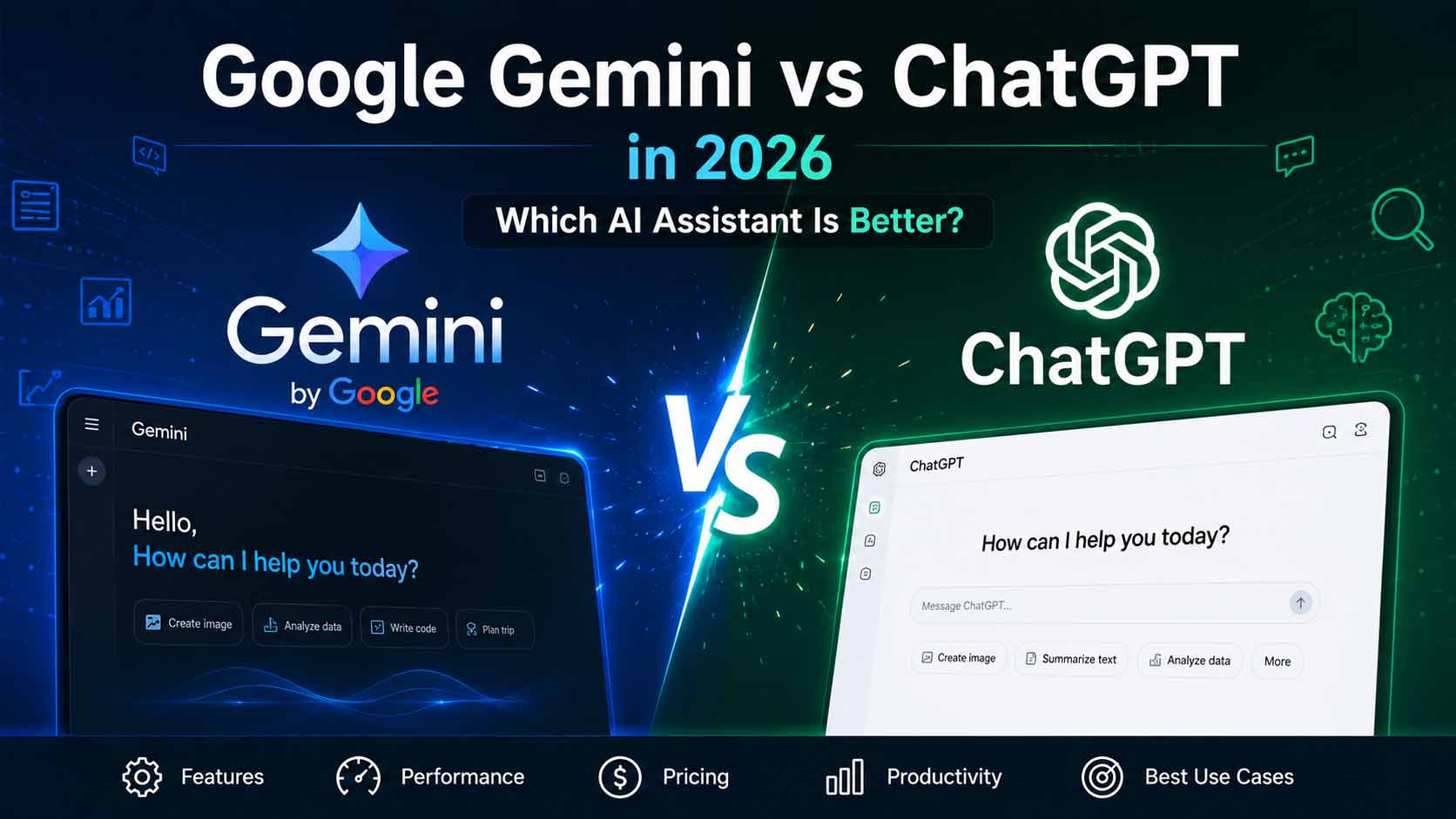
    Google Gemini vs ChatGPT in 2026: Which AI Assistant Is Better?

    Introduction

    Artificial intelligence has evolved from an experimental tech demo into an indispensable companion for daily productivity, creative work, and complex decision-making. As we navigate 2026, generative AI assistants are integrated into web browsers, mobile operating systems, office suites, and enterprise workflows. Millions of users rely on AI every single day to summarize complex documents, write production-grade code, draft strategic plans, and generate visual artwork.

    At the forefront of this AI revolution stand two undisputed titans: Google Gemini and OpenAI ChatGPT. Both platforms have invested billions of dollars into research, expanding context windows, introducing real-time voice and video multimodal capabilities, and integrating complex reasoning architectures.

    However, as both tools become increasingly sophisticated, choosing the right assistant for your specific workflow has become more challenging. Is Google’s deep integration with Search and Workspace superior, or does OpenAI’s specialized reasoning and developer ecosystem hold the crown? This comprehensive head-to-head comparison evaluates features, performance, pricing, and real-world usability to help you determine which AI assistant reigns supreme in 2026.

    What is Google Gemini?

    Google Gemini is Google’s flagship multimodal AI model, designed from the ground up to seamlessly process and combine different types of information, including text, code, audio, images, and video. Integrated deeply into Google’s vast consumer and enterprise ecosystem, Gemini powers search features, Google Workspace apps (Docs, Gmail, Drive, Slides), and Android mobile devices.

    Key Features and Strengths

    • Massive Context Window: Gemini leads the industry with native support for processing millions of tokens of context in a single prompt. This allows users to upload entire books, hours of video, or massive code repositories for instant analysis.
    • Native Ecosystem Integration: Gemini connects directly to Google Drive, Gmail, Docs, Maps, and YouTube, allowing the assistant to pull real-time personal data and web information without switching tabs.
    • Multimodal Native Architecture: Unlike models that stitch separate vision or speech modules onto a text core, Gemini was trained multimodally from inception, delivering smooth, real-time voice conversations and precise visual recognition.
    • Deep Web Grounding: Leveraging Google’s search index, Gemini offers reliable, up-to-the-minute web retrieval with direct source citations.

    Supported Platforms and Use Cases

    Gemini is available via a dedicated web web interface, native mobile applications on Android and iOS, and direct integration within Google Workspace for Business and Education. Typical use cases include research over massive document sets, automated email drafting, real-time trip planning with Google Maps, and enterprise data analysis.

    What is ChatGPT?

    ChatGPT, developed by OpenAI, is the revolutionary conversational AI assistant that sparked the generative AI boom. In 2026, ChatGPT operates on OpenAI’s state-of-the-art model lineup, combining flagship multimodal intelligence with specialized reasoning architectures that mimic step-by-step human problem-solving.

    Key Features and Strengths

    • Advanced Reasoning Engine: OpenAI’s reasoning series allows ChatGPT to execute deliberate, multi-step logical chains before responding, making it exceptionally strong in advanced mathematics, science, and complex logic puzzles.
    • The Canvas Interface: ChatGPT features an interactive workspace called Canvas, designed specifically for writing and coding projects. It enables side-by-side editing, inline feedback, and granular revisions without rewriting whole prompts.
    • Custom GPTs and Store: Users can build and deploy custom-tailored GPT assistants with specialized knowledge bases and custom actions, tapping into a massive public directory of community-built tools.
    • Advanced Voice Mode: Delivering near-zero latency, human-like cadence, emotional tone modulation, and real-time interruption capabilities, ChatGPT’s voice interface remains a benchmark for natural voice interaction.

    Supported Platforms and Use Cases

    ChatGPT is accessible via web browsers, native desktop apps for macOS and Windows, mobile apps for iOS and Android, and enterprise API endpoints. Common applications include software development, creative writing, instructional tutoring, complex data transformation, and workflow automation.

    Feature Comparison

    To help you quickly gauge how both platforms perform across core tasks, here is a breakdown of their primary capabilities:

    Feature CategoryGoogle GeminiOpenAI ChatGPTWinner
    Writing & ToneHighly natural, objective, customizable tone slidersFluid, highly creative, excellent structural adaptabilityTie
    Coding & RefactoringStrong code generation, huge context for full reposExceptional debugging, step-by-step reasoning, Canvas editorChatGPT
    Image GenerationPowered by Imagen 3; high photorealism & text renderingPowered by DALL-E 3; high artistic precision & prompt adherenceTie
    Deep ResearchIngests up to 2M tokens; direct access to live Google SearchStrong web browser; excellent synthesis of academic papersGemini
    Reasoning & LogicStrong general logic; fast processing speedsSpecialized reasoning models for STEM and complex logicChatGPT
    Processing SpeedExtremely fast throughput, near-instant responsesFast standard output; slower deliberate reasoning modesGemini
    Factual AccuracyHigh grounding with real-time web citationsHigh accuracy; occasional hallucinations in non-reasoning modeGemini
    User ExperienceClean, minimalist, deeply tied to Google WorkspaceFeature-rich, customizable, dedicated workspace modesChatGPT

    Writing and Editing

    Both AI assistants excel at natural language generation, but they approach tone and structure differently.

    Google Gemini leans toward a clean, concise, and structured writing style. It excels at synthesizing technical documentation into clear, bulleted executive summaries. Its direct integration with Google Docs means you can draft, edit, and format documents right inside your workspace without copying and pasting.

    ChatGPT, on the other hand, exhibits greater stylistic flexibility. Whether you need a formal grant proposal, a dramatic narrative, or an engaging marketing script, ChatGPT adapts quickly to nuanced persona requests. Its Canvas interface provides a dedicated side-by-side editor where you can highlight specific paragraphs to adjust reading levels, edit line by line, or polish prose with fine control.

    Coding and Software Engineering

    For developers, both tools offer powerful assistance, but their strengths diverge based on project scale.

    Gemini’s massive context window is a game-changer for large-scale codebase analysis. You can upload an entire repository or a 500-page API documentation framework, and Gemini will accurately map dependencies, identify bugs, or explain legacy functions across thousands of lines of code simultaneously.

    ChatGPT remains the preferred choice for active development and complex debugging. Its dedicated reasoning capabilities break down intricate algorithmic problems step-by-step before writing code. Combined with the coding Canvas, developers can review code diffs, run inline refactoring, and generate unit tests seamlessly.

    Image Generation and Media Capabilities

    Visual asset creation is a core component of both AI suites.

    Gemini utilizes Google’s Imagen 3 engine, producing crisp, photorealistic images with remarkable handling of complex lighting, textures, and legible text within images. It excels at generating realistic stock photography, promotional material, and natural landscapes.

    ChatGPT leverages DALL-E 3, which stands out for strict prompt adherence and artistic imagination. DALL-E 3 understands complex spatial relationships and stylized artistic directions exceptionally well, making it ideal for conceptual art, vector-style illustrations, and creative branding concepts.

    Deep Research and Context Handling

    When analyzing massive quantities of information, Gemini holds a distinct structural advantage. With native support for context windows spanning up to two million tokens, Gemini can swallow dense legal briefs, academic textbooks, or hours of recorded audio in a single prompt. It reads through raw data rapidly and cross-references facts against Google’s real-time search index.

    ChatGPT approaches deep research through structured web search modules and academic search tools. While its standard context window is smaller than Gemini’s, its ability to iteratively search the web, evaluate source credibility, and synthesize multi-page research digests makes it a powerful academic companion.

    Reasoning and Problem Solving

    In advanced mathematical proofs, symbolic logic, and multi-variable problem-solving, ChatGPT’s dedicated reasoning architecture gives it an edge. When faced with complex logic puzzles or graduate-level science questions, ChatGPT pauses to construct a silent chain of thought, checking its own work before presenting the final answer.

    Gemini offers robust general reasoning and rapid calculation speed, making it highly effective for everyday business logic, financial forecasting, and general analysis. However, for deep multi-step algorithmic challenges, ChatGPT provides slightly higher consistency.

    Pricing Comparison

    Both platforms offer robust free tiers alongside premium subscription plans tailored for power users, teams, and enterprises.

    Google Gemini Pricing Structure:
    ├── Free Tier: Access to standard Gemini model, basic Google extensions, standard context limits.
    ├── Gemini Advanced (Google One AI Premium): ~$19.99/month
    │   ├── Access to flagship Gemini models
    │   ├── 2 Million token context window
    │   ├── 2TB Google One cloud storage included
    │   └── Workspace integration (Docs, Gmail, Drive)
    └── Business & Enterprise: Custom seat-based enterprise pricing with admin controls and data privacy guarantees.
    
    OpenAI ChatGPT Pricing Structure:
    ├── Free Tier: Access to standard GPT models, limited custom GPT usage, standard voice capabilities.
    ├── ChatGPT Plus: ~$20.00/month
    │   ├── Priority access to flagship models & reasoning series
    │   ├── Full access to Canvas editor, DALL-E 3, and Advanced Voice
    │   ├── Higher messaging limits and custom GPT creation
    └── ChatGPT Team & Enterprise: $25–$30+/user/month with team workspaces, administrative analytics, and zero data training policies.
    

    If you are already paying for extra Google Drive storage, Gemini Advanced offers tremendous value because it bundles a 2TB Google One storage plan into the $19.99 monthly fee. ChatGPT Plus costs virtually the same but focuses all its value directly on standalone AI productivity tools.

    Which AI is Better for Students?

    For academic research, study planning, and homework assistance, both tools offer unique advantages depending on your field of study.

    • Choose Google Gemini if: You are conducting extensive literature reviews or reading long textbooks. Gemini allows you to upload entire PDFs, lecture recordings, and slide decks at once, turning them into instant study guides, flashcards, or practice quizzes.
    • Choose ChatGPT if: You are studying STEM subjects, computer science, or advanced mathematics. ChatGPT’s step-by-step reasoning engine acts as an interactive tutor, walking you through complex equations, physics problems, and logic proofs without jumping straight to the answer.

    Which AI is Better for Businesses?

    For corporate productivity, enterprise communication, and workflow automation, the deciding factor often comes down to your existing software stack.

    • Choose Google Gemini if: Your company is fully invested in Google Workspace (Gmail, Google Docs, Drive, Sheets, and Meet). Gemini operates directly inside your daily workflow—it can draft email replies based on previous email threads, summarize long Google Meet recordings, and build Google Slides presentations automatically from Drive documents.
    • Choose ChatGPT if: Your business requires customized workflow assistants and standalone creative tools. With Custom GPTs, companies can build internal knowledge bots trained on HR policies, customer support guidelines, or sales playbooks without writing code.

    Which AI is Better for Content Creators?

    Digital marketers, YouTubers, bloggers, and copywriters need AI assistants that can brainstorm ideas, write compelling copy, and assist with multimedia production.

    • Choose Google Gemini if: You produce video content or rely heavily on real-time trends. Gemini can analyze YouTube videos directly via URL, draft SEO-optimized video scripts, generate realistic promotional images via Imagen 3, and verify facts using live Google Search data.
    • Choose ChatGPT if: You write long-form articles, creative stories, or social media campaigns. The Canvas editor makes refining prose effortless, while DALL-E 3 allows you to maintain stylistic consistency across graphic design assets.

    Which AI is Better for Developers?

    Software engineers, data scientists, and DevOps professionals demand precision, fast execution, and excellent code comprehension from an AI tool.

    Developer Decision Matrix:
    
    Large Codebase Auditing / Heavy Documentation ──> Google Gemini (2M Token Window)
    Complex Algorithmic Logic / Interactive Refactoring ──> ChatGPT (Canvas & Reasoning Series)
    
    • Choose Google Gemini if: You need to refactor legacy code, analyze massive full-stack repositories, or digest thousands of pages of API documentation in one go.
    • Choose ChatGPT if: You want an interactive pair-programmer. The Canvas interface lets you debug code side-by-side, generate comprehensive unit tests, translate code between programming languages, and solve complex architectural bottlenecks.

    Pros and Cons

    Google Gemini

    Pros

    • Massive 2M token context window handles enormous files effortlessly.
    • Seamless integration with Google Workspace, Android, and Google Search.
    • Gemini Advanced includes 2TB of Google One cloud storage.
    • Ultra-fast generation speeds and real-time multimodal capabilities.

    Cons

    • Fewer specialized creative writing modes compared to ChatGPT.
    • Lacks a dedicated community marketplace for custom user-built bots.
    • Can occasionally be over-conservative in safety guardrails for creative prompts.

    OpenAI ChatGPT

    Pros

    • Exceptional reasoning capabilities for complex logic, math, and coding.
    • Interactive Canvas workspace simplifies writing and code editing.
    • Vast ecosystem of Custom GPTs and community plugins.
    • Superior Advanced Voice mode with expressive emotional range.

    Cons

    • Standard context window is smaller than Gemini’s flagship offering.
    • No bundled cloud storage or native Google Workspace integration.
    • Deliberate reasoning modes can take longer to process responses.

    Expert Analysis

    When evaluating Google Gemini and OpenAI ChatGPT side-by-side in 2026, it becomes clear that there is no single “winner” for every user. Instead, the AI landscape has bifurcated into two distinct operational paradigms: Ecosystem Integration vs. Standalone Intelligence.

    Google Gemini represents the ultimate ecosystem assistant. By embedding AI directly into Google Search, Gmail, Docs, and Android, Google has minimized friction. Users do not need to alter their habits; Gemini meets them inside the apps they already use every day. Its ability to process millions of tokens makes it an unmatched research engine for digesting heavy media and enterprise documentation.

    OpenAI ChatGPT represents the quintessential standalone AI toolkit. OpenAI has focused on deepening the core problem-solving capabilities of its models. With specialized reasoning architectures, the Canvas editing environment, and an expressive voice engine, ChatGPT feels like a dedicated, highly skilled digital partner. It excels when you need deep, focused work—whether that means architecting complex software or writing a novel.

    Rather than competing on identical grounds, Gemini has become the ultimate assistant for information retrieval and workflow integration, while ChatGPT remains the premier tool for creative iteration and complex reasoning.

    Frequently Asked Questions

    1. Which AI is more accurate in 2026, Gemini or ChatGPT?

    Both systems have drastically reduced hallucination rates compared to earlier generations. Gemini generally offers stronger real-time factual accuracy for current events due to its direct integration with Google Search. ChatGPT provides higher accuracy in formal logic, mathematics, and complex code execution due to its deliberate reasoning modes.

    2. Can I use Google Gemini and ChatGPT for free?

    Yes, both platforms offer robust free tiers. Free users can access conversational text generation, basic web browsing, image creation, and standard mobile app functionality on both services.

    3. What is the main benefit of Gemini’s 2 million token context window?

    A 2 million token context window allows you to feed the AI massive amounts of information in a single prompt—such as a 1,500-page book, an entire software code repository, or a 1-hour video file—and ask specific questions or generate summaries without losing context.

    4. Is ChatGPT Plus worth $20 a month in 2026?

    If you rely heavily on advanced coding, creative writing, step-by-step logic, or frequent voice interactions, ChatGPT Plus remains one of the best productivity investments available. Access to Canvas, reasoning models, and Custom GPTs easily justifies the cost for power users.

    5. Does Google Gemini Advanced include Google One storage?

    Yes. The Gemini Advanced subscription is bundled into the Google One AI Premium Plan, which includes 2TB of cloud storage for Google Drive, Gmail, and Google Photos, adding significant value for existing Google users.

    6. Which AI generates better images, Imagen 3 or DALL-E 3?

    Imagen 3 (in Gemini) generally produces higher photorealism, natural textures, and cleaner typography within images. DALL-E 3 (in ChatGPT) excels at understanding complex, stylized prompts, artistic directions, and imaginative concepts.

    7. Can ChatGPT access real-time internet information?

    Yes, ChatGPT has integrated web browsing capabilities that allow it to search the live internet, summarize current news, and cite sources with links.

    8. Which AI assistant is better for privacy and data security?

    Both Google and OpenAI offer enterprise-grade privacy plans (Gemini for Google Workspace and ChatGPT Enterprise) where user data and prompts are strictly excluded from AI model training datasets. Free and standard consumer tiers may use non-sensitive interaction data for model improvement unless opted out.

    9. Can Gemini analyze YouTube videos directly?

    Yes. Because Gemini is built by Google, you can paste a YouTube URL into Gemini and ask it to summarize the video, highlight key timestamps, or extract specific information from the audio transcript.

    10. Can I create my own custom AI tools on these platforms?

    ChatGPT allows users to create “Custom GPTs” with unique instructions, uploaded reference files, and API actions. Gemini offers customized “Gems,” allowing users to tailor system prompts and behaviors for repetitive tasks.

    Conclusion

    Choosing between Google Gemini and OpenAI ChatGPT in 2026 depends entirely on your daily tools, primary goals, and personal workflow preference.

    • Get Google Gemini if: You live inside the Google ecosystem, rely on Google Workspace apps, frequently analyze massive documents or video files, and want an AI assistant that seamlessly handles real-time web information while giving you 2TB of cloud storage.
    • Get OpenAI ChatGPT if: You need an elite pair-programmer, a sophisticated writing partner, an interactive tutor for STEM subjects, or a customizable AI tool with dedicated workspace environments like Canvas.

    Both AI assistants represent the pinnacle of modern technology. For many professionals, the ideal setup isn’t choosing one over the other, but using Gemini for information gathering and document management while leveraging ChatGPT for deep reasoning, drafting, and problem-solving.

    SEO Requirements

    • SEO Title: Google Gemini vs ChatGPT in 2026: Which AI Assistant Is Better?
    • Meta Description: Compare Google Gemini vs ChatGPT in 2026. Discover which AI assistant wins in coding, writing, reasoning, pricing, and productivity for your workflow.
    • URL Slug: google-gemini-vs-chatgpt-2026-comparison
    • Image ALT text: A split illustration showing the Google Gemini star logo on the left and the OpenAI ChatGPT logo on the right, symbolizing the 2026 AI assistant comparison.

    Suggested Internal Links:

    • Link to a guide on “Top Productivity AI Tools for Businesses in 2026.”
    • Link to an article on “How to Use Generative Engine Optimization (GEO) for AI Search.”
    • Link to a resource covering “The Best Free AI Coding Assistants for Developers.”

    Suggested External Sources:

    • Google DeepMind Official Research & Product Blog
    • OpenAI Official Announcements & Research Papers
    • MIT Technology Review (Artificial Intelligence Section)

    20 SEO Tags:

    Google Gemini, ChatGPT, Gemini vs ChatGPT, Best AI Assistant, AI Comparison, Artificial Intelligence, Productivity AI, AI Tools, Google Gemini Advanced, ChatGPT Plus, OpenAI, Google DeepMind, AI for Students, AI for Developers, Generative AI 2026, LLM Comparison, Imagen 3 vs DALLE 3, AI Reasoning Models, AI Context Window, Workspace AI.


    🌟 Add More Joy & Useful Information to Your Everyday Life

    Explore our YouTube channels and TikTok for relaxing music, trending products, helpful tips, and inspiring content updated regularly.


    ✨ Adding Joy & Useful Information to Your Everyday Life ✨

    Thank you for visiting. We hope you enjoyed this article and found it helpful.

  • Google Faces Major AI Training Lawsuit: What It Means for the Future of Generative AI

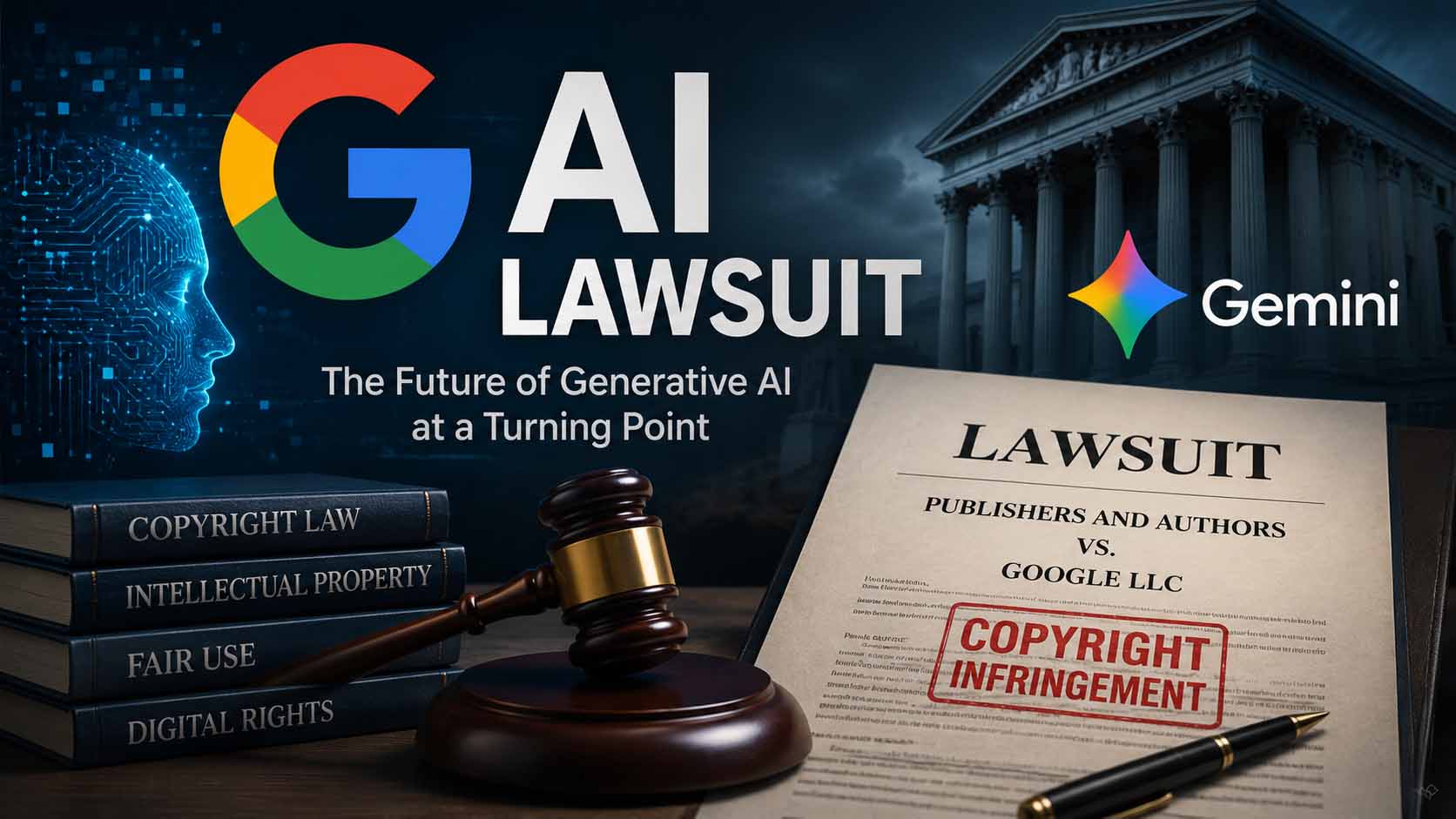
    Google Faces Major AI Training Lawsuit: What It Means for the Future of Generative AI

    Introduction

    The rapid evolution of artificial intelligence has brought about unprecedented technological breakthroughs, but it has also ignited some of the most complex legal battles of the 21st century. At the center of this legal storm is a massive Google AI lawsuit that threatens to reshape the landscape of machine learning, copyright law, and the digital economy. As artificial intelligence models transition from experimental novelties to everyday utilities, the foundational question of how these models learn has come under intense scrutiny.

    Generative AI models are incredibly powerful, capable of writing essays, coding software, and generating photorealistic images in seconds. However, these systems do not possess innate knowledge; they are trained on vast datasets scraped from the internet. This process has led to a colossal clash between tech giants and content creators. The current Google copyright lawsuit represents a watershed moment. It is not just about a single company or a single algorithm; it is a fundamental debate over who owns the internet’s data and how that data can be monetized.

    As we look at the core of this legal dispute, it becomes clear that the outcome will dictate the trajectory of AI regulation and set the standard for the future of AI. Whether you are a casual internet user, a digital publisher, or an AI developer, the implications of this lawsuit will inevitably affect how you interact with information online.

    What Happened?

    The controversy surrounding AI training data has been brewing for years, culminating in a series of high-stakes lawsuits against major AI developers. In this specific legal battle, a coalition of prominent authors, news publishers, and media organizations has filed a sweeping lawsuit against Google. These plaintiffs allege that the tech giant unlawfully scraped, copied, and utilized their copyrighted materials to build and refine its generative AI systems, most notably Google Gemini.

    The Plaintiffs and the Allegations

    The plaintiffs involved in this lawsuit represent a broad spectrum of the publishing industry. They include independent authors, major book publishers like Hachette Book Group, Cengage Learning, and Elsevier, alongside prominent figures such as bestselling author Scott Turow. According to the lawsuit, Google is accused of ingesting massive quantities of copyrighted text—including books, paywalled news articles, opinion pieces, and digital media—without seeking permission or offering compensation.

    The core allegation is that Google Gemini and its underlying large language models (LLMs) were built on the backs of these creators. The plaintiffs argue that by using their protected works as AI training data, Google committed copyright infringement on a massive scale. They claim that the AI systems are not only copying their work during the training phase but also generating outputs that closely mimic the style, tone, and sometimes the exact phrasing of the original copyrighted materials.

    The Connection to Google Gemini

    Google Gemini, the company’s flagship multimodal AI model, is at the heart of this dispute. Designed to compete with and surpass other leading AI models, Gemini is deeply integrated into Google’s ecosystem, powering everything from search summaries to enterprise software. To achieve its high level of sophistication, Gemini required an astronomical amount of training data. The plaintiffs allege that this data pipeline indiscriminately vacuumed up copyrighted works, essentially turning the life’s work of human authors into free fuel for a highly profitable commercial product.

    Why This Lawsuit Matters

    This Google AI lawsuit is far more than a standard corporate dispute; it strikes at the very foundation of how the generative AI industry operates. The legal questions raised here will likely set binding precedents for decades to come.

    AI Model Training and the Scraping Economy

    To understand the gravity of the lawsuit, one must understand AI model training. Generative AI relies on scraping billions of parameters from the web. The models analyze this data to learn language patterns, grammar, facts, and reasoning capabilities. If courts rule that this ingestion process is inherently illegal without explicit licensing, the fundamental architecture of AI development will have to be rebuilt from the ground up.

    Copyright Law and the Fair Use Debate

    The lawsuit places a spotlight on the limitations of current copyright law. Traditional copyright was designed to protect creators from direct piracy—someone copying a book and selling it. Generative AI complicates this because it does not simply copy and paste; it “learns” from the text. This brings us to the Fair Use debate. Does training a neural network constitute a transformative, fair use of copyrighted material, or is it merely high-tech plagiarism?

    Impact on Publishers and Authors

    For publishers and authors, this is an existential crisis. The internet is already a challenging environment for monetization. If an AI can read an entire news site and summarize its contents for a user in seconds, the user has no reason to click through to the original publisher. This deprives publishers of ad revenue, subscription conversions, and site traffic. Authors are similarly threatened by AI models that can mimic their unique writing styles and produce competing works, potentially devaluing human creativity.

    Ethical Concerns

    Beyond the legal framework, there are profound ethical concerns. Many creators feel violated knowing their hard work was used to train machines that might eventually replace them. The lawsuit highlights the need for an ethical approach to AI development, where consent and compensation are prioritized over rapid technological advancement.

    Google’s Possible Defense

    While the courts will ultimately decide the facts of the case, Google—like other AI giants facing similar litigation—has a robust set of legal arguments it could deploy. It is important to note that these are possible legal positions based on the framework of U.S. copyright law, not established judicial facts.

    The Fair Use Doctrine

    Google’s primary defense will likely center on the Fair Use doctrine. In the United States, Fair Use allows for the limited use of copyrighted material without permission for purposes such as criticism, news reporting, teaching, and research. Google could argue that training an AI model is a highly transformative use of the data.

    Transformative Use

    Under a transformative use defense, Google could assert that its AI does not reproduce the plaintiffs’ works to compete with them directly. Instead, the AI extracts statistical correlations, patterns, and linguistic structures to create something entirely new: a dynamic, interactive digital brain. Because the AI converts text into mathematical weights and biases within a neural network, Google could argue that it is not distributing copyrighted works, but rather learning from them in a way akin to a human reading a book at a public library.

    Publicly Available Information

    Another potential argument is the nature of the internet itself. Google could point out that much of the AI training data was freely accessible on the open web. The tech giant might argue that if a website does not explicitly block web crawlers, the data is fair game for indexing and analysis, an argument that has historically protected search engine operations.

    AI Innovation and Public Benefit

    Finally, Google may lean on the broader societal implications of the lawsuit. They could argue that overly restrictive interpretations of AI copyright would stifle American technological innovation. By framing generative AI as a critical tool for national competitiveness, scientific research, and economic growth, Google could position its data practices as a necessary step for the greater public good.

    How This Could Affect Generative AI

    The ripple effects of this Google copyright lawsuit will extend far beyond Mountain View. Every major player in the artificial intelligence sector is watching this case closely, as the verdict will directly impact their business models.

    Impact on Tech Giants (OpenAI, Anthropic, Meta, Microsoft)

    If the plaintiffs secure a decisive victory, it will set a legal precedent that will immediately threaten companies like OpenAI, Anthropic, Meta, and Microsoft. All of these companies rely on similar data-scraping methodologies to train their LLMs. A ruling against Google could trigger an avalanche of injunctions and copycat lawsuits across the industry, forcing these tech giants to completely halt training or retroactively purge copyrighted data from their existing models—a process known as “machine unlearning,” which is technically incredibly difficult, if not impossible.

    The Survival of AI Startups

    While companies with trillion-dollar market caps might be able to afford massive licensing fees to continue operating, AI startups could be devastated. If the future of AI requires paying millions of dollars to content conglomerates for clean, licensed training data, the barrier to entry will become insurmountable for small innovators. This could lead to an oligopoly where only the wealthiest tech companies can afford to develop foundational AI models.

    AI Regulation and the Future of AI

    This lawsuit may force the hand of lawmakers. Currently, AI regulation is a patchwork of disparate global policies. A messy, protracted legal battle could prompt Congress or international bodies to draft specific legislation regarding AI training data. We could see the creation of mandatory collective licensing systems, similar to how radio stations pay to broadcast music, ensuring that creators are compensated whenever their work is ingested by a machine.

    What It Means for Website Owners

    For digital publishers, bloggers, and website owners, the Google AI lawsuit touches on the very survival of their digital properties. The shift from traditional search engines to AI-driven answers is already altering the internet economy.

    AI-Generated Search and SEO

    Google is rapidly integrating AI into its search results, providing users with direct, synthesized answers rather than a list of blue links. If Google is allowed to train on publishers’ data indefinitely, website owners fear that traditional Search Engine Optimization (SEO) will become obsolete. Users will simply read the AI’s summary and leave, resulting in a massive loss of organic traffic.

    Generative Engine Optimization (GEO)

    Website owners are already pivoting from SEO to GEO (Generative Engine Optimization). GEO focuses on optimizing content so that AI models cite the website as a primary source in their generated responses. However, if the lawsuit forces Google to alter its algorithm or compensate creators, the entire strategy behind GEO could shift overnight.

    Content Ownership and Licensing

    A victory for the plaintiffs could empower website owners. It could lead to the development of standardized protocols where websites can easily opt-in or opt-out of AI training. More importantly, it could open up a lucrative new revenue stream: content licensing. Large publishing networks could negotiate exclusive data-sharing deals with AI companies, turning their archives into highly valuable assets.

    What It Means for Everyday Users

    While the lawsuit is a battle of billionaires and publishing titans, the outcome will directly affect everyday internet users, students, professionals, and creatives.

    The Future of AI Tools

    Millions of people rely on AI tools daily to draft emails, write code, plan itineraries, and brainstorm ideas. If the courts impose strict copyright limitations, the quality of these AI tools could degrade. Without access to a broad, diverse dataset of high-quality human writing, generative AI might become less accurate, more repetitive, and prone to hallucinations.

    The End of “Free” AI?

    Currently, many powerful AI models are available for free or for a relatively low monthly subscription. If AI companies are suddenly required to pay billions of dollars in licensing fees to authors and publishers, those costs will inevitably be passed down to the consumer. The era of free, unrestricted access to state-of-the-art AI could come to an end.

    Impact on Students and Businesses

    Students who use AI for research and businesses that integrate AI into their customer service and content creation workflows will need to navigate a new landscape. If AI outputs are deemed to contain unlicensed copyrighted material, end-users might face liability for using AI-generated content in commercial products.

    Protection for Content Creators

    On a positive note, for the millions of independent artists, writers, and musicians on the internet, this lawsuit offers hope. It represents a pushback against the non-consensual use of their art, potentially restoring their ability to control how their creations are used and ensuring they are fairly compensated in the digital age.

    Expert Analysis

    Legal scholars, technologists, and economists are deeply divided on the Google AI lawsuit. Analyzing the situation requires balancing the undeniable benefits of AI innovation against the fundamental rights of creators.

    On one side, copyright maximalists argue that theft is theft, regardless of how advanced the technology is. They point out that AI companies are building multi-billion-dollar empires using raw materials they acquired for free. From this perspective, requiring AI companies to license data is not just legally sound; it is morally necessary to prevent the collapse of the creative economy.

    On the other side, techno-optimists and some legal experts caution against applying 20th-century copyright paradigms to 21st-century technology. They argue that human authors read thousands of books to develop their own writing styles without paying royalties to the original authors. If the courts rule that an AI’s mathematical analysis of text is a copyright violation, it could effectively criminalize the core mechanism of machine learning, handing a massive geopolitical advantage to countries with looser intellectual property laws.

    Ultimately, experts suggest that a middle ground must be found—perhaps a modern digital framework that allows for the fair use of data for algorithmic training, coupled with a transparent royalty system that rewards the human creators whose work makes the AI intelligent in the first place.

    Frequently Asked Questions

    1. What is the Google AI lawsuit about? The lawsuit is a legal challenge brought by authors and publishers who allege that Google used their copyrighted books, articles, and content without permission or compensation to train its generative AI models, such as Google Gemini.

    2. How does AI training data relate to copyright infringement? Generative AI models learn by analyzing massive amounts of text. Plaintiffs argue that downloading and processing their copyrighted works to build a commercial AI product violates their exclusive rights to control and monetize their intellectual property.

    3. What is Google’s likely defense? Google is expected to argue that training an AI is protected under the Fair Use doctrine. They will likely claim that the process is “transformative” because it creates a new digital tool (a neural network) rather than distributing exact copies of the original works.

    4. How will this lawsuit affect Google Gemini? If Google loses, it may be forced to pay significant damages, alter how Gemini is trained, or even remove certain data from the model. This could temporarily affect the performance of Gemini and slow down future updates.

    5. Will this affect other AI companies like OpenAI? Yes. The legal precedent set by this Google copyright lawsuit will apply to the entire AI industry. OpenAI, Anthropic, and Meta use similar data-gathering methods, meaning a ruling against Google could trigger a wave of legal and operational challenges for them as well.

    6. Does this mean AI tools will become expensive? It is highly possible. If AI developers are legally required to license all training data, the massive costs of those licenses will likely be passed on to users through higher subscription fees for premium AI tools.

    7. How does this impact website owners and SEO? Website owners are concerned that AI will use their content to answer user queries directly, reducing website traffic. The lawsuit could force AI companies to cite sources better or pay websites for the right to use their data, fundamentally changing SEO strategies.

    8. What happens to the future of AI regulation? This lawsuit is pushing governments to act. It could lead to the establishment of new regulatory frameworks and copyright laws specifically designed for the AI era, ensuring a balance between technological innovation and creator compensation.

    Conclusion

    The Google AI lawsuit is much more than a legal squabble over licensing fees; it is a defining moment for the future of generative AI. As artificial intelligence becomes increasingly embedded in our daily lives, the tension between rapid technological progress and the protection of human creativity has reached a breaking point.

    The outcome of this Google copyright lawsuit will echo across the tech industry, influencing everything from AI regulation and AI model training to the future of search engines and digital publishing. Whether the courts side with the rights of content creators or prioritize the transformative potential of AI innovation, the verdict will establish the ground rules for the next era of the internet. As we watch this legal battle unfold, one thing is certain: the wild west of unregulated AI data scraping is rapidly coming to an end.

    SEO Requirements

    SEO Title: Google AI Lawsuit: How It Impacts the Future of Generative AI Meta Description: Explore the major Google AI lawsuit regarding AI training data and copyright. Learn how this legal battle impacts Google Gemini, SEO, and the future of AI. URL Slug: google-ai-lawsuit-generative-ai-copyright Image ALT text: A conceptual illustration of a digital gavel striking a computer keyboard, representing the Google AI copyright lawsuit and the future of generative AI.

    Suggested Internal Links:

    • Link to a guide on “What is Generative AI and How Does it Work?”

    • Link to an article on “The Evolution of Google Gemini.”

    • Link to a resource covering “SEO vs. GEO: Optimizing for AI Search.”

    Suggested External Sources:

    • The United States Copyright Office (Official Guidelines on AI)

    • Electronic Frontier Foundation (EFF articles on Fair Use and AI)

    • Reuters or Bloomberg Technology (For general ongoing legal tracking of tech lawsuits)

    20 SEO Tags: Google AI lawsuit, Google Gemini, AI copyright, Generative AI, AI training data, Google copyright lawsuit, AI regulation, Future of AI, machine learning law, AI model training, copyright infringement AI, Fair Use doctrine, tech lawsuit, AI ethics, digital publishing, SEO and AI, Generative Engine Optimization, OpenAI lawsuit, tech journalism, artificial intelligence legal battles.


    🌟 Add More Joy & Useful Information to Your Everyday Life

    Explore our YouTube channels and TikTok for relaxing music, trending products, helpful tips, and inspiring content updated regularly.


    ✨ Adding Joy & Useful Information to Your Everyday Life ✨

    Thank you for visiting. We hope you enjoyed this article and found it helpful.

  • Best AI Tools That Will Save You Time in 2026

    Best AI Tools That Will Save You Time in 2026

    Best AI Tools That Will Save You Time in 2026

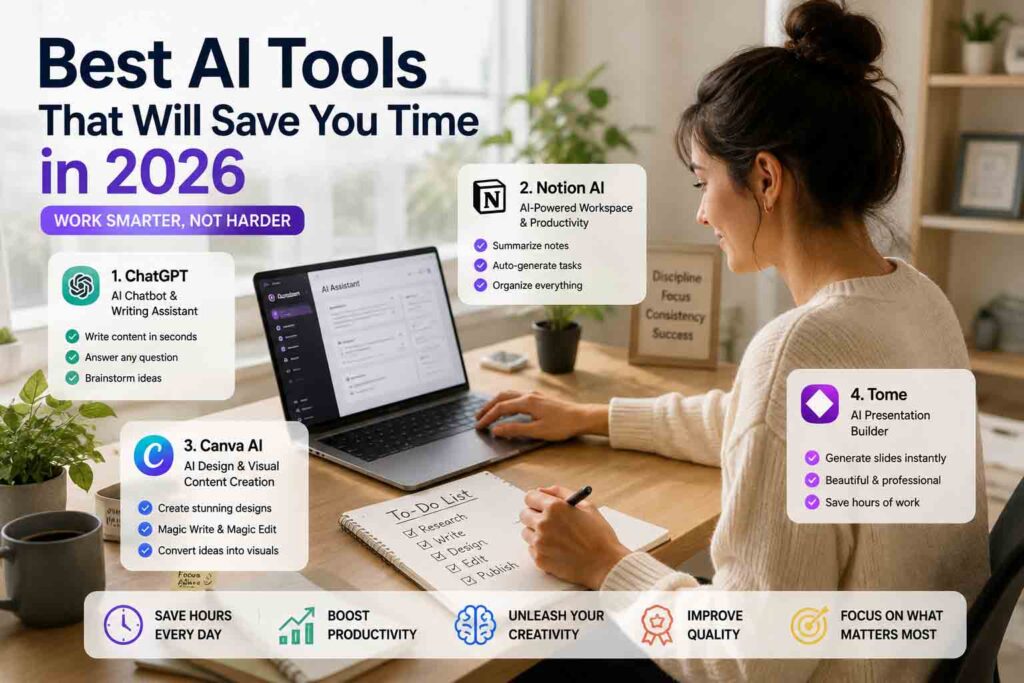
    The landscape of daily productivity has evolved. In 2026, artificial intelligence tools are no longer just basic writing assistants; they are essential engines that drive efficiency and automate repetitive workflows. If you find yourself bogged down by administrative tasks, complex research, or slow drafting processes, integrating the right AI platform can save you countless hours every week. This guide explores the most effective AI tools available today and how they can immediately streamline your workload.

    What You’ll Learn

    • How the top AI platforms differ in their core functionalities.
    • Specific use cases where each AI tool excels in a professional environment.
    • How to choose the perfect tool to eliminate your specific workflow bottlenecks.
    1. ChatGPT

    As the most widely recognized AI model, OpenAI’s ChatGPT remains the gold standard for general-purpose assistance. Its constant updates have transformed it into a powerful multi-modal platform capable of handling text, voice, and data analysis simultaneously.

    Introduction

    ChatGPT acts as your highly adaptable digital assistant. Whether you need to draft emails, analyze a spreadsheet, or brainstorm marketing copy, it offers a highly intuitive chat interface that adapts to almost any professional requirement.

    Key Features

    • Advanced Data Analysis: Instantly process CSV files, create charts, and uncover trends without needing advanced Excel skills.
    • Custom GPT Builder: Create personalized AI assistants trained on your specific business documents or brand voice guidelines.
    • Canvas Interface: A dynamic side-by-side workspace that allows you to directly edit and refine AI-generated text and code without losing the chat context.

    Pros

    • Incredibly versatile across almost all digital tasks.
    • Huge library of integrations and community-built GPTs.
    • Very user-friendly for complete beginners.

    Cons

    • Can occasionally lack deep nuance in highly specialized or creative writing.
    • Usage caps on premium tiers can interrupt long working sessions.

    Best For

    General professionals, marketers, and students who need a reliable, “jack-of-all-trades” assistant for daily multi-tasking.


    2. Google Gemini

    Google Gemini is built for scale and integration. Powered by a massive context window, it is the ultimate tool for users who already live inside the Google ecosystem and need to process enormous amounts of information at once.

    Introduction

    Gemini goes beyond standard chatting by seamlessly connecting with the tools you already use. It acts as an analytical powerhouse that can read through entire libraries of documents in seconds.

    Key Features

    • Ultra-Large Context Window: Capable of analyzing hundreds of pages of text, hours of video, or massive codebases in a single prompt.
    • Workspace Integration: Natively connects to Gmail, Google Docs, and Google Drive to retrieve files and summarize long email threads.
    • Native Multi-Modality: Understands audio, video, and text naturally, without needing to convert everything to text first.

    Pros

    • Unmatched ability to analyze massive datasets without forgetting context.
    • Saves time by working directly inside your existing Google files.
    • Lightning-fast response times for complex queries.

    Cons

    • Sometimes struggles with highly creative or unconventional formatting requests.
    • Requires specific prompting to accurately locate specific files in cluttered Google Drives.

    Best For

    Enterprise workers, researchers, and power users who heavily rely on Google Workspace and need to summarize massive amounts of data.


    3. Claude

    Anthropic’s Claude has earned a reputation as the “thinker’s AI.” It stands out for its exceptional reasoning capabilities, highly nuanced writing style, and advanced coding proficiency.

    Introduction

    If you are tired of AI text sounding robotic or repetitive, Claude is the solution. It offers a much more natural, human-like cadence and is built with strict safety and logical frameworks to prevent errors.

    Key Features

    • Artifacts Window: Automatically opens generated code, websites, or long documents in a separate, interactive panel next to your conversation.
    • Advanced Logical Reasoning: Excels at complex problem-solving, mathematical reasoning, and high-level software architecture.
    • Human-like Prose: Generates text that requires significantly less editing to sound natural and professional.

    Pros

    • Produces the highest quality, most natural-sounding written content on the market.
    • Exceptional accuracy for complex coding and debugging tasks.
    • Clean, distraction-free interface.

    Cons

    • Lacks a native internet search function for real-time news retrieval.
    • Lower daily message limits compared to some competitors.

    Best For

    Software developers, writers, and analysts who require deep logical reasoning and high-quality, publish-ready text.


    4. Perplexity AI

    Perplexity AI is revolutionizing how we gather information. Instead of giving you a list of blue links to click through, it acts as a conversational answer engine that does the research for you.

    Introduction

    For research-heavy workflows, Perplexity is an absolute game-changer. It scans the web in real-time and compiles comprehensive answers backed by hyperlinked citations, completely eliminating search engine fatigue.

    Key Features

    • Real-Time Citations: Every fact is numbered and linked directly to its source, allowing for instant verification.
    • Pro Search: An advanced mode that asks you clarifying questions to ensure it gathers exactly the data you are looking for.
    • Collections and Threads: Easily organize your research topics into shareable, categorized folders.

    Pros

    • Drastically reduces the time spent researching and fact-checking.
    • Highly transparent; you always know exactly where the data came from.
    • Bypasses SEO spam and irrelevant websites.

    Cons

    • Not designed for long-form content generation or creative writing.
    • Quality of answers heavily depends on the quality of currently published web content.

    Best For

    Journalists, students, strategists, and anyone whose job requires hours of web research and strict fact-checking.


    5. Notion AI

    Notion AI takes a different approach by embedding artificial intelligence directly into the place where your team already works, organizes, and collaborates.

    Introduction

    Rather than switching tabs to talk to a chatbot, Notion AI lives inside your documents. It helps you write, edit, and organize unstructured thoughts into clean project management databases seamlessly.

    Key Features

    • Inline Text Manipulation: Highlight any paragraph to instantly rewrite it, change the tone, fix grammar, or summarize it.
    • Database Autofill: AI can automatically generate tags, summaries, or action items based on the content of your project pages.
    • Workspace Q&A: Ask questions like “What were the key takeaways from last week’s meeting?” and the AI will search your entire workspace for the answer.

    Pros

    • Eliminates context switching by keeping the AI inside your document editor.
    • Brilliant for cleaning up messy meeting notes into structured action plans.
    • Retrieves lost information quickly from massive company wikis.

    Cons

    • The underlying model is not as powerful for complex coding or reasoning as ChatGPT or Claude.
    • You must already use and maintain a clean Notion workspace to get the most value out of it.

    Best For

    Project managers, startup teams, and highly organized individuals who use Notion as their primary digital brain.

    AI Tools Comparison Table

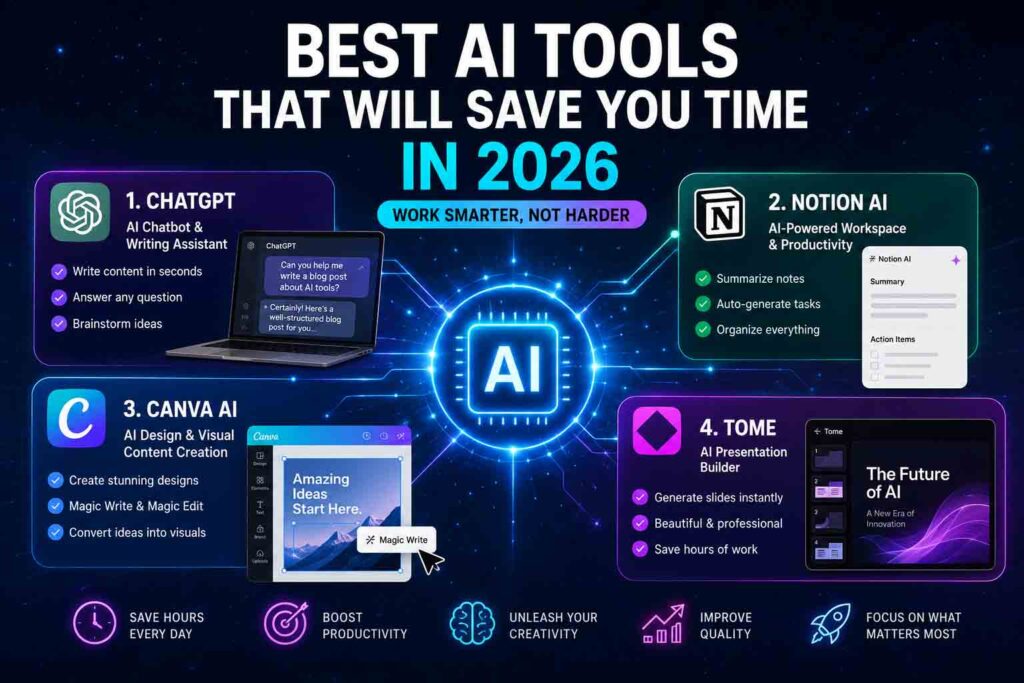
    AI Tool Primary Strength Best Suited For
    ChatGPT Versatile automation & custom GPTs General productivity & multi-modal tasks
    Google Gemini Deep Google Workspace integration Ecosystem power users & large context analysis
    Claude Advanced reasoning & nuanced writing Coding, complex analysis & long-form drafting
    Perplexity AI Real-time accurate research Information gathering & fact-checking
    Notion AI Contextual workspace management Note-taking, project tracking & internal knowledge bases

    Frequently Asked Questions (FAQ)

    Are these AI tools secure for sensitive corporate data?

    Most premium tiers of these tools (such as ChatGPT Team/Enterprise or Google Workspace Enterprise) offer robust data privacy agreements, ensuring your inputs are not used to train future public models. Always verify your organization’s compliance guidelines before pasting proprietary data.

    Do I need to pay for all of these tools to be productive?

    Absolutely not. It is best to identify your primary workflow bottleneck. If it is research, choose Perplexity. If it is document management, choose Notion AI. For general use, the free tiers of ChatGPT or Claude are often sufficient to start.

    Can these tools fully automate my daily tasks?

    They act as powerful co-pilots rather than completely autonomous workers. They drastically accelerate drafting, editing, coding, and researching, but still require human oversight, verification, and strategic direction.

    Which AI tool is best for beginners?

    ChatGPT is generally considered the best starting point for beginners due to its highly intuitive chat interface, conversational tone, and versatile capabilities that handle general day-to-day tasks with zero learning curve.

    Can I use multiple AI tools together?

    Yes, combining tools can create highly optimized workflows. For example, many professionals use Perplexity AI to gather deeply cited research materials and then bring that data into Claude for high-level technical drafting or coding development.

    Final Thoughts

    Reclaiming your time in 2026 is not about working harder; it is about delegating the cognitive heavy lifting to the right specialized platforms. By matching your primary daily friction points—whether that is endless reading, repetitive writing, complex coding, or chaotic project tracking—to the specific strengths of these top five AI tools, you can easily save hours of operational overhead every single week. Start by integrating just one tool into your routine, and watch your productivity multiply.

    Related Articles

    • Best AI Agents That Will Change the Way You Work in 2026
    • The Ultimate Guide to AI Workflow Automation
    • Top Passive Income Ideas in 2026

    🌟 Add More Joy & Useful Information to Your Everyday Life

    Explore our YouTube channels and TikTok for relaxing music, trending products, helpful tips, and inspiring content updated regularly.


    ✨ Adding Joy & Useful Information to Your Everyday Life ✨

    Thank you for visiting. We hope you enjoyed this article and found it helpful.

  • The Neurological Impact of Latin Festival Beats on Active Senior Well-being

    The Neurological Impact of Latin Festival Beats on Active Senior Well-being

    1. Introduction

    The aging process brings dynamic shifts in neurobiology, cognitive processing, and physical mobility. As public health initiatives shift toward proactive systems for healthy aging, neuroscientists and music therapists are exploring the therapeutic potential of sensory-rich auditory environments. Among the most powerful tools for neurological optimization in older adults is the strategic application of syncopated, high-energy global music. Rhythmic Latin music, characterized by complex percussion patterns, distinctive syncopations, and joyful arrangements, serves as a comprehensive multi-sensory stimulator that systematically promotes structural and emotional well-being.

    Active seniors seeking to maintain intellectual clarity, motor agility, and emotional resilience often look beyond basic cognitive puzzles and standardized physical training. While simple rhythmic exercises provide baseline physical benefits, the multi-layered rhythmic structures of traditional Latin musical styles—such as salsa, samba, cumbia, and flamenco-inspired arrangements—engage the aging brain in a profound way. By simultaneously activating networks responsible for movement execution, memory retrieval, and emotional processing, these musical textures form a complete cognitive and physical workout.

    This deep operational framework explores the biological mechanics of audio-driven neuroplasticity, cognitive motor control, and emotional resilience in the aging demographic. We will analyze the specific neurochemical transformations triggered by syncopated percussion, map the distinct cognitive benefits of traditional Latin rhythms, and provide actionable daily listening guidelines for active seniors. By understanding the intersection of auditory science, physiological movement, and community music festivals, creators and wellness professionals can design highly effective audio strategies to promote long-term active aging.


    2. Why Rhythmic Latin Music Affects the Aging Brain

    The human brain remains remarkably responsive to complex structural auditory inputs throughout the lifespan. Rhythmic Latin music features a dense grid of overlapping percussive patterns, syncopated downbeats, and polyrhythmic foundations that challenge and sharpen human auditory processing. When an older adult listens to these complex arrangements, the aging brain cannot remain passive; it must actively decode the shifting syncopations and predict upcoming rhythmic drops, driving massive neural engagement.

    From an evolutionary and biological standpoint, the brain treats rhythm as a critical structural map. The dense percussive layers generated by traditional instruments—such as congas, timbales, claves, and maracas—provide clear acoustic anchors that stimulate the brain’s internal timing mechanisms. This high level of structural engagement exercises the auditory cortex while building active neural bridges to the areas of the brain responsible for motor planning, attention tracking, and pattern recognition, keeping the mind sharp.

    Furthermore, Latin music frequently incorporates call-and-response vocal structures and fluid, improvised horn arrangements that mimic natural human conversation. This combination of structural complexity and expressive, flowing melody forces the aging brain to constantly monitor multiple layers of information simultaneously. This continuous cognitive processing serves as a comprehensive workout for your executive functions, naturally helping seniors push back against the standard cognitive decline associated with normal aging.


    3. Brain Plasticity and Rhythmic Stimulation

    For many years, traditional medical science believed that the structural architecture of the adult human brain became completely fixed after early maturity. However, modern neuroscience has thoroughly disproven this limitation, demonstrating that the aging brain retains the capacity for neuroplasticity—the vital ability to rewire neural pathways, construct fresh synaptic connections, and grow new neurons in response to continuous learning and sensory enrichment. Rhythmic acoustic stimulation stands out as one of the most effective catalysts for driving this neuroplastic transformation.

    When seniors are consistently exposed to the highly structured, syncopated percussive loops of Latin music, it triggers a biological process known as auditory neural entrainment. The brain’s internal electrical networks automatically adjust their firing rates to match the exact tempo and rhythmic pulse of the external music. This synchronization forces separate, distant areas of the brain to communicate in harmony, reinforcing existing white matter tracts and building fresh synaptic pathways across both hemispheres.

    This rhythmic stimulation is particularly effective at reinforcing the neural networks located in the hippocampus—the primary brain structure responsible for memory formation, emotional regulation, and spatial navigation. By challenging the brain to track, predict, and remember complex polyrhythmic shifts, Latin music exercises your spatial memory networks. This active mental training strengthens cognitive reserves, providing a resilient biological shield that helps older adults maintain intellectual independence.


    4. Neurochemical Transformations: Dopamine, Serotonin, and Endorphins

    Listening to or dancing to the vibrant beats of a Latin music festival triggers a profound chemical transformation within the senior brain. The complex, highly satisfying resolution of syncopated rhythms interacts directly with the brain’s deep reward centers, stimulating the immediate release of a powerful chemical cocktail containing dopamine, serotonin, and endorphins.

    Dopamine functions as the primary neurochemical driver for anticipation, motivation, and physical pleasure. When the brain anticipates a specific rhythmic shift or experiences the satisfying drop of a syncopated percussion line, it releases a wave of dopamine that boosts alertness and sharpens immediate cognitive focus. Concurrently, the smooth, flowing melodic hooks found in styles like cumbia and flamenco elevate baseline serotonin levels, which stabilizes mood, reduces anxious thoughts, and fosters a deep sense of internal peace.

    When seniors transition from passive listening to active physical movement—such as dancing or playing along with percussion instruments—the brain releases endorphins, the body’s natural pain-relieving chemicals. These endorphins mask physical fatigue, alleviate joint discomfort, and trigger a natural state of euphoria. By systematically lowering cortisol production (the primary stress hormone) while boosting these positive neurotransmitters, rhythmic music serves as an exceptional tool for protecting senior neurological health.


    5. Dynamic Latin Rhythms and Cognitive Engagement

    Each distinct genre within the Latin music universe presents a unique percussive fingerprint that challenges the senior brain in specific, highly beneficial ways. By selecting specific styles, seniors can target different areas of cognitive engagement and physical movement.

    • Salsa Rhythms: Built upon the strict, continuous structural foundation of the clave rhythm, salsa demands immense predictive processing from the brain. The fast tempo and complex syncopations keep the mind highly alert, making it an exceptional workout for visual tracking, rapid choice execution, and sharp cognitive focus.
    • Samba Beats: Originating from vibrant Brazilian traditions, samba features an intense, multi-layered polyrhythmic structure driven by traditional percussion instruments. The high-energy, rapid double-step rhythms demand quick motor planning and physical agility, helping seniors build fast reflexes and excellent physical balance.
    • Cumbia Tempos: Characterized by a highly predictable, comforting rolling bassline and an easy-to-follow shuffling rhythm, cumbia offers a gentle yet highly engaging movement framework. This continuous rhythmic glide is ideal for lower-intensity physical therapies, encouraging steady movement without overwhelming older joints.
    • Flamenco-Inspired Textures: Combining intricate acoustic guitar picking with sharp, dramatic handclaps (palmas), flamenco-style music demands deep auditory focus. The sudden changes in tempo and dramatic emotional shifts encourage creative expression and foster strong mental focus.

    By regularly varying the musical styles in their listening routines, seniors can build a robust cognitive defense system. Alternating between the intense, rapid shifts of salsa and the smooth, flowing rhythms of cumbia keeps the brain flexible, adaptable, and highly resilient against cognitive decline.


    6. Music Therapy Research and Older Adults

    The therapeutic value of structured music for older adults is backed by a large and growing body of international clinical research. Music therapy programs conducted in clinical environments routinely demonstrate that rhythmic auditory stimulation can help bypass damaged neural pathways, offering fresh hope for seniors managing neurodegenerative conditions like Parkinson’s disease and various forms of dementia.

    In patients diagnosed with Parkinson’s disease, the brain’s internal pacemaker—located within the basal ganglia—becomes structurally impaired, leading to freezing episodes, shuffling gaits, and severe balance issues. Clinical trials reveal that introducing a strong, highly predictable external rhythm, such as a steady Latin percussion loop, allows the brain to completely bypass the damaged basal ganglia networks. The auditory cortex sends timing signals directly to the motor cortex instead, helping patients smooth out their walking gaits, eliminate freezing steps, and reclaim independent mobility.

    For seniors dealing with advanced cognitive decline or Alzheimer’s disease, musical memory often remains remarkably preserved even when short-term autobiographical memory has faded. Because the brain stores musical memories across wide, decentralized networks, playing familiar, emotionally resonant music can instantly unlock forgotten fragments of language, spark vivid personal memories, and reduce the severe agitation often associated with late-stage dementia, significantly improving quality of life.


    7. Cardiovascular and Neurological Benefits of Rhythmic Movement

    When seniors pair vibrant Latin festival music with physical dance, they combine the protective benefits of aerobic exercise with advanced neurological training. Dancing to syncopated music requires continuous changes in body weight, multi-directional footwork, and precise timing, making it a highly effective full-body workout.

    From a physical standpoint, the changing tempos of Latin dance forms provide an excellent cardiovascular workout that strengthens the heart muscle, improves oxygen circulation, and increases lung capacity. This steady aerobic activity lowers resting blood pressure, reduces arterial plaque accumulation, and optimizes overall metabolic health, drastically lowering the long-term risk of stroke and cardiac events.

    From a neurological perspective, dancing forces the brain to perform complex, split-second calculations regarding spatial orientation, balance, and motor coordination. The brain must constantly adjust its motor commands to keep the body perfectly balanced on a moving surface, which significantly thickens gray matter volumes inside the cerebellum. This physical training drastically reduces the long-term risk of accidental falls—the leading cause of injury among the senior demographic.


    8. The Social Benefits of Community Music and Festivals

    Physical and cognitive health do not exist in a vacuum; human wellness is deeply dependent on consistent social connection. Chronic loneliness and social isolation pose a massive threat to the senior demographic, triggering low-grade chronic inflammation and increasing the risk of depression and rapid cognitive decline. Community music festivals and local dance gatherings provide a vibrant, accessible antidote to this social isolation.

    Participating in a group music festival or attending a local community dance class fosters a powerful psychological phenomenon known as collective effervescence. Moving in perfect sync with a room full of peers releases a massive wave of oxytocin—the hormone responsible for empathy, social trust, and interpersonal bonding. This shared experience breaks down social anxiety, helps seniors form fresh friendships, and builds a supportive social safety net.

    Furthermore, these community gatherings provide seniors with a strong sense of purpose, identity, and cultural belonging. Getting dressed up for a weekend music festival or committing to a weekly dance class gives older adults a highly motivating event to look forward to, boosting self-esteem and instilling a positive, forward-looking perspective on the aging process.


    9. Active Aging via Long-Form Instrumental Playlists

    While high-energy dance classes are fantastic for active physical hours, long-form Latin instrumental playlists serve as an exceptional tool for promoting relaxation, focus, and low-stress active aging throughout the rest of the day. By opting for wordless instrumental tracking—focused on nylon-string acoustic guitars, soft pan flutes, and gentle hand percussion—seniors can build an inviting auditory sanctuary in their homes.

    Long-form instrumental playlists are highly effective because they remove the cognitive distraction of spoken lyrics. When an audio track contains complex vocal storylines, the brain’s language centers are forced to actively decode the words, which can cause subtle mental fatigue over extended periods. Wordless ambient arrangements bypass these language filters completely, providing a smooth background that calms the nervous system while allowing the mind to stay fully focused on tasks.

    Playing these long-form instrumental tracks during everyday activities—such as cooking healthy meals, painting, gardening, or reading—keeps the brain’s internal rhythm networks gently engaged without causing sensory overload. This consistent acoustic background helps seniors reduce cortisol production, maintain low anxiety levels, and stay effortlessly anchored in a state of productive, calm flow throughout the day.


    10. Practical Daily Listening Habits for Active Seniors

    Integrating the therapeutic power of rhythmic sound into your everyday life does not require a complete lifestyle overhaul. By building structured, intentional listening habits into your existing daily routines, you can seamlessly optimize your neurological and physical health. Consider adopting the following practical steps:

    • The Morning Auditory Wake-Up: Start your day by playing 20 minutes of bright, energetic cumbia or acoustic flamenco music during breakfast to naturally boost dopamine levels, sharpen morning focus, and elevate your mood.
    • Rhythmic Chore Integration: Turn routine household chores like dusting, vacuuming, or washing dishes into a fun physical activity by playing a high-energy salsa playlist, encouraging natural stretching and extra steps.
    • Structured Afternoon Deep Work: Play a non-lyrical, long-form Latin instrumental playlist during your quiet afternoon hours to maintain deep focus while working on hobbies, reading, or puzzle solving.
    • The Evening Wind-Down Routine: Swap out loud, stressful nightly news broadcasts for slow, relaxing Latin jazz or soft acoustic guitar arrangements to lower your blood pressure and prepare your body for deep sleep.

    By establishing these simple sensory anchors, you transform music from a source of passive background noise into a reliable, active wellness tool. Consistency is the ultimate key; dedicating even a small block of time each day to focused rhythmic listening will yield massive long-term benefits for your cognitive and physical longevity.


    11. Future Trends in AI-Generated Therapeutic Latin Music

    The field of neuro-auditory therapy is standing on the edge of a massive technological revolution, driven by the convergence of generative artificial intelligence and biometric monitoring systems. In the coming years, therapeutic relaxation music will shift away from static, pre-recorded playlists and evolve into real-time, personalized soundscapes tailored to a senior’s immediate health needs.

    Tomorrow’s advanced wellness applications will connect seamlessly with wearable smartwatches and ring sensors to monitor real-time health data, such as heart rate variability (HRV), skin temperature, and blood pressure. If an AI music engine detects an oncoming spike in stress indicators or signs of physical agitation, it will immediately modify the background music—softening the downbeats, lowering the tempo, and embedding custom alpha-wave entrainment tones to pull your body back to balance.

    Furthermore, virtual reality setups will allow homebound seniors to experience the joy of a live global music festival right from their living rooms. By pairing immersive 3D spatial audio with interactive visual environments, these advanced technologies will give everyone access to high-quality sensory enrichment, regardless of physical limitations. By automating and personalizing sound therapy, we can make advanced neurological care accessible to seniors around the world.


    12. Rhythmic Brain Stimulation Comparison Matrix

    The table below provides a scannable overview of the core Latin musical styles, highlighting their distinctive rhythmic characteristics, target brain areas, and ideal listening situations for active seniors:

    Music Style Rhythm Characteristics Brain Stimulation Area Primary Emotional Effect Ideal Listening Situation
    Salsa Fast-paced, complex syncopations, strict clave foundation Motor cortex, prefrontal cortex, predictive tracking networks High alertness, intense joy, boosted motivation Active aerobic dancing, social gatherings, morning wake-up
    Samba Rapid, double-step pulse, rich polyrhythmic percussion layers Cerebellum, vestibular system, balance coordination tracks Euphoria, high physical energy, reduced fatigue Reflex agility training, festive community celebrations
    Cumbia Moderate tempo, steady rolling bassline, predictable shuffling step Hippocampus, autonomic nervous system balance centers Comfort, low stress, gentle emotional grounding Low-impact physical therapy, continuous household chores
    Flamenco (Acoustic) Dramatic tempo shifts, intricate guitar picking, sharp handclaps Auditory cortex, deep emotional processing centers Creative inspiration, passion, sharp mental focus Artistic hobbies, quiet reading, targeted cognitive focus

    13. Frequently Asked Questions

    1. How exactly does listening to fast Latin music help improve a senior’s physical balance?

    Fast syncopated music like salsa and samba challenges the brain to perform rapid, continuous calculations regarding timing, body weight placement, and spatial orientation. When seniors dance or move to these beats, they actively strengthen the neural connections inside the cerebellum—the primary brain structure responsible for physical balance and motor coordination—which helps protect against accidental falls.

    2. Can older adults with zero previous dance experience still get cognitive benefits from this music?

    Absolutely. You do not need any formal training to reap the rewards of rhythmic music. Simply listening closely to the complex arrangements, tapping your feet to the beat, or playing along with simple hand percussion instruments like maracas activates your brain’s auditory entrainment pathways, driving neuroplastic growth and sharpening focus.

    3. Why is non-lyrical instrumental Latin music recommended for daily concentration over vocal versions?

    When an audio track features spoken lyrics, the brain’s language processing centers automatically activate to follow and interpret the words, which can cause subtle mental fatigue over extended periods. Non-lyrical instrumental arrangements eliminate this language barrier completely, providing a smooth background that calms the nervous system while allowing the mind to stay fully focused on tasks.

    4. How often should seniors incorporate rhythmic audio into their weekly wellness routines?

    For optimal results, consistency is far more important than raw volume. Aim to dedicate at least 20 to 30 minutes each day to focused rhythmic listening or movement. Building small, consistent musical anchors into your existing daily habits—such as your morning stretch or your afternoon reading time—delivers the best long-term results for your cognitive longevity.

    5. Is rhythmic auditory stimulation safe for individuals who use pacemakers or hearing aids?

    Yes, listening to rhythmic music through standard room speakers is completely safe for individuals with pacemakers, as ordinary sound waves carry no electromagnetic interference. Seniors who use hearing aids should adjust their device profiles to a dedicated “music mode” if available, which optimizes frequency ranges and minimizes distortion for a rich, comfortable listening experience.

    6. Can listening to high-energy festival beats help alleviate the symptoms of chronic depression?

    Yes, music therapy research confirms that bright, fast-tempo syncopated music can be an incredibly effective tool for managing mood. The complex, satisfying resolution of Latin rhythms stimulates the immediate release of dopamine and serotonin, which quickly lowers cortisol levels, reduces anxious looping thoughts, and elevates baseline emotional health.

    7. What is the difference between white noise and therapeutic percussive soundscapes?

    White noise is a continuous, uniform signal that blankets all audible frequencies equally, making it excellent for physically blocking out sudden disruptive ambient noises like traffic or loud neighbors. Therapeutic percussive soundscapes use complex musical composition, syncopations, and changing natural rhythms to actively engage the brain’s internal timing networks, driving cognitive and neuroplastic growth.

    8. Can rhythmic music help smooth out the shuffling gaits associated with Parkinson’s disease?

    Yes, this is a well-established neurological phenomenon known as auditory driving. When a patient with Parkinson’s disease listens to a strong, highly predictable external beat, the timing signals allow the brain to completely bypass the damaged basal ganglia networks. The auditory cortex sends movement commands directly to the motor cortex instead, helping patients smooth out their steps and eliminate freezing episodes.

    9. Does organic acoustic music provide better brain stimulation than purely synthetic electronic tracks?

    While electronic music can utilize precise frequencies, natural acoustic instruments like nylon-string guitars and wooden flutes produce rich, complex layers of sound known as natural overtones. These organic textures mimic the acoustic patterns found in wild natural environments, which are highly comforting to the human ear and provide an excellent, non-fatiguing listening environment for long sessions.

    10. Should seniors listen to this music through headphones or open room speakers?

    Both options deliver excellent results, so you should choose based on personal comfort and your immediate environment. Open room speakers are ideal for active physical dancing and everyday household chores, while high-quality stereo headphones provide a deeply immersive, distraction-free experience that is perfect for quiet afternoon meditation and targeted cognitive focus.


    14. Final Summary

    Promoting long-term active aging is not about avoiding physical and mental challenges; it is about building a lifestyle that consistently nourishes and protects your nervous system. By mastering the core principles of Audio-Visual Integration and integrating the vibrant, syncopated beats of rhythmic Latin music into your daily habits, you build a powerful cognitive defense system. These accessible, joyful auditory practices provide an exceptional, science-backed framework for reducing stress chemicals, enhancing physical balance, and driving neuroplastic growth.

    Do not let your daily routines become stagnant or uninspiring. Take charge of your cognitive and physical wellness today by filling your home with the healing power of slow, immersive global soundscapes. Commit to a weekly dance group, explore rich percussive arrangements, and build a joyful, active foundation that secures your mental clarity, physical agility, and emotional well-being for years to come.


    Related Videos


    16. Sources & Further Reading


    🌟 Add More Joy & Useful Information to Your Everyday Life

    Explore our YouTube channels and TikTok for relaxing music, trending products, helpful tips, and inspiring content updated regularly.


    ✨ Adding Joy & Useful Information to Your Everyday Life ✨

    Thank you for visiting. We hope you enjoyed this article and found it helpful.